 EV Charger Scout
In 2026, utilities and charging networks are actively paying EV drivers for flexibility. Plug in at the right time, let your charger pause briefly when the grid is stressed, or send a little energy back to the wall, and the credits land on your next utility bill or directly into the charging network's wallet. The programs are no longer niche — they cover tens of millions of EV drivers worldwide — but most owners haven't enrolled, simply because the setup is buried under acronyms most drivers have never had a reason to learn.
This guide covers what demand response actually does for EV drivers in 2026, which public stations participate in grid programs (so you can pick the ones that credit you back), and the smart home chargers that handle enrollment automatically across the US, Canada, UK, EU, Australia, and Japan.
Demand Response in Plain Language
A demand response (DR) program is an agreement between a grid operator or utility and a power user. The user gets paid — in direct rebates, credits, or lower rates — in exchange for letting the operator nudge their consumption when the grid is strained. For an EV owner, 'nudging consumption' means one of three things:
- →Time-shifting: Charging shifts to low-demand hours automatically. You still get a full battery by morning, but the power came from off-peak supply.
- →Power-throttling: Your charger drops from, say, 48A to 24A for a few minutes during a grid event. You charge a bit slower, the grid avoids dispatching an expensive peaker plant, and you get credited.
- →Vehicle-to-Grid (V2G) or Vehicle-to-Home (V2H): For bidirectional-capable vehicles, your car actually exports energy back for a short window during a peak event. This pays the most, but needs compatible hardware.
Demand response is distinct from regular time-of-use (TOU) rates, though the two overlap. TOU is a fixed rate schedule — cheap at night, expensive at peak. Demand response is event-driven — when the grid specifically needs help (hot summer evenings, cold winter mornings), you get a targeted incentive on top of your base rate.
How Much Does It Actually Pay?
The numbers vary significantly by region and program type, but the 2026 ranges look like this:
| Program Type | Typical Incentive (2026) | Notes |
|---|---|---|
| Utility managed charging (US) | $25–$150 enrollment + $1–$3 per event | Runs 5–30 events/year; ConnectedSolutions (New England) is the biggest example |
| Utility DR (UK) | £100–£350/year | Octopus Intelligent, OVO Charge Anytime, E.ON Next Drive pay for automated overnight shifting |
| EU flexibility contracts | €50–€250/year | Varies by country; Netherlands (Vandebron, Jedlix) and Germany (TIBBER) lead |
| Australian VPP / FCAS | A$50–A$400/year | Amber Electric + Jedlix / Evnex style auto-shifting |
| Public station off-peak rebate | $0.05–$0.20/kWh discount | Electrify America, EVgo, IONNA, BP Pulse, Ionity run discounted off-peak windows |
| V2G / bidirectional (early) | $500–$2,500/year | Limited to compatible cars + bidirectional chargers; OVO Power Move, Nuvve, Octopus Power Pack |
A mainstream EV driver with a smart home charger and one utility DR program will typically save $100–$400 per year in 2026, on top of whatever savings they already get from off-peak TOU. V2G participants with a Nissan Ariya, Kia EV9, Ford F-150 Lightning, Volvo EX90, or Mitsubishi Outlander PHEV can push well past $1,500/year if their utility supports it.
Home Charging Upgrade · EV Shop

Emporia Universal Dual EV Charger
Best Value Universal — UL + ETL Certified, NACS & J1772 Dual Connector
* Amazon affiliate link — EV Charger Scout may earn a small commission at no extra cost to you.
Finding Public Stations That Credit You Back
Several major public charging networks now run variable-rate pricing or off-peak windows where a session costs 15–40% less. These aren't always advertised clearly, but they're easy to spot in most charger-finder apps by filtering for network and time of day:
North America
- →Electrify America: Off-peak 'Plus' discount window typically 11pm–6am in many markets; Pass+ members save an additional 15–20% during these hours.
- →EVgo: Flexible Reservations + off-peak pricing in California, Texas, New York. Rewards program pairs with CA utility DR events.
- →IONNA: Launched smart pricing in Q1 2026; off-peak kWh rates in select corridors, with extra discount for members who opt in to a curtailment signal.
- →ChargePoint + Flo: Host-configurable rates — many hotels and municipal lots now discount overnight charging automatically.
- →Tesla Superchargers: Dynamic per-kWh pricing that is usually lowest between 11pm–6am local time at urban sites. Off-peak V4 stops can be 30–40% cheaper than the 5–8 pm peak.
Europe & UK
- →Ionity: Passport tariff discount plus new 'Green Hour' off-peak rate at selected sites; 10–25% less during mid-day solar windows.
- →Fastned: 'Solar hours' discount in the Netherlands and Germany when local generation is high.
- →BP Pulse UK: Overnight rate for registered drivers; 'Pulse Plus' membership passes 10% savings directly to off-peak sessions.
- →Shell Recharge: Dynamic pricing in NL and UK based on wholesale rates; check the app before plugging in.
- →EnBW mobility+ (Germany): Grid-friendly off-peak tariff that applies automatically between 10pm and 6am on the EnBW network.
Australia, NZ & Japan
- →Evie Networks (AU): Off-peak night rates on 350 kW stalls in NSW and VIC.
- →ChargeNet (NZ): Time-variable pricing tied to wholesale spot prices; the app shows the next cheap hour.
- →JR East / Japan: Most CHAdeMO DC stations still use fixed monthly plans, but the newer 'MOBI Charge' app introduced off-peak tariffs in Tokyo and Kansai in early 2026.
When using a charger-finder app, sort stations by price-per-kWh for your time window rather than raw distance. A station five minutes further away charging 20% less is a better stop on nearly every longer trip.
Smart Home Chargers That Auto-Enroll You
For home charging, the practical path is a charger with built-in grid integration. These chargers enroll in local utility DR programs in software, schedule charging to hit the cheapest overnight window, and pause automatically when the grid signals a peak event.
| Charger | Region | DR / Smart Integrations |
|---|---|---|
| Emporia EV Charger + Vue | US / Canada | Works with ConnectedSolutions, Xcel, PG&E, DTE; whole-home energy view |
| ChargePoint Home Flex | US / Canada | Utility rebate partner with 30+ US utilities; TOU scheduling built-in |
| Wallbox Pulsar Plus | Global | OCPP 1.6+2.0.1; integrates with Octopus, Tibber, Amber, local aggregators |
| Ohme Home Pro | UK / EU | Integrated with Octopus Intelligent, OVO Charge Anytime, EDF GoElectric |
| Easee One / Charge | EU / UK / AU | OCPP-based, works with Tibber, Jedlix, Amber Electric, Powerflex |
| Zaptec Go | Europe | Dynamic load balancing; dealer-programmable DR support |
| Nissan Leaf + Wallbox Quasar 2 | Global (where certified) | Full V2G; directly exports to grid during peak events |
| Ford Charge Station Pro + Intelligent Backup Power | US (F-150 Lightning) | V2H and emerging V2G utility pilots (DTE, PG&E) |
Step-by-Step: Getting Credited
- 1Check your utility's EV rate page. Search '[utility name] EV rebate' or '[utility name] managed charging' — most US, Canadian, UK, and Australian utilities now have a dedicated page.
- 2Pick a smart charger that's on your utility's approved list. Rebates for hardware alone often cover half the charger's cost (US $400–$700, UK £200–£350, AU A$400+).
- 3Install and connect the charger to home Wi-Fi. Provisioning usually takes 15 minutes with the manufacturer's app.
- 4Enroll in the managed-charging program through the charger's app or the utility portal. You'll provide your utility account number and usually agree to a participation cap (e.g., 'no more than 30 curtailment events per year').
- 5Set a default schedule (plug in anytime; let the charger pick the cheap window). Leave the car's own built-in schedule OFF so the two systems don't fight each other.
- 6For V2G, confirm your vehicle is certified with the utility's pilot (currently Leaf, Ariya, EV9, F-150 Lightning in most regions; more to come). V2G still requires a bidirectional charger and professional installation.
Don't double-schedule. Many EVs have an in-car charging schedule AND a smart charger schedule. If both are active and disagree, the car typically wins — meaning the DR program thinks you broke the agreement and you may lose that event's credit. Pick one controller and disable the other.
DC Fast Charging Upgrade · EV Shop
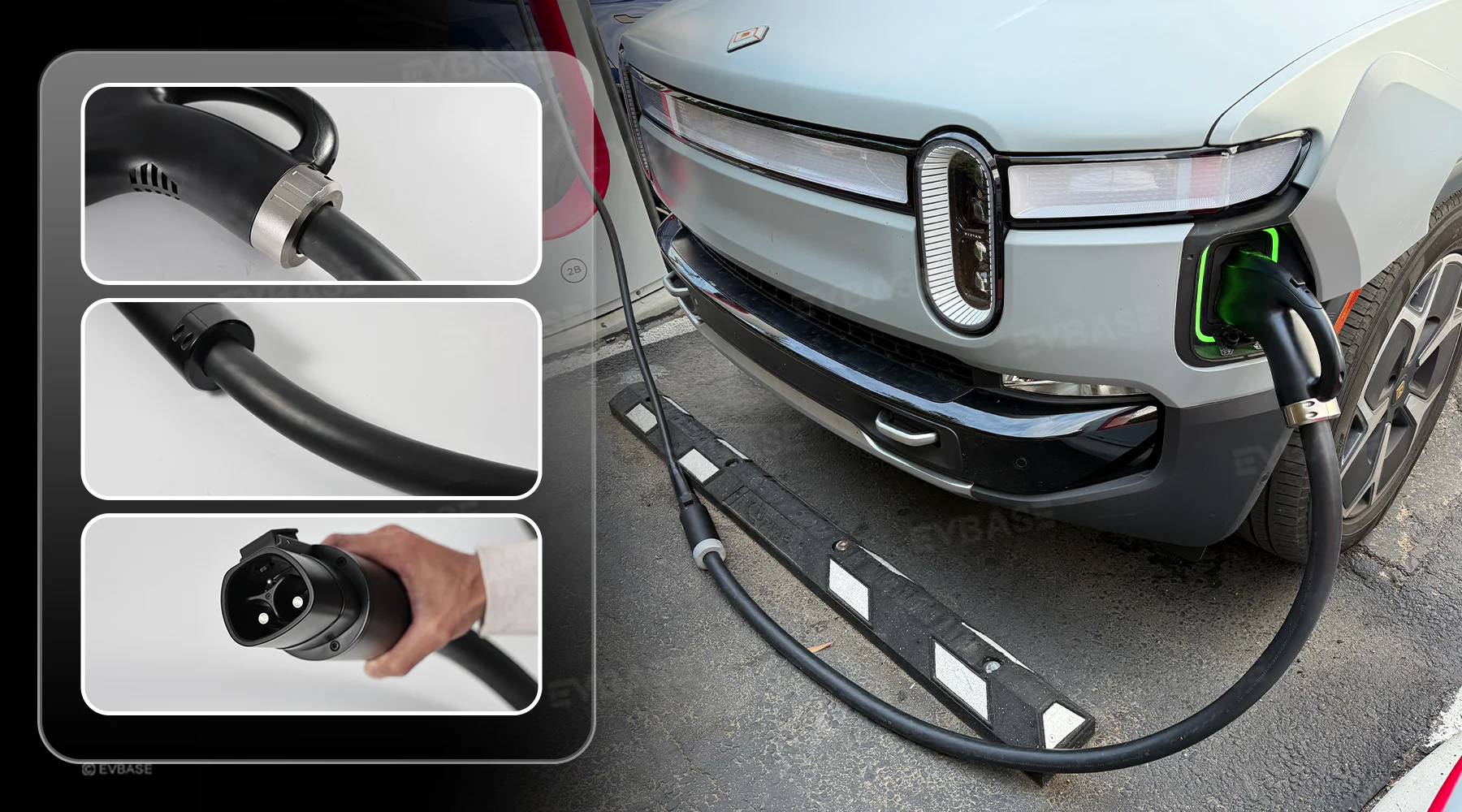
EVBASE NACS to CCS1 Adapter with Extension Cable
Max 350A/1000V with Extension Cable — Charge CCS1 EVs at Tesla Superchargers
* EVBASE affiliate link (via AWIN) — EV Charger Scout may earn a small commission at no extra cost to you.
Which EV Drivers Benefit Most
Demand response pays the most when three conditions line up: a large battery, predictable overnight dwell, and a utility with active EV programs. That profile fits:
- →Suburban commuters with 40–80 km round-trip daily driving who plug in every evening
- →Multi-EV households — a second car drawing 11 kW overnight doubles the flexibility value
- →Drivers of bidirectional-capable EVs (Leaf, Ariya, EV9, F-150 Lightning, EX90) where V2G is live
- →Rural drivers on low-draw grids where even a small curtailment is locally valuable
- →Solar homeowners with time-of-export metering, who can align charging with their own solar midday surplus
City apartment dwellers without a home charger get less out of DR directly, but they still benefit from off-peak rates at public stations — the same filtering strategy applies.
What to Watch Out For
- →Event opt-outs: Most programs let you skip a few events per year without penalty. Use the app to opt out of the night before a road trip so your car is full in the morning.
- →Privacy: DR programs share charge session data with utilities. This is usually fine, but review what data leaves your charger. Most major brands allow granular opt-outs for analytics while keeping DR participation.
- →Battery warranty on V2G: Older bidirectional pilots raised concerns about cycle count; 2026 programs now mostly carry manufacturer warranty coverage, but verify for your exact model before enrolling.
- →Local outages during events: A DR curtailment is not a blackout — your charger slows, it doesn't stop. If your charger actually stops, suspect your panel, not the utility.
Program availability changes block by block. A driver on one street may have a $200/year rebate program while a neighbour across the boundary of a different utility does not. Don't rely on friend-of-a-friend advice — check your current bill and search your utility's site directly.
Quick 2026 Enrollment Checklist
- →Smart charger installed and online (OCPP-compatible if possible)
- →Utility EV rate plan switched to TOU or dynamic pricing
- →Managed charging / DR program enrolled via charger app or utility portal
- →One controller (not two) setting the schedule
- →Auto-opt-in to off-peak windows at public stations via network loyalty app
- →Route-plan filter set to sort by current $/kWh, not just distance
- →V2G pilot application submitted if your car and utility both qualify
Demand response has shifted from grid-operator jargon to a genuine line-item in EV ownership economics. In 2026, it's consistently one of the highest-return moves a driver can make — a one-time setup, no behavioural change, and a real recurring discount. The drivers who haven't enrolled usually just didn't know where to look, and that's fixable in one afternoon.
Frequently Asked Questions
What is a demand response program for EV charging?
A demand response (DR) program is an agreement where a utility or grid operator pays an EV owner — through rebates, credits, or lower rates — in exchange for flexibility when the grid is strained. For drivers this usually means time-shifting charging to off-peak hours, briefly throttling the charger's power during a grid event, or, with bidirectional hardware, exporting energy back during a peak.
How much can EV drivers earn from demand response in 2026?
A mainstream EV driver with a smart home charger and one utility DR program typically saves around $100–$400 per year, on top of off-peak time-of-use savings. Public station off-peak windows can cut sessions by 15–40%. V2G participants with a compatible car like a Nissan Ariya, Kia EV9, or Ford F-150 Lightning can push well past $1,500 per year where their utility supports it.
How is demand response different from time-of-use rates?
Time-of-use (TOU) is a fixed rate schedule — cheap at night, expensive at peak — that applies every day. Demand response is event-driven: when the grid specifically needs help, such as hot summer evenings or cold winter mornings, you get a targeted incentive on top of your base rate. The two overlap and can stack, but they aren't the same thing.
Which home chargers auto-enroll me in grid programs?
Chargers with built-in grid integration handle enrollment and scheduling in software. Examples include the Emporia EV Charger, ChargePoint Home Flex, Wallbox Pulsar Plus, Ohme Home Pro, Easee One/Charge, and Zaptec Go, many of which support OCPP and integrate with aggregators like Octopus, Tibber, Amber, and Jedlix. Bidirectional setups such as the Wallbox Quasar 2 or Ford Charge Station Pro enable V2G or V2H where certified.
What's the biggest mistake to avoid when enrolling?
Don't double-schedule. Many EVs have an in-car charging schedule and the smart charger has its own; if both are active and disagree, the car usually wins, which can make the DR program think you broke the agreement and cost you that event's credit. Pick one controller and disable the other. Also use event opt-outs the night before a road trip so your car is full in the morning.
More guides on Save Money
Explore the full Save Money topic hub — related guides that build on this one.