 EV Charger Scout
Buying a Level 2 EV charger in 2026 is genuinely simpler than it was three years ago — but only if you ignore the marketing noise. Most people don't need 80 amps, don't need three-phase capability, and don't need an app to charge their car. What they do need is a UL-listed unit that matches their panel, fits the connector their car uses (NACS or J1772 in North America, Type 2 in Europe and Australia), and survives a decade outdoors. This guide walks through the chargers genuinely worth buying in 2026 and the questions you should answer before you click checkout.
What "Level 2" Actually Means
Level 2 is the industry shorthand for AC charging at 208–240 volts. In the US and Canada that's split-phase 240V from a household panel; in the UK, EU, and Australia it's single-phase 230V or three-phase 400V from the grid. Every Level 2 charger sold in 2026 falls into the same broad category — the differences are amperage, connector type, smart features, and enclosure rating.
| Spec | Typical range | What it means in practice |
|---|---|---|
| Output amperage | 16A – 80A | Higher amps = faster charging, but only if your car's onboard charger can use it. Most EVs cap at 32A or 48A AC. |
| Output power | 3.8 kW – 19.2 kW | Multiply amps × voltage. A 48A unit on 240V delivers 11.5 kW — enough to add ~30 miles of range per hour. |
| Connector (NA) | NACS (J3400) or J1772 | NACS is the new standard; J1772 still ships on most non-Tesla EVs through model-year 2026. |
| Connector (EU/UK/AU) | Type 2 (Mennekes) | Universal across Europe, the UK, Australia, and New Zealand. |
| Cable length | 18–25 ft (5.5–7.6 m) | Always measure twice; cable on the wrong side of the car forces awkward routing. |
| Enclosure rating | NEMA 4 / IP54 or higher | NEMA 4 (or IP65) means rated for direct rain. Critical for outdoor installs. |
| Certification | UL 2594 / UL 2231 (NA), IEC 61851 (EU) | Skip anything that doesn't list these standards on the spec sheet. |
How Much Amperage Do You Actually Need?
This is the single most over-spec'd part of a Level 2 install. The rule that matters: your charger output is bottlenecked by either (a) your car's onboard AC charger, (b) the breaker on your circuit, or (c) the unit's own rating — whichever is lowest. There's no benefit to a 48A charger on a car that only accepts 32A AC.
| Onboard AC charger | Examples (varies by year/trim — confirm in your owner's manual) | Recommended Level 2 amperage |
|---|---|---|
| 7.7 kW (32A) | Many Tesla Model 3/Y configurations, Chevy Bolt, Hyundai Ioniq 5/6 (most trims), Kia EV6, BMW i4 | 32A unit on a 40A breaker |
| 9.6 kW (40A) | Some Ford Mustang Mach-E trims, VW ID.4 (newer) | 40A unit on a 50A breaker |
| 11.5 kW (48A) | Tesla Model S/X, Rivian R1T/R1S, many Ford F-150 Lightning trims, Lucid Air | 48A unit on a 60A breaker, hardwired |
| 19.2 kW (80A) | Ford F-150 Lightning with Charge Station Pro and the right wiring, Lucid Air higher trims, GMC Hummer EV | 80A unit, hardwired on a 100A breaker — requires panel headroom |
Buying a 48A charger today even if your current EV only accepts 32A is reasonable future-proofing — the next car might charge faster, and the price premium for 48A over 32A is small. But going beyond 48A is rarely worth it unless you specifically own a high-onboard-charger vehicle.
Per the National Electrical Code (NEC 625.41 / NEC 210.19), the breaker and conductors for a continuous load — including EVSE — must be sized at no less than 125% of the continuous load. So a 48A charger requires at least a 60A breaker, a 40A charger requires at least a 50A breaker, and a 32A charger requires at least a 40A breaker. Plug-in units drawing more than 40A continuous (e.g., 48A and 80A chargers) generally must be hardwired rather than installed on a NEMA 14-50 outlet.
Top Picks for 2026
1. ChargePoint Home Flex (50A) — Best Overall
The ChargePoint Home Flex remains the best all-around 2026 pick. It supports up to 50A output (configurable down to 16A), plug-in (NEMA 14-50 or 6-50) or hardwire installation, an app that schedules off-peak charging on your utility's time-of-use rate, and energy reporting that's useful when claiming the federal 30C tax credit (sunsetting June 30, 2026 under OBBBA — see installation guide for details). NACS and J1772 versions ship today; the unit is UL-listed and rated NEMA 3R for outdoor mounting.
- →Output: Up to 50A / 12 kW
- →Connector: NACS or J1772 (choose at purchase)
- →Install: Plug-in (14-50/6-50) or hardwire
- →Smart features: Wi-Fi, app scheduling, OCPP-compatible
- →Warranty: 3 years

ChargePoint Home Flex
Best J1772 — Up to 50A, Energy Star Certified, Any Non-Tesla EV
* Amazon affiliate link — EV Charger Scout may earn a small commission at no extra cost to you.
2. Tesla Universal Wall Connector — Best for Mixed Garages
Tesla released the Universal Wall Connector in early 2024 specifically for households running a mix of Tesla and non-Tesla EVs. It includes a built-in J1772-to-NACS adapter that stays attached to the cable end, so the charger natively serves both connector types without anyone having to swap dongles. Outputs up to 48A hardwired (11.5 kW) and integrates with the Tesla app for monitoring even on non-Tesla vehicles.
- →Output: 48A / 11.5 kW (hardwired only)
- →Connector: NACS with permanently attached J1772 adapter
- →Install: Hardwire only — no plug-in option
- →Smart features: Wi-Fi, Tesla app, power-sharing across multiple units
- →Warranty: 4 years

Tesla Universal Wall Connector
Best Universal — Two Cables, One Station: NACS + J1772
* Amazon affiliate link — EV Charger Scout may earn a small commission at no extra cost to you.
Home Charging Upgrade · EV Shop
ChargePoint Home Flex
Best J1772 — Up to 50A, Energy Star Certified, Any Non-Tesla EV
* Amazon affiliate link — EV Charger Scout may earn a small commission at no extra cost to you.
3. Wallbox Pulsar Plus — Most Compact
Spanish-built Wallbox Pulsar Plus is the smallest 40A unit on the market — about the size of two stacked paperback novels. It's a great fit for tight garages, condo parking spots, or installs where the unit will be visible. Available in NACS and J1772 versions in North America and as a Type 2 unit across Europe, the UK, and Australia. Built-in Power Boost feature dynamically adjusts output to avoid tripping a shared house breaker — useful for older homes without panel headroom.
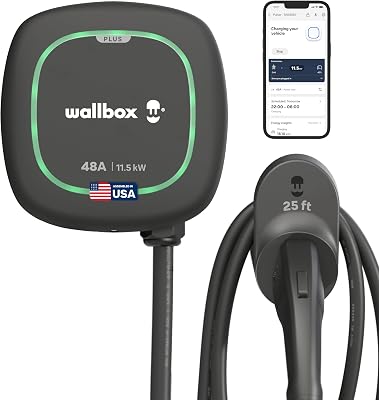
Wallbox Pulsar Plus
Most Compact Level 2 — 40A, Smart App, Power Boost Load Balancing
* Amazon affiliate link — EV Charger Scout may earn a small commission at no extra cost to you.
4. Emporia EV Charger — Best Value
Emporia's EV Charger is the value pick of 2026. Output up to 48A, UL-listed, plug-in or hardwire, NACS or J1772, and a price typically $200–$300 below the equivalent ChargePoint or Wallbox. Pairs with Emporia's Vue energy monitor for whole-home load shedding — automatically scaling charge rate down if the rest of the house is drawing too much.

Emporia Universal Dual EV Charger
Best Value Universal — UL + ETL Certified, NACS & J1772 Dual Connector
* Amazon affiliate link — EV Charger Scout may earn a small commission at no extra cost to you.
5. Grizzl-E Classic — Most Durable
The Canadian-built Grizzl-E Classic is a 40A unit favored by people who want a charger that just works for ten years. Cast aluminum enclosure, NEMA 4 rated for direct outdoor exposure, no Wi-Fi or app. The Grizzl-E Smart and Grizzl-E Duo add scheduling and dual-port options. If you want zero-cloud, no-account charging, this is the one.
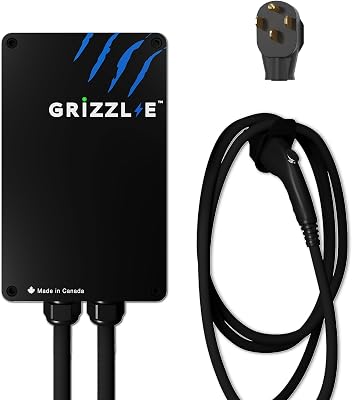
Grizzl-E Classic
Most Durable Level 2 — Cast Aluminum, NEMA 4, No-App Reliability
* Amazon affiliate link — EV Charger Scout may earn a small commission at no extra cost to you.
6. JuiceBox 40 / 48 — Most App-Forward
Enel X Way (the maker of JuiceBox) emerged from corporate restructuring in 2024 and now operates JuiceBox under new ownership, with the app and cloud services restored. The hardware itself remains solid — UL-listed, 40A or 48A versions, plug-in or hardwire. The app is particularly strong for utility integration: many North American utilities have rebate programs that require a JuiceBox specifically because of its OpenADR demand-response support.
7. Autel MaxiCharger AC Wallbox — Best Heavy-Duty
Autel's MaxiCharger comes in 40A and 50A versions and is the hardware most often used in workplace and small-fleet installs that scale beyond a single home charger. Includes RFID card support, OCPP for back-end management, and a screen for status info. Overkill for a single-vehicle home but the right answer if you're charging two EVs and want professional-grade load management.

Autel MaxiCharger AC Wallbox
Best Heavy-Duty — 40–50A, OCPP, RFID, Screen, Workplace-Grade
* Amazon affiliate link — EV Charger Scout may earn a small commission at no extra cost to you.
NACS vs J1772 in 2026: Which Connector to Buy
North America is in the middle of a multi-year transition from J1772 (the legacy AC standard) to NACS (the J3400 standard, originally Tesla's connector). For a Level 2 home charger, the practical answer in 2026 is:
- →If you only own Tesla vehicles: buy a NACS-connector charger (Tesla Wall Connector or any third-party NACS unit).
- →If you only own non-Tesla EVs through model year 2026: buy J1772 — every non-Tesla EV sold through 2026 still has a J1772 inlet, with NACS rolling in from MY2026/2027 across the major brands.
- →If you have a mixed garage: buy the Tesla Universal Wall Connector, or a J1772 unit plus a J1772-to-NACS adapter (the Tesla version costs about $50 and stays in the car).
- →If you're buying for a future EV: NACS is the long-term winner — but a J1772 charger plus a future J1772-to-NACS adapter works just as well technically. The connector itself doesn't affect charging speed.
AC charging standards in Europe, the UK, Australia, and New Zealand all use Type 2 (Mennekes). The NACS-vs-J1772 question simply doesn't exist in those markets — every Level 2 home charger uses Type 2.
Smart Features: Which Are Actually Useful
Almost every charger sold in 2026 advertises an app and "smart" connectivity. Some of these features genuinely save money; others are marketing.
| Feature | Worth paying for? | Why |
|---|---|---|
| Time-of-use scheduling | Yes | Charging during off-peak hours often costs 50–70% less. ChargePoint, Wallbox, JuiceBox, and Emporia all do this well. |
| Energy monitoring + reports | Yes | Useful for federal 30C tax credit documentation (credit sunsets June 30, 2026 under OBBBA) and for tracking actual cost per mile. |
| OCPP / OpenADR | Yes if your utility offers a rebate that requires it | JuiceBox is the most common pick here; check your utility's program list. |
| Dynamic load balancing | Yes for older homes | Wallbox Power Boost, Emporia load shedding, and Tesla power sharing prevent panel trips. |
| Voice assistant integration | Mostly no | You can already start/stop from the car. Voice control adds little. |
| Solar-only charging mode | Yes for solar owners | Some apps can charge only from excess PV production. Check Wallbox MyEnergi compatibility for the strongest version. |
| Cellular fallback | Optional | Useful if your garage has weak Wi-Fi. Adds $5–10/month subscription on some brands. |
A "smart" charger's cloud service can change. Enel X JuiceBox owners temporarily lost app access in late 2023 during the parent company's restructuring. The hardware kept working — cars still charged — but scheduling and remote control disappeared. If those features are essential, prefer brands with stable corporate backing (ChargePoint, Tesla, Wallbox) and pick units that fall back to local scheduling on the unit itself.
EV Interior Essentials · EV Shop

TrunkCratePro Collapsible Trunk Organizer
Best-Selling Trunk Organizer — Collapsible with Non-Slip Base
* Amazon affiliate link — EV Charger Scout may earn a small commission at no extra cost to you.
International Quick Reference
United Kingdom
UK home chargers are 7 kW single-phase as standard (32A at 230V). Popular units include Ohme Home Pro, Hypervolt 3, Pod Point Solo 3, Wallbox Pulsar Plus, and Andersen A2. The OZEV grant for home chargers ended in 2022 for single-home owners but remains available for renters and flat dwellers (EV Chargepoint Grant). All UK home chargers sold from 2022 onwards must comply with The Electric Vehicles (Smart Charge Points) Regulations — meaning default off-peak scheduling and smart-grid randomization.
European Union
EU homes split between 3.7 kW single-phase (16A at 230V) and 11 kW or 22 kW three-phase (16A or 32A at 400V). Three-phase is dominant in Germany, Austria, Switzerland, the Nordics, and Benelux. Wallbox Pulsar Plus (11 kW), Easee One, ABB Terra AC, Alfen Eve Single Pro-Line, and Mennekes Amtron all dominate the EU market. National incentives vary — Germany's KfW 440 program ended but state-level programs continue; France's CITE replacement now subsidizes installation labor up to €960.
Canada
Canadian homes use the same 240V split-phase as the US, so any North American Level 2 charger works directly. Incentives are largely provincial — BC, Quebec, Nova Scotia, and PEI offer rebates ranging from CA$350 to CA$2,500 for the unit and installation. The federal Greener Homes Loan covers EV charger installs as part of a broader retrofit.
Australia and New Zealand
Australia uses 230V single-phase or 400V three-phase. Popular units include Wallbox Pulsar Plus, Ocular IQ, EVSE.com.au-branded units, Tesla Wall Connector (Type 2 version), and Schneider EVlink. State incentives are scattered — the ACT, NSW, and Victoria each have their own EV-related rebate frameworks. New Zealand has minimal direct subsidies for home chargers but pairs well with low overnight electricity tariffs from providers like Ecotricity and Octopus.
Installation Cost Reality Check
The unit itself is rarely the most expensive part. Total installed cost in 2026 typically breaks down like this for a US single-family home:
| Item | Typical 2026 cost (USD) |
|---|---|
| Level 2 charger (40–48A) | $400 – $750 |
| Permit | $50 – $300 |
| Electrician labor (simple install, garage adjacent to panel) | $400 – $900 |
| Electrician labor (long run, conduit, drywall work) | $1,200 – $3,000 |
| Panel upgrade (if 100A → 200A is needed) | $1,500 – $4,500 |
| Federal 30C tax credit — sunsets Jun 30, 2026 (rural / low-income census tracts only) | −30% up to −$1,000 |
| Utility rebate (varies by state / province) | −$100 to −$1,200 |
For the full breakdown of wiring, permits, and how the same job differs across countries, see our companion guide: Home EV Charger Installation Guide: Wiring, Permits, and Cost in 2026.
Mistakes to Avoid
- 1Buying way more amperage than the car or panel can use. A 48A charger on a 32A-onboard EV is purely cosmetic.
- 2Choosing plug-in over hardwire for a 48A unit. Per UL and NEC guidance, anything above 40A continuous should be hardwired.
- 3Picking the cheapest unlisted import on a marketplace site. UL 2594 (or equivalent IEC 61851 / RCM in Australia / CE in EU) is the floor — anything below that is uninsurable in many jurisdictions and risks a house fire.
- 4Mounting an indoor-rated unit outside. Confirm NEMA 4 / NEMA 3R / IP54 or better before exterior install.
- 5Ignoring cable length. A 25-ft cable is the safe default; an 18-ft cable will haunt you if you ever park nose-in instead of nose-out.
- 6Skipping the permit. Insurers can deny EV-fire claims if the install was unpermitted, and most utility rebates require a permit copy.
Use EV Charger Scout to confirm your car's exact onboard AC charger spec before buying. Picking a Level 2 unit that matches the car's actual maximum AC input — not just whatever the marketing claims — is the single biggest factor in long-term satisfaction.
The Short Answer
For most 2026 home buyers in North America, the ChargePoint Home Flex 50A is the safe overall pick. If you specifically have a Tesla and a non-Tesla in the same garage, the Tesla Universal Wall Connector solves that without an adapter. If you're cost-sensitive, Emporia gets you 90% of the features for two-thirds the price. In Europe, the UK, and Australia, the Wallbox Pulsar Plus and Easee One are the equivalent default picks. Match the connector to your car, match the amperage to your panel, hardwire anything above 40A, and you'll have a charger that quietly does its job for the next decade.
Frequently Asked Questions
How many amps does my home EV charger need?
For most homes a 40A or 48A charger is the sweet spot. A 48A unit on a 240V circuit delivers about 11.5 kW — roughly 30–40 miles of range per hour — which fully recharges nearly any EV overnight. Higher 80A units only help if both your car's onboard AC charger and your electrical panel can actually support them, which most can't.
NACS or J1772 — which connector should I buy in 2026?
Buy based on your car. NACS (J3400) is the new North American standard and ships on Teslas and a growing number of 2025–2026 EVs; J1772 still ships on many non-Tesla models through 2026. Many Level 2 chargers now come in either connector, and inexpensive adapters bridge the two, so match the plug your current car uses and keep an adapter for the other.
Do I really need a smart Wi-Fi EV charger?
Only if you'll use the features. Energy monitoring, scheduling to off-peak rates, and load sharing between two cars are genuinely useful; app-based remote start usually isn't. A simple UL-listed non-connected charger charges just as fast and has fewer things that can break.
How much does it cost to install a Level 2 charger?
In 2026 a typical professional install runs about $400–$1,200 in the US when your panel has spare capacity and the run to the garage is short. Costs climb if you need a panel upgrade, a long conduit run, or trenching to a detached garage. Always pull the permit — skipping it can cause insurance and resale problems.
What enclosure rating do I need for an outdoor charger?
Look for NEMA 4 (or IP65) or better for direct outdoor exposure. NEMA 3R / IP54 units tolerate splashes but aren't ideal for driving rain. Mounting the unit under an eave still helps extend its life.
More guides on Home Charging
Explore the full Home Charging topic hub — related guides that build on this one.