 EV Charger Scout
It's one of the first questions almost every new EV owner asks, usually while standing in a driveway holding a charging cable during a downpour: is this actually safe? The instinct makes sense — everyone grows up learning that water and electricity don't mix. But EV charging equipment is engineered from the ground up specifically to handle rain, snow, and wet hands, and the safety mechanisms involved are well-documented, standardized, and used identically by every major charging network worldwide. Here's exactly what's happening inside that connector, and the handful of situations that genuinely do call for caution.
Why EV Chargers Are Built for Wet Weather
Unlike a household electrical outlet, an EV charging connector is not "live" the moment it's plugged in. When you insert a connector — whether it's a Type 1/J1772 plug in North America, a Type 2 in Europe, or the NACS connector Tesla popularized — the vehicle and the charging station first complete a communication handshake over a dedicated pilot signal. Only after that handshake confirms the connector is fully seated and the circuit is properly closed does the station apply power to the pins. Rain on the outside of the connector housing doesn't complete that circuit; the pins themselves are recessed and sealed against splashing by design.
This is fundamentally different from, say, a household extension cord, where exposed metal prongs are energized the instant they're plugged in. EV connectors are purpose-built to be handled by wet hands, in wet weather, thousands of times over the life of the equipment.
EV Interior Essentials · EV Shop

Seven Sparta EV Charging Cable Organizer
Keep EV Cables Tangle-Free — Dedicated Charging Connector Holder
* Amazon affiliate link — EV Charger Scout may earn a small commission at no extra cost to you.
IP Ratings: What They Actually Mean
Every home and public charger is assigned an Ingress Protection (IP) rating, an international standard (IEC 60529) that describes how well an enclosure resists solids and liquids. It's written as two digits — the first for dust and solid particles, the second for water.
| Rating | Water Protection | Typical Use |
|---|---|---|
| IP44 | Splashing water from any direction | Minimum for outdoor connector housings |
| IP54 | Splashing water, limited dust protection | Common minimum for outdoor Level 2 chargers |
| IP55 / IP56 | Low-pressure water jets | Most reputable home charging stations |
| IP65 | Low-pressure water jets, dust-tight | Premium home and commercial chargers |
| IP67 | Temporary immersion (up to 1m, 30 min) | Public DC fast charger connectors and cable housings |
If you're shopping for a home charging station, IP54 is a reasonable minimum for a covered installation, and IP55 or higher is worth prioritizing if the unit will be fully exposed to weather. Public DC fast chargers almost universally exceed these minimums, since they're commercial-grade equipment designed for outdoor use in every climate a network operates in.
Don't confuse the wall unit's IP rating with the connector plug's rating — manufacturers sometimes list them separately. A charger with an IP54 enclosure paired with an IP67 connector plug (common on many home units) is a well-protected combination for nearly any weather a driveway installation will see.
Ground Fault Protection: The Real Safety Layer
IP ratings keep water out of the equipment in the first place, but the layer that actually protects a person is ground fault protection — the electrical equivalent of a GFCI outlet in a bathroom. Every EV charging station sold for public or residential use, under US (UL 2231/2202), European (IEC 61851), and most other national standards, includes a ground fault circuit interrupter that continuously monitors for any current leaking outside its intended path — including through water, a damaged cable, or a person. If it detects even a small leak, it cuts power in well under a second, typically in 20–30 milliseconds.
This is the same fundamental technology that makes a GFCI bathroom outlet safe to use near a sink, scaled up for the higher currents involved in EV charging. It's a mandatory, tested feature — not an optional add-on — on any charger that's passed certification in a major market.
Home Charging Upgrade · EV Shop
* Amazon affiliate link — EV Charger Scout may earn a small commission at no extra cost to you.
What Actually Is Worth Avoiding
None of this means every wet-weather scenario is risk-free. The genuine precautions are narrow and specific, not a blanket "don't charge in the rain":
- →Damaged or cracked cables. A connector or charging cable with visible cracks, exposed wiring, or a damaged housing has lost the sealing that makes it weather-safe. Water intrusion through physical damage is the one scenario that genuinely bypasses the built-in protections. Stop using it and have it inspected.
- →Standing water or flooding. Charging equipment is rated for rain and splashing, not for a connector or charge port that's sitting submerged in standing floodwater. If your driveway or a public charging bay is flooded rather than just wet, wait until the water recedes.
- →Non-certified or aftermarket adapters. Cheap, uncertified adapters sold without UL, CE, or equivalent certification may skip the sealing and ground fault protection that certified equipment includes. This is a genuine reason to buy adapters from reputable brands rather than the lowest-price listing.
- →Active lightning nearby. As with any powered electronics, a nearby lightning strike can send a surge through the grid. This is a precaution about the storm, not the rain itself.
If you ever notice a charging connector feels unusually warm, see visible damage to the cable jacket, or notice the charging session repeatedly failing to start only in wet weather, stop using that specific unit and report it. That combination of symptoms — not rain on its own — is what actually warrants concern.
How This Compares Internationally
The engineering principles are consistent worldwide because the relevant standards are largely harmonized. North America uses SAE J1772 and NACS connectors built to UL and NEMA specifications; Europe and the UK use Type 2 and CCS2 connectors under the IEC 62196 and IEC 61851 standards; Japan, South Korea, and China have their own connector standards (CHAdeMO and GB/T) but apply equivalent ingress protection and ground fault requirements. A driver in Norway, the UK, Australia, or the US is protected by functionally the same layered design: sealed, low-voltage-until-verified connectors backed by mandatory ground fault interruption.
If you'd simply rather stay dry while you plug in, EV Charger Scout's map lets you filter for station amenities and see facility details before you arrive — useful for spotting canopied or garage-based DC fast locations on a rainy travel day, sourced from NREL and OpenChargeMap data.
Frequently Asked Questions
Is it actually safe to plug in an EV while it's raining?
Yes. Every charging connector sold for public or home use — Type 1 (J1772), Type 2, CCS1, CCS2, and NACS/Tesla — is designed and certified to be plugged and unplugged in wet weather. The connector pins are recessed inside an insulated housing, the charging station only energizes the pins after it confirms a secure, sealed connection, and a ground fault circuit interrupter cuts power in milliseconds if any current leak is detected. Manufacturers test this specifically; it isn't an oversight.
What IP rating should a home EV charger have?
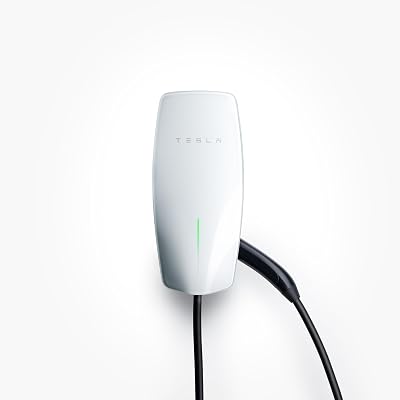
For outdoor-mounted home chargers, look for at least IP54 (protected against splashing water from any direction), though most reputable Level 2 units — ChargePoint Home Flex, Tesla Wall Connector, Wallbox Pulsar Plus — carry IP55 or IP65. IP65 adds protection against low-pressure water jets, which is a reasonable margin for anyone in a heavy-rain climate. The connector plug itself is typically rated IP44 to IP67 depending on brand, which is separate from the wall unit's rating.
Can charging in the rain cause an electric shock?
In practice, no — this is the single most common EV myth. The charging pins are not energized until the vehicle and the charger complete a low-voltage handshake confirming a sealed connection, and every charger sold in the US, EU, UK, and most of Asia is required to include ground fault protection that trips in under 30 milliseconds if current finds an unintended path, including through water. You'd be far more likely to get a shock from a damaged household extension cord than from a certified EV charger in normal rain.
Should I avoid charging during a thunderstorm?
Lightning is the one legitimate exception, and it has nothing to do with the charger's water resistance — it's the same reason you unplug other sensitive electronics during an electrical storm. A direct or nearby lightning strike can send a damaging voltage surge through the electrical grid and into anything plugged in, including an EV charger. If you're charging at home during a severe thunderstorm with frequent nearby strikes, unplugging is a reasonable precaution. Routine rain carries no such risk.
Is it safe to use a public DC fast charger in the rain?
Yes, and it's arguably even more thoroughly weatherproofed than a home unit, since public DC fast chargers are commercial equipment designed for 24/7 outdoor operation and undergo more rigorous certification (UL 2202 in North America, IEC 61851 internationally). The bigger practical issue in bad weather isn't safety — it's comfort. Look for stations with a canopy if you'd rather stay dry while connecting.
More guides on Safety
Explore the full Safety topic hub — related guides that build on this one.