 EV Charger Scout
Public EV chargers are networked computers connected to the power grid, your vehicle, and the internet simultaneously. That combination creates a cybersecurity surface that didn't exist in the era of gasoline pumps. Researchers have demonstrated real vulnerabilities — not theoretical ones — in publicly deployed charging hardware, and the industry's response has been uneven. This doesn't mean you should stop using public chargers, but it does mean understanding the risks, what's actually been demonstrated in the real world, and what practical precautions make sense.
What Cybersecurity Researchers Have Actually Demonstrated
Before listing threats, it's worth being precise about what has been demonstrated in controlled research versus what remains theoretical:
| Attack Type | Demonstrated? | Real-World Incident? | Risk Level |
|---|---|---|---|
| Payment terminal skimming (card data theft) | Yes | Yes (multiple incidents 2022–2024) | Moderate — use NFC/app payment |
| Man-in-the-middle on unencrypted OCPP | Yes (research) | Not confirmed publicly | Low in practice (requires physical access or rogue network) |
| Vehicle CAN bus injection via EVSE | Yes (research, limited) | Not confirmed publicly | Low — requires specific vehicle + charger combination |
| Remote charger shutdown / disruption | Yes (Idaho National Lab, 2023) | Isolated incidents | Low for individuals; relevant for infrastructure operators |
| Station firmware tampering | Yes (research) | Not confirmed publicly | Low (requires physical or privileged network access) |
| QR code phishing ('quishing') | Yes | Yes — growing trend | Moderate — verify URLs before scanning |
The honest picture: credit card skimming and QR code phishing at charging stations are real, documented problems. The more alarming scenarios — vehicle takeover via a compromised charger — remain in the research domain and have not been confirmed in real-world attacks. The threat landscape for everyday EV drivers is primarily about payment security and account credentials, not vehicle safety.
Payment Security at Public Chargers
Card Skimming: The Most Common Threat
Physical card skimmers — counterfeit overlays placed on payment terminals — have been found on public EV chargers in several US states. California, Florida, and Texas have documented incidents. The attack is identical to skimmers found on ATMs and gas station pumps: a physical device captures magnetic stripe data or records PIN entry. Modern chip-and-PIN transactions are harder to skim but not impossible if the terminal is compromised at the hardware level.
- →Physically inspect the card reader before inserting your card — look for misaligned edges, loose components, or unusual overlays
- →Wiggle the card slot — legitimate readers are firmly mounted; skimmer overlays often have some play
- →If the reader looks unusual, use the network's mobile app to initiate the session instead
- →Tap-to-pay (NFC/contactless) is significantly harder to skim than card insertion — prefer this when available
QR Code Phishing ('Quishing')
A newer and growing threat: fraudulent QR code stickers placed over or next to legitimate charger QR codes. Scanning a fake code takes you to a phishing site that mimics the real charging network, captures your payment information, and potentially installs malware if you're tricked into downloading a fake app.
- →Before scanning a QR code at a charger, check whether the sticker looks different from others on the same station (different font, quality, placement)
- →After scanning, verify the URL in your browser matches the official network domain before entering any payment information
- →Use the official app (downloaded from the App Store or Google Play) to initiate sessions rather than scanning QR codes whenever possible
- →If you're taken to an unfamiliar URL after scanning, close the browser and use the network app directly
QR code phishing is particularly dangerous because it looks identical to a legitimate charger interaction. The Federal Trade Commission and several state AGs issued warnings in 2024 about this attack pattern specifically targeting EV drivers. It is a growing threat, not a theoretical one.
EV Tech Pick · EV Shop
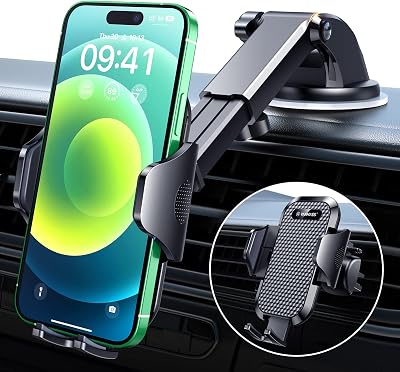
VANMASS Military-Grade Car Phone Mount
Military-Grade Metal Clamp — Strongest Windshield Phone Mount
* Amazon affiliate link — EV Charger Scout may earn a small commission at no extra cost to you.
Account Security for Charging Network Apps
Your charging network accounts (ChargePoint, Electrify America, EVgo, Tesla, etc.) link to payment methods and personal information. A compromised account can be used to charge sessions to your payment method or access personal data. Standard account security hygiene applies, but the specifics matter:
| Security Measure | Importance | How to Implement |
|---|---|---|
| Unique password per app | High | Use a password manager — never reuse credentials across charging networks |
| Two-factor authentication (2FA) | High | Enable in every charging app that offers it — most major networks do |
| Monitor charging history | Medium | Review session history monthly for charges you don't recognize |
| Payment method with fraud alerts | Medium | Credit cards with real-time notifications are better than debit for charging accounts |
| App download verification | High | Only install charging apps from official App Store or Google Play listings |
Most charging network apps link directly to your credit card. Treat your Tesla, ChargePoint, and EVgo accounts with the same security level as your bank account — because unauthorized sessions are financially equivalent to unauthorized card charges.
Vehicle-Level Risks: What the Research Shows
Researchers at Idaho National Laboratory (INL), Sandia National Laboratories, and several academic institutions have investigated whether a compromised charger could communicate maliciously with a connected vehicle. The honest assessment: this attack surface exists but is currently difficult to exploit in practice for several reasons.
The OCPP Layer
Most public chargers communicate with their network management systems via OCPP (Open Charge Point Protocol). OCPP handles session management, billing, and remote diagnostics. Research has shown that some OCPP implementations use unencrypted communication (OCPP 1.6 over plain WebSocket), which allows an attacker with access to the local network to intercept charger-network communication.
Critically: OCPP handles charger management, not direct vehicle communication. An attacker exploiting OCPP can potentially disrupt charging sessions or manipulate billing records — not inject commands into the vehicle's systems. The car and the charger communicate via a separate protocol (ISO 15118 / PLC), which has its own security architecture.
ISO 15118 and Vehicle Communication Security
ISO 15118 is the protocol governing the communication between a vehicle and a charger during a DC fast charging session — including Plug & Charge authentication and smart charging negotiation. ISO 15118 uses TLS (transport layer security) and certificate-based authentication, which provides meaningful protection against man-in-the-middle attacks on the vehicle-charger communication layer.
Research into ISO 15118 vulnerabilities has identified issues in some implementations, particularly around certificate validation and power line communication (PLC) channel security. No confirmed exploitation of these vulnerabilities in a real-world attack has been publicly reported, but the research community continues to publish findings and push for stronger implementation standards.
The ISO 15118-2 standard (the current deployed version) has some known weaknesses that ISO 15118-20 (used in newer implementations) addresses. If your vehicle and charger support ISO 15118-20, you're using the more secure protocol version.
Infrastructure-Level Risks: Grid Security
Beyond individual drivers, cybersecurity researchers and government agencies (DHS, CISA) have focused on charging infrastructure as a potential grid vulnerability. A large-scale coordinated attack on public chargers — causing simultaneous demand spikes or disruption — could theoretically destabilize grid segments.
This is a concern for infrastructure operators and policymakers, not individual EV drivers. CISA issued guidance in 2024 on cybersecurity requirements for publicly funded EVSE (particularly NEVI-funded stations), including mandatory security audit requirements and incident reporting protocols. The federal government treats charging infrastructure cybersecurity as critical infrastructure security — the same category as the power grid itself.
DC Fast Charging Upgrade · EV Shop

LENZ CCS1-to-Tesla NACS Adapter
UL 2252 Certified — Charge Your Tesla at CCS1 DC Fast Stations
* Amazon affiliate link — EV Charger Scout may earn a small commission at no extra cost to you.
What to Actually Do: Practical Safety Measures
Prioritized by realistic risk level for an individual EV driver:
- 1Use mobile app or NFC payment instead of card insertion at unfamiliar or low-traffic chargers — eliminates the most common real-world attack vector
- 2Verify QR code legitimacy before scanning — physically inspect stickers and check the URL before entering any information
- 3Enable 2FA on all charging network accounts — takes 2 minutes and closes the account takeover risk significantly
- 4Download charging apps only from official app store listings, not links in QR codes or emails
- 5Monitor your charging account history monthly for unrecognized sessions — set up email receipts if the network offers them
- 6Report suspicious charger modifications (loose readers, unusual stickers) to the network operator and to your local law enforcement
- 7Keep your vehicle's software updated — manufacturers patch security vulnerabilities in OTA updates, including those related to charging communication protocols
How Networks and Manufacturers Are Responding
The industry is taking cybersecurity more seriously in 2025–2026 than at any prior point. Key developments:
- →NEVI program requirements mandate OCPP 2.0 (encrypted, more secure) for all newly federally funded EVSE — this is a binding requirement, not a recommendation
- →ChargePoint, EVgo, and Electrify America all run bug bounty programs that pay security researchers to find and responsibly disclose vulnerabilities
- →Tesla's charging network uses a proprietary communication stack with TLS throughout — its security track record is stronger than most open-standard implementations
- →The SAE International cybersecurity standard (SAE J3061) and ISO/SAE 21434 now apply to EV charging systems — manufacturers must demonstrate cybersecurity architecture in certification
- →Several states (California, New York) have adopted or are adopting state-specific cybersecurity requirements for commercial EVSE that exceed federal minimums
International Cybersecurity Standards for EV Charging
| Jurisdiction | Standard / Requirement | Key Requirement |
|---|---|---|
| United States (NEVI) | CISA EVSE Cybersecurity Guidelines | OCPP 2.0, incident reporting, security audits |
| European Union | NIS2 Directive + ENISA EV guidelines | Risk management, incident reporting, supply chain security |
| United Kingdom | PAS 1878 Smart EVSE Standard | Cybersecurity by design, firmware signing, secure communications |
| China | GB/T 34658 EVSE Security Standard | Authentication, encryption, anti-tampering requirements |
| ISO International | ISO 15118-20, ISO/SAE 21434 | Protocol security, automotive cybersecurity lifecycle |
The Bottom Line: How Worried Should You Be?
Not very — but not zero. The realistic threat for an individual EV driver is financial fraud through payment terminal skimming or QR code phishing, both of which are mitigated simply by using app-based payment and verifying QR codes before scanning. Vehicle-level attacks via chargers remain in the research domain without confirmed real-world incidents.
The more concerning threat picture is at the infrastructure level — the potential for coordinated attacks on charging networks affecting grid stability — and this is the focus of government agencies, not something individual drivers can meaningfully address. What you can do is support networks and manufacturers that take security seriously, and report anything suspicious you observe at charging stations.
Public charging is not a security minefield. It's a mature utility infrastructure with real but manageable security considerations — not unlike using any networked financial service in public.
Frequently Asked Questions
Can a public charger hack my EV?
Vehicle-level attacks via a compromised charger remain in the research domain and have not been confirmed in real-world incidents. The car and charger communicate over ISO 15118, which uses TLS and certificate-based authentication, separate from the OCPP protocol that handles charger management. The realistic threat for individual drivers is financial fraud, not vehicle takeover.
What is the most common real cybersecurity threat at EV chargers?
Payment terminal card skimming and QR code phishing ('quishing') are the documented, real-world threats. Physical card skimmers have been found on public chargers in states including California, Florida, and Texas, and fraudulent QR stickers placed over legitimate codes redirect drivers to phishing sites. Both are mitigated by using app-based or NFC payment and verifying URLs before entering payment information.
How can I protect my charging network accounts?
Use a unique password for each charging app via a password manager, enable two-factor authentication on every network that offers it, and only install charging apps from the official App Store or Google Play. Review your charging history monthly for unrecognized sessions and use a credit card with real-time fraud alerts, since these accounts link directly to your payment method.
Is QR code phishing at chargers a real problem?
Yes. Fraudulent QR code stickers placed over or next to legitimate charger codes are a growing threat, and the Federal Trade Commission and several state attorneys general issued warnings in 2024 specifically targeting this pattern. Before scanning, check whether a sticker looks different from others on the station, and verify the URL matches the official network domain before entering any payment details.
How are networks and regulators improving charger security?
The NEVI program mandates the more secure, encrypted OCPP 2.0 for newly federally funded EVSE, and networks like ChargePoint, EVgo, and Electrify America run bug bounty programs. CISA issued cybersecurity guidance for publicly funded stations in 2024, and standards such as ISO/SAE 21434 and newer ISO 15118-20 are raising the baseline across the industry.
More guides on Safety
Explore the full Safety topic hub — related guides that build on this one.