 EV Charger Scout
The National Electric Vehicle Infrastructure (NEVI) program has been America's most ambitious public charging push — and also one of its most criticized for slow rollout. The first half of 2026 has finally produced something the program desperately needed: visible, on-the-ground progress. Roughly 700 new NEVI-funded fast charging ports have come online since January, more than doubling the cumulative count from the program's first three years. Here's a clear breakdown of where those ports actually are, which states are pulling ahead, and what this means whether you're driving a Tesla in Texas, a Hyundai Ioniq 5 in Sweden, or a BYD Atto in Australia keeping an eye on how government-funded charging programs unfold worldwide.
The Numbers: Where NEVI Stands in Mid-2026
NEVI was authorized at $5 billion over five years through the Infrastructure Investment and Jobs Act, signed in November 2021. By the end of 2025, only a few hundred ports were operational — far below the roadmap that originally projected thousands of ports lighting up corridors by now. The Joint Office of Energy and Transportation (the federal entity coordinating NEVI between the Department of Transportation and Department of Energy) tracks operational sites, and the curve finally bent upward in 2026.
| Period | Approx. NEVI ports operational | Notes |
|---|---|---|
| End of 2024 | ~120 ports | Ohio's Pataskala site (first NEVI station, opened Dec 2023) plus early sites in NY, PA, ME, VT, HI |
| End of 2025 | ~500 ports | Slower than projected; Buy America transitions and contract delays |
| Mid-2026 | ~1,200 ports | ~700 added in H1 2026 — the program's first true acceleration |
| Original 2026 projection | 4,000–5,000 ports | Industry-analyst consensus from 2022; not met |
Numbers above are approximate operational ports tracked across federal dashboards, state DOT progress reports, and third-party trackers like the Atlas EV Hub and the Joint Office of Energy and Transportation. NEVI counts ports (individual plugs) rather than stations — a typical NEVI site has four ports.
Why 2026 Finally Started Delivering
The acceleration isn't an accident. Several mechanisms that were stuck in 2024 and most of 2025 unblocked in late 2025 and early 2026.
- →Buy America compliance matured — When NEVI launched, no domestic charger supply chain existed at scale. By 2026, factories from Tritium (Lebanon, Tennessee), ABB (South Carolina), Signet EV (Houston), BTC Power (California), and FreeWire have been producing compliant hardware in volume. State DOTs are no longer waiting on certification.
- →State procurement playbooks settled — The first wave of NEVI contracts in 2023–2024 forced every state to invent its own bidding process essentially from scratch. Second-round contracts in 2025–2026 reused templates and moved much faster from RFP to construction.
- →Federal funding clarification — Early 2025 saw legal and political uncertainty around IIJA disbursements. By mid-2025, courts had affirmed that already-obligated NEVI funds remained committed, and most states resumed normal procurement.
- →Site control resolved — Many of the 2026 openings were sites where leases, utility upgrades, and permits were locked down in 2024. Construction simply caught up to the paperwork.
State-by-State: Who's Leading and Who's Behind
NEVI is administered through state DOTs, so progress varies dramatically by state. Here's a snapshot of the leaders and laggards as of mid-2026, based on publicly reported state plans and operational counts.
| State | Status in 2026 | Notable corridors |
|---|---|---|
| Ohio | Leader — 60+ ports operational | I-70, I-75, I-71 |
| Pennsylvania | Strong — 50+ ports | I-80, I-81, I-76 (PA Turnpike) |
| New York | Strong — 40+ ports | I-87, I-90, I-81 |
| Colorado | Strong — multiple corridors complete | I-70, I-25 |
| Maine, Vermont, Hawaii | Above-average for size | Early adopters; smaller corridor counts |
| California | Slow despite EV-friendliness | Procurement complexity and existing private network deployment |
| Texas | Mixed | Strong rural progress on I-10 and I-20; urban contracts delayed |
| Florida, Georgia, Mississippi | Behind schedule | Awards made; construction lagging |
To see currently operational fast chargers — NEVI-funded or not — open EV Charger Scout's map and filter by DC Fast Charger. Every public DC fast station from NREL's Alternative Fuels Data Center and OpenChargeMap shows up regardless of funding source.
Home Charging Upgrade · EV Shop

Emporia Universal Dual EV Charger
Best Value Universal — UL + ETL Certified, NACS & J1772 Dual Connector
* Amazon affiliate link — EV Charger Scout may earn a small commission at no extra cost to you.
What a NEVI Station Actually Has to Provide
Every NEVI-funded station follows the same minimum specification. This consistency is one of the program's quiet achievements — it makes the entire network predictable for road-trippers, no matter which state you're driving through.
- 1At least four 150 kW DC fast charging ports, all able to deliver full power simultaneously when fully utilized.
- 2Both NACS and CCS available at the station — the original NEVI rule required four CCS ports per site, and the FHWA's 2024 amendment now allows NACS connectors as long as the station also offers CCS. In practice, most newly opened 2026 sites are dual-connector at every dispenser, though the federal requirement is at the station level rather than the per-port level.
- 324/7 access — no membership wall, no closed-business-hours blackouts.
- 4Credit card payment without an app — required by federal rule. You can pay at the unit even if you've never used the network before.
- 5Within one mile of an Interstate (or designated Alternative Fuel Corridor) interchange, and spaced at most 50 miles apart along the corridor.
- 697% uptime requirement — operators must report reliability and face penalties for chronic outages.
The 97% uptime rule applies only to NEVI-funded stations. Privately funded stations from EVgo, Electrify America, ChargePoint, Tesla, and Ionna have their own internal reliability targets but are not bound by federal NEVI requirements. If reliability matters for a critical stop, plan around NEVI sites or check user reports for non-NEVI alternatives.
The Networks Operating NEVI Sites
NEVI funds construction and equipment but doesn't operate the stations directly. State DOTs award contracts to charging network operators — and a relatively small group has captured most of the awards through 2026.
- →Francis Energy — The single most active NEVI operator nationally, with awards or operating sites in 20+ states. Heavy presence in the Midwest, South, and Plains states.
- →Pilot Flying J / GM Energy / EVgo joint network — Branded as the Pilot–GM partnership, deploying 500+ NEVI-funded ports at Pilot truck stops along major Interstates. Several hundred of those ports went live in 2025–2026.
- →Electrify America — Selectively bidding on NEVI sites that complement its existing footprint. Less of a NEVI-volume player than its own private build-out.
- →ChargePoint, Blink, FLO, Greenlots (Shell Recharge) — Each has won state-specific contracts, often in regions where they already operate Level 2 networks.
- →Ionna — The seven-automaker high-power network (BMW, GM, Honda, Hyundai, Kia, Mercedes-Benz, Stellantis) doesn't bid for NEVI funds directly but has made coordinating with state plans an explicit goal.
How NEVI Compares to International Programs in 2026
NEVI is unusual among public charging programs in two ways: its strict Buy America requirements, and its corridor-first design. Looking at peer programs in 2026 helps put US progress in perspective.
European Union — AFIR
The EU's Alternative Fuels Infrastructure Regulation (AFIR), which took binding effect in April 2024, requires fast charging stations every 60 km along the Trans-European Transport Network (TEN-T) core network — at minimum 150 kW pools, scaling to 600 kW pool capacity at major sites by 2030. AFIR has no domestic content requirement, and rollout has consequently moved faster than NEVI in raw deployment terms. Ionity, Fastned, Allego, Tesla Supercharger (open to non-Tesla EVs across Europe), and national operators like EnBW and Atlante have collectively added thousands of CCS2 ports per year.
United Kingdom — Rapid Charging Fund
The UK targets 300,000 public chargers by 2030 through a mix of the Rapid Charging Fund (motorway sites) and the Local Electric Vehicle Infrastructure (LEVI) fund (residential and town deployment). Progress in 2026 has been strong — InstaVolt, Gridserve, BP Pulse, Osprey, and Fastned UK have collectively pushed ultra-rapid (150 kW+) site counts well past pre-pandemic targets.
Canada — ZEVIP
Natural Resources Canada runs the Zero Emission Vehicle Infrastructure Program (ZEVIP), which funds Level 2 and DC fast chargers at workplaces, multi-unit buildings, and along highways. Less corridor-focused than NEVI; broader in eligible site types.
DC Fast Charging Upgrade · EV Shop
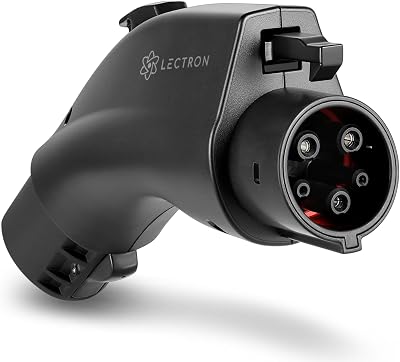
Lectron Vortex Plus NACS-to-CCS Adapter
The Gold Standard — UL 2252 Certified with Safety Interlock
* Amazon affiliate link — EV Charger Scout may earn a small commission at no extra cost to you.
Australia — Driving the Nation
The federal Driving the Nation fund and ARENA (Australian Renewable Energy Agency) co-fund highway corridor charging, primarily through Evie Networks, Chargefox, and the NRMA. Australia's enormous geography makes corridor coverage challenging — gap closure between cities like Adelaide and Perth remains a multi-year effort.
India — FAME III and PM E-DRIVE
India's FAME (Faster Adoption and Manufacturing of Electric Vehicles) phase III, succeeded by the PM E-DRIVE scheme launched in late 2024, includes targeted public fast charger funding along National Highways. Tata Power, ChargeZone, Statiq, and Bharat Petroleum dominate operational counts, with growth heavily concentrated around metro corridors.
What 700 New Ports Mean in Practice
Adding 700 ports across a country the size of the United States is both a lot and a little. It depends entirely on where they are.
For a Tesla driver who already has access to roughly 30,000+ Supercharger stalls in North America, 700 NEVI ports is incremental. For a Chevy Equinox EV driver heading from Iowa to South Dakota on Interstate 29 — a stretch that had essentially no fast charging two years ago — a single new four-port NEVI site is genuinely trip-enabling. The most meaningful additions in 2026 have been on rural and secondary corridors where private operators have less commercial incentive to invest.
Open EV Charger Scout, search a US city you're planning to drive between, and toggle the DC Fast Charger filter. The newest NEVI sites typically appear along Interstate exits one mile out — exactly where the program requires them. If a corridor still looks sparse, EV Charger Scout's hex-grid search reaches further into the surrounding area to surface anything within driving distance.
What to Expect Through End of 2026
State DOT publicly reported pipelines suggest another 800–1,200 ports could come online in the second half of 2026 if construction stays on schedule. That would put cumulative NEVI ports somewhere around 2,000–2,500 by year-end — still below the original 4,000–5,000 projection, but on a meaningfully steeper curve than at any prior point in the program.
The longer-term trajectory matters more than any single year's number. The $5 billion is appropriated, contracts are signed, and the procurement playbook is now mature. The realistic outcome is meaningful coverage of major US Interstate corridors by 2028–2029, with rural and secondary highway gaps gradually closing through the early 2030s.
Practical Takeaways for EV Drivers
- 1If you're road-tripping in the US, check your route against an updated map within a week of departure — NEVI sites are opening fast enough that quarterly-printed guides are already out of date.
- 2Don't assume the NACS port at a NEVI site means it's a Tesla Supercharger. Most NEVI sites are operated by Francis Energy, Pilot–GM–EVgo, ChargePoint, and others, and use the NACS connector rather than the Tesla network's Supercharger system.
- 3If reliability is critical, prioritize NEVI sites over generic public DC fast chargers — the 97% uptime requirement is enforceable and operators take it seriously.
- 4Outside the US, look for the equivalent in your country (AFIR sites in the EU, Rapid Charging Fund in the UK, ZEVIP in Canada, ARENA-funded sites in Australia) — these tend to be the newest, highest-power, and most reliably connected to multiple connector types.
- 5Home charging remains the single highest-impact investment for any EV owner. Public networks are improving, but the convenience and economics of waking up to a full battery beat any roadside corridor.
EV Charger Scout pulls live station data from NREL and OpenChargeMap so you see every NEVI-funded and privately funded fast charger active right now. Filter by your connector type, and tap any station to check live port availability where supported by TomTom.
Frequently Asked Questions
How many NEVI-funded charging ports are operational in 2026?
By mid-2026 roughly 1,200 NEVI ports were operational, after about 700 came online in the first half of the year — the program's first true acceleration. That's still well below the original industry projection of 4,000–5,000 ports by 2026, but it more than doubled the cumulative count from the program's first three years.
Why did NEVI deployment finally speed up in 2026?
Several blockers cleared at once. Domestic Buy America charger supply matured as factories ramped up, state procurement playbooks settled so second-round contracts moved faster, courts affirmed that already-obligated NEVI funds remained committed, and many sites where leases, permits, and utility upgrades were locked in during 2024 finally finished construction.
What does every NEVI station have to provide?
Each NEVI site must offer at least four 150 kW DC fast ports able to deliver full power simultaneously, both NACS and CCS connectors at the station, 24/7 access, and credit-card payment without an app. Sites must be within one mile of an Interstate interchange, spaced no more than 50 miles apart, and meet a 97% uptime requirement.
Does the NACS plug at a NEVI site mean it's a Tesla Supercharger?
No. Most NEVI sites are operated by companies like Francis Energy, the Pilot–GM–EVgo network, and ChargePoint, and they use the NACS connector rather than Tesla's Supercharger network. The NACS plug shape is now common across many networks, so the connector alone doesn't tell you which operator runs the station.
How do NEVI stations compare to programs in other countries?
NEVI is unusual for its strict Buy America content rules and corridor-first design. Peer programs like the EU's AFIR, the UK's Rapid Charging Fund, Canada's ZEVIP, and Australia's Driving the Nation fund have no domestic-content requirement, and several have moved faster than NEVI in raw deployment terms. They tend to fund the newest, highest-power, multi-connector sites in their regions.
More guides on Infrastructure
Explore the full Infrastructure topic hub — related guides that build on this one.