 EV Charger Scout
Australia's electric vehicle market spent years as the developed world's laggard — high purchase prices, limited government incentives, and genuinely sparse charging infrastructure made EV ownership a specialist sport. In 2025 and 2026, that narrative shifted fast. EV sales crossed 10% market share for the first time. The federal government's Electric Vehicle Strategy unlocked new infrastructure funding. And the charging network — Chargefox, NRMA, Evie Networks, Tesla, and new entrants — expanded dramatically. Now a new question is at the center of every Australian EV conversation: which connector wins — CCS2 or NACS?
The Current State of Australian Charging Infrastructure
Australia uses CCS2 (Combined Charging System Type 2, also known as CCS Combo 2) as its DC fast charging standard for both Australian-delivered EVs and the country's public fast charging networks. This is the same standard used throughout Europe and is the dominant DC fast connector worldwide outside North America (which uses CCS1 or NACS/SAE J3400) and China (which uses GB/T).
The CCS2 ecosystem in Australia is anchored by four major networks:
| Network | Stations (approx.) | Max Power | Coverage |
|---|---|---|---|
| Chargefox | 1,500+ chargers | Up to 350 kW at ultra-rapid sites | Nationwide, strong highway corridor coverage |
| Evie Networks | 200+ sites | Up to 350 kW at select sites | Highway corridors, CBD locations, major retail |
| NRMA EV Fast Charging | 60+ sites | Mostly 50 kW, some 75–150 kW upgrades | NSW + expanding nationally; rural and remote focus |
| Tesla Supercharger (CCS2) | 75+ sites | 250 kW (V3) / up to 325 kW (V4) | Urban, tourist routes, highway |
| BP Pulse | 100+ | 50–150 kW | Fuel station co-locations |
| ChargePoint | 300+ | 7–50 kW (mostly Level 2) | Urban parking, commercial |
The critical detail for international visitors or buyers of imported vehicles: Australian-delivered Teslas and Tesla Superchargers in Australia both use CCS2 natively. Australia was one of the first markets where Tesla deployed the CCS2 variant of its Supercharger network as the default, and AU-spec Model 3/Y/S/X ship with a CCS2 inlet onboard — no adapter is required for any CCS2 public charger.
NACS in Australia — What's Actually Happening
SAE J3400 (NACS — the Tesla-derived connector now adopted by the North American automotive industry) is not the Australian standard and was not expected to be. NACS has only entered Australia indirectly through grey-import or privately brought-in North American–spec vehicles — US-spec Teslas, US-market Ford, GM, Rivian, and Honda EVs — which carry the NACS inlet rather than the CCS2 inlet used on Australian-delivered cars.
The result: any grey-import or personally imported NACS vehicle cannot use Australian public DC fast chargers without a NACS-to-CCS2 adapter. Tesla's own Australian vehicles are unaffected — they ship with CCS2 onboard. But for imported NACS vehicles, owners need a reliable adapter, and stall-cable length at busy urban Supercharger sites can be a practical constraint.
If you're importing or purchasing a North American-spec EV for use in Australia, verify connector compatibility before purchase. North American CCS1 vehicles (using the CCS1 / SAE J1772 Combo connector, not CCS2) are also incompatible with Australian DC fast chargers without a CCS1-to-CCS2 adapter. CCS1 and CCS2 are different connectors despite sharing the "CCS" name.
DC Fast Charging Upgrade · EV Shop

BTUYDTUY CCS1-to-CCS2 Adapter
Use European CCS2 Fast Chargers with Your CCS1 EV
* Amazon affiliate link — EV Charger Scout may earn a small commission at no extra cost to you.
CCS1 vs CCS2 — Why It Matters for Visitors and Importers
This is the most common point of confusion for international EV owners visiting or relocating to Australia. The two CCS standards share the same name and similar marketing but are physically different:
| Standard | Also Known As | Used In | Compatible with AU chargers? |
|---|---|---|---|
| CCS1 (Combo 1) | SAE J1772 Combo, CCS Type 1 | USA, Canada, Japan (older stations) | No — requires CCS1-to-CCS2 adapter |
| CCS2 (Combo 2) | IEC 62196 Type 2 Combo | Australia, Europe, South Korea, rest of world | Yes — native standard |
| CHAdeMO | — | Japan (older), some global | Very limited — few AU chargers; mostly legacy |
| NACS (J3400) | Tesla connector | USA, Canada; some AU-spec Tesla | Tesla AU Supercharger with CCS2 cable adapter only |
| GB/T | Chinese national standard | China only | No — incompatible with AU infrastructure |
For North American drivers visiting Australia (hiring or short-term borrowing an Australian EV), the vehicles available locally will have CCS2 and will work seamlessly with all Australian public infrastructure. For visitors bringing their own North American CCS1 vehicle — an extreme edge case but it happens on long-distance relocations or for Australian emigrants returning with a US-purchased EV — a CCS1-to-CCS2 adapter is the solution.
The Major Highway Corridors — Where Fast Charging Is Now Reliable
Sydney to Melbourne (850 km)
The Hume Highway is Australia's most important EV charging corridor. Chargefox, Evie Networks, and Tesla Superchargers are all present at key stops including Goulburn, Holbrook, Albury, and Wodonga. The 2025 NRMA expansion added additional points through the Southern Tablelands. For a vehicle with 400+ km range, this corridor now requires only 2–3 stops on the entire Sydney–Melbourne journey, each under 20 minutes with a 350 kW charger.
Brisbane to Sydney (900 km)
The Pacific Highway and New England Highway both have charging coverage, with Evie Networks providing the most consistent ultra-rapid presence. Key stops include Coffs Harbour, Port Macquarie, and Newcastle. Some gaps remain south of Coffs Harbour on the Pacific Highway where charger spacing exceeds 200 km — plan for a stop at Ballina or Evans Head if driving a shorter-range vehicle.
Perth to Adelaide (2,700 km)
The Nullarbor crossing remains the toughest EV test in Australia. Chargefox's Nullarbor charging stations and the NRMA's investments have improved coverage dramatically, with fast chargers now at Norseman, Balladonia, Caiguna, Madura, Mundrabilla, Eucla, Ceduna, and key stops in between. The gaps are large — some stations are 250–300 km apart — making a vehicle with at least 350 km real-world range essential for this route.
The Nullarbor is a serious undertaking for any EV. Check Chargefox's live app for charger availability at each stop before committing to the crossing. High summer temperatures (45°C+) significantly reduce battery efficiency and increase cabin cooling drain. Plan for 20–25% more energy consumption than usual in midsummer.
Home Charging Upgrade · EV Shop
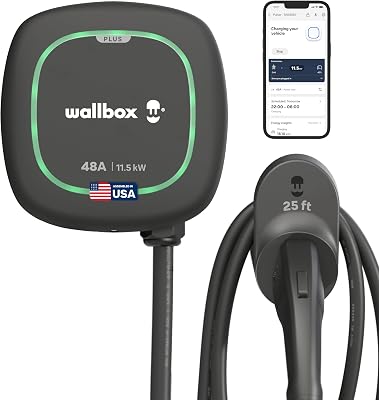
Wallbox Pulsar Plus
Most Compact Level 2 — 40A, Smart App, Power Boost Load Balancing
* Amazon affiliate link — EV Charger Scout may earn a small commission at no extra cost to you.
Pricing — How Much Does Fast Charging Cost in Australia?
| Network | Pricing Model | Approx. Cost |
|---|---|---|
| Chargefox (public) | Per kWh | A$0.45–0.55/kWh (ultra-rapid), A$0.30–0.40/kWh (standard fast) |
| Chargefox (member) | Per kWh (member discount) | A$0.35–0.45/kWh with annual membership |
| Evie Networks | Per kWh | A$0.45–0.55/kWh |
| Tesla Supercharger | Per kWh (non-Tesla)/ per minute (Tesla) | A$0.48–0.65/kWh (non-Tesla vehicles) |
| NRMA EV | Per kWh | A$0.40–0.50/kWh |
| BP Pulse | Per kWh | A$0.45–0.55/kWh |
Pricing fluctuates seasonally and by location. Remote Nullarbor stations typically carry a premium due to installation and servicing costs. Chargefox membership ($AUD 99/year) reduces per-kWh rates across the network and is worth the investment if you travel frequently or do highway runs.
EVs Most Popular in Australia and Their Charging Compatibility
| Model | DC Connector (AU-spec) | Max DC Rate | Compatible with AU Ultra-Rapid? |
|---|---|---|---|
| Tesla Model 3 / Y (AU-spec) | CCS2 (native onboard inlet) | 250 kW | Yes |
| Hyundai Ioniq 5 / 6 | CCS2 | 220–250 kW | Yes |
| Kia EV6 / EV9 | CCS2 | 230–240 kW | Yes |
| BYD Atto 3 / Seal | CCS2 | 88–150 kW | Yes |
| MG ZS EV / MG4 | CCS2 | 76–150 kW | Yes |
| Polestar 2 | CCS2 | 205 kW | Yes |
| Volvo EX30 / EX40 | CCS2 | 153–200 kW | Yes |
| BMW iX3 / iX | CCS2 | 150–195 kW | Yes |
| Nissan Leaf (older) | CHAdeMO | 50 kW | Limited — CHAdeMO stations rare in AU |
What's Coming in 2026 and Beyond
The Australian federal government's Electric Vehicle Strategy includes A$500 million in EV charging infrastructure investment, with a focus on rural and regional coverage — the gaps that still make longer journeys stressful. In parallel, state governments in New South Wales, Victoria, and Queensland are co-funding ultra-rapid corridors to ensure no EV driver is more than 150 km from a 350 kW charger on any major highway by 2027.
The NACS question in Australia will likely be settled by the market: as more globally sold vehicles adopt NACS (particularly US-aligned brands including Ford, GM, Rivian, and Honda in their North American specs), adapter demand will grow. Chargefox and Evie Networks have indicated they are monitoring NACS adoption but have no current plans to add native NACS cables to their infrastructure — CCS2 remains the standard.
BYD's rapid growth in the Australian market is also introducing GB/T DC charging as a second-class citizen — BYD vehicles sold in Australia use CCS2 for public DC charging rather than GB/T, maintaining compatibility. This is a deliberate market adaptation that differs from how BYD sells vehicles in China.
EV Charger Scout pulls station data from OpenChargeMap for Australian locations, including Chargefox, NRMA, and Evie Networks stations. Filter by CCS2 and set a minimum power of 50+ kW to see only fast charging options in your search area.
EV Charger Scout's Australian data comes from OpenChargeMap, a community-maintained database. Station data for Australia is generally accurate for established networks but may lag on newly opened sites or recently retired hardware. Always cross-check with the network's own app before a long-distance journey.
Frequently Asked Questions
What DC fast charging connector does Australia use?
Australia uses CCS2 (Combined Charging System Type 2) as its DC fast charging standard for both locally delivered EVs and public networks. It's the same standard used across Europe and is the dominant DC connector worldwide outside North America (CCS1 or NACS) and China (GB/T).
Do Australian Teslas need an adapter for public chargers?
No. Australian-delivered Teslas and Tesla Superchargers in Australia both use CCS2 natively, so AU-spec Model 3/Y/S/X ship with a CCS2 inlet and need no adapter for any CCS2 public charger. Australia was one of the first markets where Tesla deployed the CCS2 Supercharger variant as the default.
Can I use a North American NACS or CCS1 vehicle in Australia?
Not without an adapter. A grey-import NACS vehicle cannot use Australian public DC fast chargers without a NACS-to-CCS2 adapter, and a North American CCS1 vehicle needs a CCS1-to-CCS2 adapter. CCS1 and CCS2 are physically different connectors despite sharing the “CCS” name, so verify compatibility before importing.
Which networks cover Australia's main highway corridors?
Chargefox, Evie Networks, NRMA EV Fast Charging, and Tesla Superchargers anchor the CCS2 ecosystem. The Hume Highway between Sydney and Melbourne now needs only 2–3 stops for a 400+ km vehicle, while routes like Brisbane–Sydney and the Perth–Adelaide Nullarbor crossing have improved but still have larger gaps.
How much does fast charging cost in Australia?
Public ultra-rapid charging typically runs about A$0.45–0.55/kWh, with standard fast charging closer to A$0.30–0.40/kWh and non-Tesla Supercharger rates up to around A$0.65/kWh. Prices vary by location, remote Nullarbor stations carry a premium, and a Chargefox membership (about A$99/year) reduces per-kWh rates for frequent travelers.