 EV Charger Scout
You pull up to a fast charger, plug in the cable, and the session starts on its own. No app, no card tap, no RFID fob. The charger knows your car, verifies your payment credentials, and begins delivering power — all in under ten seconds. That's Plug and Charge in action, and in 2026 it has moved from a niche premium feature to something a meaningful portion of new EV buyers encounter on their first DC fast charging stop. Here's exactly how it works, which vehicles and networks support it, and what it looks like in different parts of the world.
What Plug and Charge Actually Is
Plug and Charge is the colloquial name for automated charging session initiation based on the ISO 15118 communication standard. The formal technical process is called "Plug&Charge" (PnC) and uses a public-key infrastructure to authenticate the vehicle directly to the charging station — no human action required beyond physically inserting the connector.
When you plug an ISO 15118-capable EV into a compatible EVSE, the following happens in the background: the vehicle presents a certificate stored in its onboard secure element; the charger validates that certificate against the mobility operator's backend; the backend verifies payment authority; and charging starts. The whole exchange typically completes in 5–10 seconds. If any link in the chain fails — expired certificate, network timeout, incompatible protocol version — the session falls back to normal RFID or app-based authorization.
ISO 15118 has two relevant versions. ISO 15118-2 covers AC and DC charging over CCS. ISO 15118-20 is the newer standard that adds NACS (J3400) support, bidirectional charging (V2G), and wireless communication. Most Plug and Charge deployments in operation today run on ISO 15118-2; 15118-20 rollouts are beginning in 2025–2026.
Which Networks Support It in 2026
Electrify America
Electrify America was the first major North American network to deploy Plug and Charge at scale. Starting with a firmware rollout in 2021, the network progressively enabled PnC across its CCS-equipped stalls, with NACS stalls receiving support starting in mid-2024. As of 2026, Plug and Charge works at the majority of Electrify America stations — the exception being some older hardware at sites that haven't yet received the firmware update.
From a driver's perspective, you need to set up Electrify America's Pass+ plan (or a comparable partner plan) and link your payment method to your vehicle account before PnC works. The one-time pairing typically happens through the automaker's app or the vehicle's touchscreen. After that, every Electrify America session is automatic.
EVgo
EVgo launched Autocharge+ — its branded Plug and Charge implementation — in 2022 and has since extended it across its DC fast charger fleet. EVgo's implementation works with both CCS1 and NACS connectors, and activation is handled through the EVgo app with a one-time vehicle MAC address registration step (a slightly different approach than full ISO 15118 certificate exchange, though EVgo is rolling out full PnC support alongside Autocharge+).
EVgo has also integrated PnC with automaker backends for several brands, meaning some vehicles arrive PnC-ready without requiring separate EVgo app enrollment — the session authorization flows from the manufacturer's account directly.
DC Fast Charging Upgrade · EV Shop
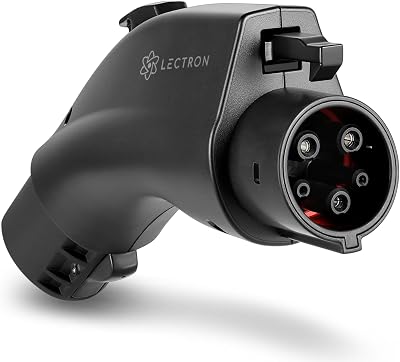
Lectron Vortex Plus NACS-to-CCS Adapter
The Gold Standard — UL 2252 Certified with Safety Interlock
* Amazon affiliate link — EV Charger Scout may earn a small commission at no extra cost to you.
ChargePoint
ChargePoint supports ISO 15118 Plug and Charge on its CPE250 and newer hardware, primarily at Level 2 and DC stations deployed after 2022. ChargePoint's implementation requires account linking through the automaker's app for brands that support it natively, or through ChargePoint's own account system for all others.
Ionna
Ionna — the network jointly backed by eight automakers (BMW, GM, Honda, Hyundai, Kia, Mercedes-Benz, Stellantis, and Toyota) — was designed from the ground up with ISO 15118-20 support as a baseline hardware requirement. All Ionna stalls deploy with both NACS and CCS connectors and full PnC capability. For vehicles from the founding OEM partners, no separate enrollment is needed: if you have a linked account through your automaker's app, Ionna sessions start automatically.
Tesla Supercharger
Tesla Superchargers use a proprietary handshake protocol that accomplishes the same goal as ISO 15118 — automatic session initiation linked to your Tesla account. For Tesla vehicles, this has worked since the network launched. For non-Tesla EVs accessing Superchargers via NACS port or Magic Dock, Tesla has been progressively rolling out ISO 15118 compatibility so that those vehicles can also benefit from automatic initiation rather than requiring the Tesla app.
Which 2026 EVs Support Plug and Charge
ISO 15118 Plug and Charge support is increasingly standard equipment in new EVs, particularly for vehicles targeting the premium and mainstream segments. The vehicles below support PnC in at least one of their market variants as of the 2025–2026 model years:
| Vehicle | PnC Support | Networks (North America) |
|---|---|---|
| Ford Mustang Mach-E (2024+) | ISO 15118-2 | Electrify America, EVgo, Ionna |
| Ford F-150 Lightning (2024+) | ISO 15118-2 | Electrify America, EVgo, Ionna |
| Hyundai Ioniq 5 / 6 (2022+) | ISO 15118-2 | Electrify America, EVgo, Ionna |
| Kia EV6 / EV9 (2022+) | ISO 15118-2 | Electrify America, EVgo, Ionna |
| BMW i4 / iX / i7 (2022+) | ISO 15118-2 | Electrify America, EVgo, ChargePoint, Ionna |
| BMW i3 / iX3 2026 (North America) | ISO 15118-20 (NACS) | Electrify America, EVgo, Ionna, Supercharger |
| Mercedes EQS / EQE (2022+) | ISO 15118-2 | Electrify America, EVgo, ChargePoint |
| Porsche Taycan (2020+) | ISO 15118-2 | Electrify America, EVgo, Ionna |
| Audi e-tron GT / Q8 e-tron | ISO 15118-2 | Electrify America, EVgo |
| Rivian R2 (2026+ NACS-native) | ISO 15118-20 (NACS) | Electrify America, EVgo, Ionna, Supercharger |
| Rivian R1T / R1S Gen 2 (2024+ CCS1) | ISO 15118-2 | Electrify America, EVgo (Supercharger via adapter) |
| GM (Ultium platform, 2024+) | ISO 15118-2 / 15118-20 | Electrify America, EVgo, Ionna, Supercharger |
| Tesla (all models) | Proprietary / ISO 15118-20 | Supercharger (all), others expanding |
Not all trims of every model support PnC equally. Entry-level trims occasionally ship without the secure element hardware required for ISO 15118 certificate storage, leaving higher trims to carry the feature. Check your specific trim's feature sheet before assuming PnC is available.
If you're unsure whether your vehicle supports Plug and Charge, check the automaker's app for a "Plug and Charge" or "Autocharge" enrollment option. If the option exists, your car's hardware supports it. If it doesn't appear in the app at all, your trim may not have the required secure element.
How to Activate It — The General Steps
The exact flow varies by brand, but the pattern is consistent across most supported vehicles:
- →Step 1 — Link your network accounts. Log in to the charging network's app (Electrify America, EVgo, ChargePoint, etc.) and add a payment method. Some networks require a specific plan that includes PnC support.
- →Step 2 — Enable in the vehicle app. Navigate to the Charging section of your automaker's app and look for "Plug and Charge" or "Autocharge." Toggle it on. For many 2024+ models, this triggers a certificate provisioning process that completes in 24–48 hours.
- →Step 3 — Vehicle-to-network pairing (some brands). A few manufacturers require you to explicitly pair your vehicle ID with individual networks. Hyundai and Kia, for example, let you select which Plug and Charge partner networks to enable from within the BlueLink or Connect app.
- →Step 4 — First session verification. On your first PnC session, some networks display a brief confirmation on the charger screen showing the EV's certificate was accepted. After that, sessions start silently.
Europe and the AFIR Connection
In the European Union, Plug and Charge is being pushed forward by regulatory pressure, not just market forces. The Alternative Fuels Infrastructure Regulation (AFIR), which comes into full effect in 2025–2026, requires publicly accessible DC fast chargers above 50 kW to support ad-hoc payment — meaning no app or account should be required to charge. PnC sits alongside this requirement: while ad-hoc payment handles the "no account needed" case, ISO 15118 handles the "seamless account-linked" case. Both must coexist on the same hardware.
Networks operating in the EU — including IONITY, Allego, EnBW, Fastned, and Recharge — have been rolling out ISO 15118 support to comply with AFIR requirements and to match the expectations of customers arriving in CCS2-equipped European EVs. By early 2026, ISO 15118-2 PnC is active at the majority of new IONITY and Fastned installations across Western Europe.
Home Charging Upgrade · EV Shop
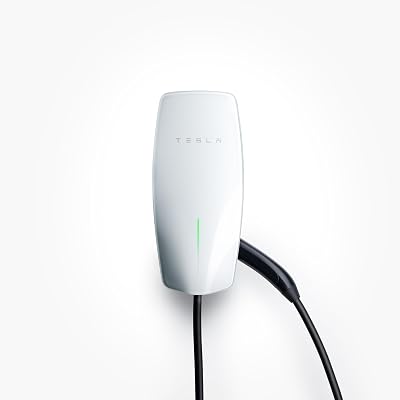
* Amazon affiliate link — EV Charger Scout may earn a small commission at no extra cost to you.
CCS2 in Europe vs. NACS in North America
European Plug and Charge is built on CCS2 (IEC 62196 Type 2 Combined), which has been the European fast charging standard since 2020. NACS/J3400 has not been adopted in Europe; European drivers using Plug and Charge will continue to do so through CCS2 connectors for the foreseeable future. If you're driving an American NACS-native vehicle in Europe with a CCS2 adapter, PnC may or may not carry through the adapter depending on whether the adapter supports ISO 15118 signal passthrough — most current adapters do not, meaning you'll use RFID or app authorization instead.
Japan, South Korea, and the Asia-Pacific Region
Japan has its own variant of Plug and Charge linked to the CHAdeMO protocol and, more recently, the ChaoJi standard (which China and Japan are co-developing). CHAdeMO 2.0 includes automated authentication capabilities, though adoption of the automated feature has been limited compared to the card-tap model that Japanese drivers are accustomed to. South Korea, which operates primarily on CCS2 for DC fast charging, has been slower to deploy full PnC but several Hyundai, Kia, and Genesis models sold domestically support the feature for compatible stations.
Australia's charging market is transitioning from CHAdeMO and CCS2 toward NACS (particularly following Tesla's widespread Supercharger deployment and the growing install base of NACS-native models from Ford, GM, and others), but PnC at non-Tesla stations is still inconsistently supported. NRMA and Chargefox are the largest networks with any PnC capability.
Common Issues and How to Fix Them
- →Session doesn't start automatically. Wait 30 seconds. If nothing happens, try a tap-to-pay or RFID card — the fallback means PnC failed at some point in the chain. Common causes: expired certificate (re-enable in the app), network timeout, or unsupported hardware at that specific stall.
- →"Certificate error" on charger screen. Usually means the OEM backend timed out during verification. It's rarely a hardware problem. Restart the session attempt. If it keeps happening, disable and re-enable PnC in your vehicle app, which triggers a fresh certificate provisioning cycle.
- →Works at some stations but not others. Not all stalls at a given station have been updated to the same firmware. A newer stall at the same site may work while an older one doesn't. Use the charger-selection screen if the station has multiple banks.
- →New vehicle, no PnC option in app. Some OEM apps take 24–72 hours after vehicle delivery to enable charging features. Wait a day, check for app updates, and try enrolling again.
Plug and Charge is designed for accounts you control. Never share your vehicle's PnC enrollment with people you don't trust — they could start paid charging sessions that bill your linked payment method.
What to Expect Next
ISO 15118-20 is the next significant step. It adds NACS/J3400 support, enables bidirectional (V2G) communication through the same session initiation framework, and introduces wireless PnC for inductive charging systems. Ionna has already deployed 15118-20-compatible hardware. Expect the majority of new US and European stations installed in 2026 and beyond to carry 15118-20 as the baseline, with 15118-2 remaining active for backward compatibility with older vehicles.
From the driver's perspective, the trajectory is clear: less fumbling with apps and cards, more sessions that just work. If your current EV doesn't support PnC, your next one almost certainly will — and the infrastructure to support it will be waiting.
Frequently Asked Questions
What is Plug and Charge?
Plug and Charge is automated charging session initiation based on the ISO 15118 communication standard. When you insert the connector into a compatible charger, your EV presents a stored certificate, the charger validates it against the operator's backend, payment is verified, and charging starts — typically in 5–10 seconds with no app, card tap, or RFID fob required.
Which charging networks support Plug and Charge in 2026?
Electrify America was the first major North American network to deploy it at scale, and EVgo (as Autocharge+), ChargePoint, Ionna, and Tesla Superchargers all support automated session initiation. Ionna was designed from the ground up with ISO 15118-20, and most of its stalls start sessions automatically for vehicles from its founding automaker partners.
How do I activate Plug and Charge on my EV?
The general pattern is to link your network accounts and add a payment method, enable Plug and Charge or Autocharge in your automaker's app, and — for some brands like Hyundai and Kia — pair your vehicle with specific partner networks. For many 2024+ models, enabling it triggers a certificate provisioning process that completes in 24–48 hours, after which sessions start silently.
Why didn't my Plug and Charge session start automatically?
Common causes include an expired certificate, a network timeout, an OEM backend that timed out during verification, or unsupported firmware at that specific stall. Wait about 30 seconds, then fall back to tap-to-pay or RFID. If it keeps failing, disable and re-enable Plug and Charge in your vehicle app to trigger a fresh certificate provisioning cycle, or try a different stall at the same site.
Does Plug and Charge work in Europe and Asia?
In Europe, Plug and Charge runs on CCS2 and is being pushed by AFIR regulation, with networks like IONITY, Allego, EnBW, Fastned, and Recharge rolling out ISO 15118 support. Japan has its own CHAdeMO-linked variant and the emerging ChaoJi standard, while South Korea and Australia support it more inconsistently. NACS has not been adopted in Europe, so European drivers continue using CCS2.
More guides on Strategy & Planning
Explore the full Strategy & Planning topic hub — related guides that build on this one.
Managed Charging & Off-Peak EV Rates: How to Save $100+ Per Month in 2026
13 min read
Home vs. Public EV Charging Costs in 2026: Real Rates, the Math, and How to Save
14 min read
AI-Powered Smart Charging Apps: How They Predict Availability at Your Nearest Station
11 min read
Winter EV Battery Care & Charging 2026: Everything You Need to Know to Maximize Range and Speed in the Cold
13 min read
How to Future-Proof Your EV Charging in the NACS Transition Era
9 min read