 EV Charger Scout
EV range anxiety was a legitimate concern a decade ago; in 2026 it's increasingly a solved problem at the top end of the market, where several production vehicles now clear 400 miles of EPA-estimated range on a single charge. This guide ranks the longest-range electric cars currently available, explains why the leaders get there so differently — some through sheer battery size, others through efficiency engineering — and makes the case for why headline range isn't always the number that matters most.
The Longest-Range EVs, Ranked by EPA Miles
These figures reflect the top-range trim or configuration of each model as rated by the EPA, which can differ meaningfully from lower trims of the same vehicle with smaller batteries or larger wheels. Manufacturer-published figures can also shift with model-year updates, so treat these as a current snapshot rather than a permanent ranking.
| Rank | Vehicle | Body Type | EPA-Est. Range |
|---|---|---|---|
| 1 | Lucid Air Grand Touring | Sedan | ~512 miles / 824 km |
| 2 | Chevrolet Silverado EV (extended range) | Pickup truck | ~493 miles / 793 km |
| 3 | Cadillac Escalade IQ | Full-size SUV | ~465 miles / 748 km |
| 4 | GMC Sierra EV Denali | Pickup truck | ~460 miles / 740 km |
| 5 | Mercedes-Benz EQS 450+ | Sedan | ~453 miles / 729 km |
| 6 | Lucid Gravity Grand Touring | SUV | ~450 miles / 724 km |
| 7 | Rivian R1T (Max Pack) | Pickup truck | ~420 miles / 676 km |
Range figures for the same nameplate can vary significantly between trims — wheel size alone can shift EPA range by 20–40 miles on some vehicles, since larger wheels increase rolling resistance. Always check the range for the exact trim and wheel package you're configuring, not just the headline number in an ad.
EV Interior Essentials · EV Shop
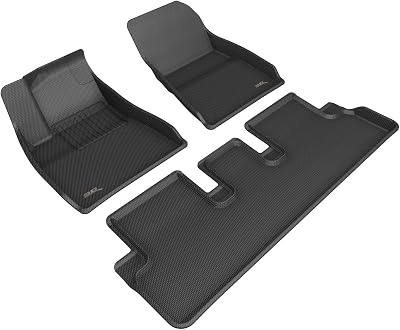
Premium All-Weather Floor Mats
Laser-Measured for Maximum Coverage — Custom-Fit for Your Vehicle
* Amazon affiliate link — EV Charger Scout may earn a small commission at no extra cost to you.
Two Very Different Paths to Long Range
Look closely at that ranking and a pattern emerges: the list splits between very large trucks and SUVs with enormous battery packs, and the Lucid models, which get there almost entirely through efficiency.
Brute-Force Range: Big Batteries
The Chevrolet Silverado EV, GMC Sierra EV, and Cadillac Escalade IQ carry some of the largest battery packs in the industry — often 200 kWh or more — to support serious payload and towing capability alongside long range. That approach works, but it comes with real weight, cost, and charging-time tradeoffs: a substantially larger battery takes proportionally longer to recharge from empty at the same charging power, and adds thousands of pounds the vehicle has to move (and therefore energy it has to spend) on every trip.
Efficiency-Driven Range: The Lucid Approach
Lucid's engineering strategy is different: rather than maximizing battery size, its powertrains extract roughly 4.6 miles of range per kWh of battery capacity — noticeably better than most competing sedans and SUVs. That efficiency advantage means the Lucid Air reaches its class-leading range with a battery that's proportionally smaller (and lighter) than what a less efficient vehicle would need to hit the same number. It's the same principle that makes a fuel-efficient gas car go further on a smaller tank than a less efficient one with a bigger tank.
DC Fast Charging Upgrade · EV Shop
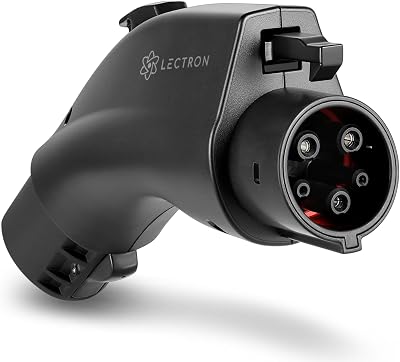
Lectron Vortex Plus NACS-to-CCS Adapter
The Gold Standard — UL 2252 Certified with Safety Interlock
* Amazon affiliate link — EV Charger Scout may earn a small commission at no extra cost to you.
EPA vs. WLTP: Why the Same Car Shows Different Numbers Abroad
If you've compared a US-market range figure against a European or UK listing for what looks like the same car, you've likely noticed the numbers don't match — sometimes by a wide margin. That's because they're measured on entirely different test cycles. The EPA cycle used in the United States blends city and highway driving with real-world adjustment factors baked in, while WLTP (Worldwide Harmonized Light Vehicle Test Procedure), used across the UK, EU, and many other markets, tends to produce meaningfully higher figures for the same vehicle. As one example, a Lucid Air Grand Touring configuration rated at roughly 512 miles EPA has been quoted with a WLTP figure well above 550 miles for the equivalent European specification. Neither number is "wrong" — they're just not directly comparable across standards, so only compare EPA-to-EPA or WLTP-to-WLTP.
Never compare an EPA-rated US listing directly against a WLTP-rated European or UK listing to judge which car has "more real range." The test cycles produce systematically different numbers for identical hardware, and the gap varies by vehicle — sometimes 10%, sometimes closer to 20%.
Does Headline Range Actually Matter for Most Drivers?
For the large majority of owners, the answer is: less than the marketing suggests. Most daily driving in the US, UK, EU, and Australia falls well within 50 miles a day, and most road trips are comfortably supported by any EV with 250–320 miles of real range paired with a reliable DC fast charging network along the route. The vehicles topping this list are also, without exception, among the largest, heaviest, and most expensive in their respective segments — genuinely useful for specific use cases like heavy towing or very long, remote road trips, but overkill for typical ownership.
- →Efficiency (miles per kWh) often matters more day to day than peak range, since it directly determines how often you need to charge and how much each charging session costs.
- →Charging speed and network reliability frequently matter more for road-trip comfort than an extra 100 miles of range you'll rarely use to its full extent between stops.
- →Real-world conditions eat into every EV's range similarly — cold weather, highway speeds, and cabin climate control reduce range by a comparable percentage regardless of whether the EPA rating started at 300 miles or 500.
Rather than shopping by headline range alone, use EV Charger Scout's Real-World Range Estimator in the EV Tools hub, which factors in live weather conditions and your specific vehicle to show a more realistic range figure for your actual driving — a far more useful number than the EPA sticker for planning a specific trip.
Frequently Asked Questions
What is the longest-range electric car you can buy in 2026?
The Lucid Air Grand Touring leads the market with an EPA-estimated range of approximately 512 miles (about 824 km) on its top-range configuration — the longest of any production EV currently sold. Lucid holds this position primarily through efficiency rather than raw battery size: its powertrain achieves roughly 4.6 miles per kWh, meaningfully better than most competitors, which lets a comparatively sized battery go further.
Why do electric trucks have such long EPA ranges now?
Large electric trucks and SUVs — the Chevrolet Silverado EV, GMC Sierra EV, and Cadillac Escalade IQ among them — carry very large battery packs (often 200+ kWh) to compete on payload and towing capability, and that battery size translates directly into long EPA range even though these vehicles are far less efficient per kWh than something like the Lucid Air. It's brute-force range from a big battery rather than efficiency-driven range.
Is EPA range the same as what I'll get in real-world driving?
Not exactly — EPA testing uses a standardized cycle that blends city and highway driving at moderate speeds and mild temperatures. Sustained highway speeds above roughly 70 mph, cold weather, and cabin heating/cooling all reduce real-world range below the EPA figure, sometimes by 15–25% in harsh conditions. EPA numbers are the most consistent way to compare vehicles against each other, but treat them as a best-case reference point, not a guarantee.
What's the difference between EPA range and WLTP range?
They're different test cycles used in different regions — EPA in the US, WLTP (Worldwide Harmonized Light Vehicle Test Procedure) in the UK, EU, and many other markets — and they consistently produce different numbers for the same vehicle, with WLTP figures typically coming in noticeably higher than EPA for the same car. If you're comparing a US-market EPA figure against a European WLTP figure for a similar model, they are not directly comparable; always compare within the same standard.
Should I just buy the longest-range EV available?
Not necessarily. The longest-range vehicles are often the largest, heaviest, and most expensive in their category, and most drivers' actual daily and even most road-trip needs are comfortably covered by 250–320 miles of real range paired with reliable access to fast charging. Efficiency (miles per kWh) matters more than headline range for most owners' actual cost and charging-stop frequency — a highly efficient 300-mile EV can be more practical day to day than a less efficient 450-mile one.
More guides on EV Models
Explore the full EV Models topic hub — related guides that build on this one.