 EV Charger Scout
The charging speed ceiling for passenger EVs is moving fast. Just a few years ago, 150 kW was considered impressive. Then 350 kW became the benchmark for premium fast charging. Now, hardware capable of 600 kW and beyond is entering highway deployment in the United States — a level of power that completely changes the math on charging stops. At 600 kW, a 100 kWh battery can theoretically receive a 10–80% charge in under 10 minutes.
The engineering reality is more nuanced than the headline specs. No passenger EV currently accepts 600 kW, but vehicle architectures are evolving rapidly to catch up with the infrastructure. Here's what's being deployed, which vehicles can use it today, and what the timeline looks like for 600 kW becoming a broadly accessible consumer experience.
What 600 kW Actually Means in Practice
Power delivered to a battery equals voltage times current (P = V × I). Current passenger EVs charge at:
| Voltage Architecture | Max Current (typical) | Max Power | Example Vehicles |
|---|---|---|---|
| 400V (standard) | 250A | ~100 kW (AC-DC limit) | Most EVs 2020–2023 |
| 400V (high current) | 500A | ~200 kW | Tesla Model 3/Y (250 kW peak) |
| 800V architecture | 300A | ~240 kW | Hyundai Ioniq 6, Kia EV6 (early 800V) |
| 800V high current | 500A | ~400 kW | Hyundai Ioniq 5N, Porsche Taycan |
| 900V+ next-gen | 600A+ | 600+ kW | Upcoming — 2025–2027 vehicles |
Reaching 600 kW requires either extremely high voltage (900V+) or very high current at 800V, plus cable and connector systems rated for that current. The cable is actually the hardest engineering challenge — liquid-cooled cables are required at these power levels, as air-cooled cables at 600A+ would overheat rapidly.
Stations Deploying 600 kW Hardware in the US
Tesla V4 Supercharger (V4 cabinet rated up to 500 kW per stall)
Tesla's true V4 Supercharger cabinet — entering broader US deployment from late 2025 — is rated up to 500 kW per stall for future passenger EVs (and up to 1.2 MW per stall via a separate MCS connector for the Tesla Semi). Most "V4" sites today still use V4 posts paired with V3 cabinets (250 kW per stall, or up to 325 kW at boosted installations from January 2025 onward). No production passenger EV currently pulls anywhere near 500 kW from a V4 stall — the Cybertruck peaks around 325 kW at V4 sites today — with higher usable rates expected as next-generation 800V–900V EVs arrive.
Ionna (400 kW deployed, 600 kW infrastructure ready)
Ionna's flagship "Rechargery" sites on major US highway corridors deploy hardware rated up to 400 kW per stall, with dual-cable NACS + CCS1 dispensers so any compatible EV can plug in. Ionna has stated that its backbone electrical infrastructure is designed for future stall upgrades as cable and vehicle technology matures — though higher-power steps will depend on how the SAE J3400 (NACS) connector specification evolves beyond its current ~500 kW ceiling.
DC Fast Charging Upgrade · EV Shop
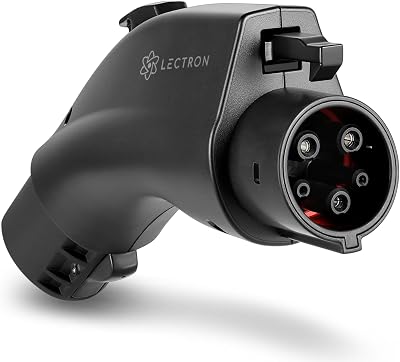
Lectron Vortex Plus NACS-to-CCS Adapter
The Gold Standard — UL 2252 Certified with Safety Interlock
* Amazon affiliate link — EV Charger Scout may earn a small commission at no extra cost to you.
ABB Terra 360 and Terra 600 Deployment
ABB's Terra 360 (360 kW, currently deployed at select US locations) and its Terra 600 platform (targeting 600 kW per outlet) are being evaluated for highway deployment through partnerships with several network operators. ABB's liquid-cooled cable technology — which enables the cable itself to dissipate heat during high-current sessions — is one of the enabling technologies for passenger-vehicle 600 kW charging.
Electrify America Gen 3 Hardware
Electrify America's third-generation hardware — being installed at new and retrofit locations in 2025–2026 — is rated for up to 350 kW per vehicle using current hardware. EA's engineering team has indicated that future variants of the Gen 3 platform will support 600 kW, but no specific deployment timeline has been announced. For now, EA's ceiling remains 350 kW at its highest-power sites.
Which Passenger EVs Can Actually Use High Power in 2025–2026
| Vehicle | Architecture | Peak Charge Rate | Time to 10–80% (100 kWh battery) |
|---|---|---|---|
| Porsche Taycan Turbo S | 800V | 320 kW | ~18 min |
| Hyundai Ioniq 5 N | 800V | ~250 kW | ~21 min |
| Hyundai Ioniq 6 (Long Range) | 800V | 240 kW | ~20 min |
| Kia EV6 GT | 800V | 240 kW | ~20 min |
| Mercedes EQS 450+ | 400V | 200 kW (peak) | ~31 min |
| Tesla Model S Plaid | 400V | 250 kW | ~26 min |
| Lucid Air Grand Touring | 900V+ | 300 kW | ~22 min (on 350kW station) |
| GMC Hummer EV | 400V | 350 kW | ~25 min (on 350kW station) |
| Chevrolet Silverado EV | 400V (Ultium) | 350 kW | ~25 min |
No current production passenger EV accepts 600 kW. The Lucid Air's 924V architecture gets closest — its onboard electronics accept up to 300 kW from current infrastructure, and Lucid has indicated future software updates could push this further as paired infrastructure matures. The gap between charger capability and vehicle capability will narrow as 2026–2028 model years arrive.
The Connector Question: NACS at 600 kW
SAE J3400 — the official NACS standard — is rated for up to 1,000V and 500A, which works out to roughly 500 kW peak per connector. That means reaching the 600 kW headline on passenger vehicles over NACS will require either a future revision of the J3400 standard or a different connector for ultra-high-power passenger use. Tesla's own 1.2 MW true-V4 stalls for the Semi, for example, use the separate MCS (SAE J3271) connector rather than NACS.
CCS2 (used in Europe, Korea, and some global markets) has a similar specification headroom — CCS2 is rated for 500A / 1,000V in its maximum configuration, enabling up to 500 kW. European manufacturers planning 600 kW charging systems (Porsche, BMW, Hyundai Genesis) have either designed around 500 kW CCS2 or are developing proprietary high-power stations for their own brands.
If you're buying a new EV in 2026 and highway road trips are part of your regular use case, prioritize 800V architecture. At 800V, a vehicle on a 350 kW station charges significantly faster than a 400V vehicle on the same hardware, and 800V vehicles will benefit first from 600 kW infrastructure as it deploys.
The Engineering Challenges Holding Back 600 kW for Passenger Cars
Battery Cell Chemistry
Charging fast generates heat inside the battery. Current lithium-ion chemistries — particularly NMC (nickel manganese cobalt) — can absorb very high charge rates without damage only within specific temperature ranges and state-of-charge windows. The 10–80% window used in fast charging benchmarks is specifically because charging above 80% and below 10% requires slower rates to protect the battery.
Next-generation silicon anode cells and solid-state battery technologies promise significantly better high-rate charge tolerance. Several manufacturers (Toyota, Samsung SDI, QuantumScape) are targeting commercial production of cells that support 6C+ charging rates — which, at typical EV battery capacities, would enable the energy throughput that 600 kW represents.
Thermal Management
At 600 kW, the cable from the station to the vehicle carries enormous current. Liquid-cooled cable technology — pioneered by ABB and used in Porsche's Turbo Charging platform — is essentially mandatory. The vehicle's internal cooling system must also be capable of managing the heat generated inside the battery during extreme-rate charging.
EV Tech Pick · EV Shop

VANMASS Military-Grade Car Phone Mount
Military-Grade Metal Clamp — Strongest Windshield Phone Mount
* Amazon affiliate link — EV Charger Scout may earn a small commission at no extra cost to you.
Preconditioning
All high-rate charging sessions require the battery to be at an optimal temperature — typically 25–35°C. Vehicles with thermal preconditioning (Tesla, Porsche Taycan, Hyundai Ioniq 5/6, Lucid Air, Rivian) heat or cool the battery to this range during navigation to the charger, maximizing the charge rate available upon arrival. Without preconditioning, even a 350 kW station may only deliver 100–150 kW to a cold battery.
If your route planner shows a high-power station ahead, always trigger navigation to that station through your EV's built-in navigation system — not a third-party app — so battery preconditioning activates. Arriving at a 350 kW station with a cold battery is a common cause of disappointing charge speeds.
International Ultra-Fast Charging: How the US Compares
The US is behind Europe in ultra-fast charging deployment at commercial scale. IONITY has operated 350 kW stations across 24 European countries since 2022 and is now testing 400 kW delivery at selected sites. Fastned in the Netherlands is deploying 400 kW hardware at high-volume locations. South Korean E-pit stations run 400 kW.
| Region | Current DCFC Peak | Planned 600 kW Timeline | Key Network |
|---|---|---|---|
| United States | 350 kW (EA, Ionna Gen 1) | 2026–2027 (V4 Tesla, Ionna Gen 2) | Tesla, Ionna |
| Europe | 400 kW (IONITY Turbo) | 2027 (Fastned, IONITY next-gen) | IONITY, Fastned |
| South Korea | 400 kW (E-pit) | 2027 (E-pit Gen 3) | Hyundai E-pit |
| China | 480+ kW (Huawei, CATL) | 600 kW in 2025–2026 (commercial scale) | State Grid, Huawei |
| UAE / Gulf | 350 kW (ENOC, ADNOC) | 2027 (planned) | ADNOC, DEWA |
China is actually furthest ahead on ultra-fast passenger car charging deployment. Huawei's 1,000 kW (1 MW) charger for passenger EVs — paired with CATL's Kirin 3.0 battery — is in commercial operation in China in 2026. The Huawei Mega Charge ecosystem delivers 600 kW to compatible Huawei-partnered vehicles in real-world sessions. This is unique to Chinese-market vehicles with Chinese-market infrastructure — it doesn't translate directly to US or European vehicles — but it demonstrates the technical ceiling is not as distant as it might seem.
What to Expect in the Next 18 Months
- 12026 Q2–Q3: Ionna and Tesla V4 expansion continues; the physical hardware for 600 kW is widely deployed even if current vehicles can't fully use it
- 22026 Q3–Q4: First production vehicles designed for 400–500 kW charge acceptance expected from Hyundai/Kia platform successors and BMW Neue Klasse
- 32027: 600 kW-capable passenger EVs expected from at least two manufacturers (Hyundai Genesis, Porsche/Audi group)
- 42027: NEVI-funded highway corridors require only 150 kW minimum, but market competition is pushing new deployments well above this floor
- 52028: 600 kW is projected to be widely accessible for premium segment vehicles; mainstream 400 kW becomes the standard new-deployment spec
How to Position Yourself for Ultra-Fast Charging Now
- →If buying new: choose an 800V architecture vehicle — it charges faster today at 350 kW stations and will benefit first from 600 kW upgrades
- →Use battery preconditioning on every fast charging stop — it's the single biggest factor determining real-world charge speed
- →Favor Ionna and V4 Supercharger locations for best current-generation charging experience
- →Plan charging stops on PlugShare or ABRP filtered for 200 kW+ capability to maximize session efficiency
- →Don't over-index on peak kW specs alone — a station at 350 kW that you can reliably reach and use is better than a 600 kW station 50 miles off-route
Frequently Asked Questions
Can any EV actually charge at 600 kW today?
No production passenger EV currently accepts 600 kW. The hardware capable of 600 kW and beyond is entering US highway deployment, but vehicles are still catching up. The Lucid Air's 924V architecture gets closest, accepting up to about 300 kW from current infrastructure, and the gap should narrow as 2026–2028 model years arrive.
What does 600 kW mean for charging time?
Power delivered equals voltage times current, so at 600 kW a 100 kWh battery could theoretically take a 10–80 percent charge in under 10 minutes. Reaching that requires very high voltage (900V+) or very high current at 800V, plus liquid-cooled cables, since air-cooled cables at 600A+ would overheat rapidly.
Which networks are deploying high-power chargers in the US?
Tesla's true V4 Supercharger cabinet is rated up to 500 kW per stall, Ionna deploys hardware up to 400 kW with backbone infrastructure ready for upgrades, ABB's Terra 600 platform targets 600 kW per outlet, and Electrify America's Gen 3 hardware currently tops out at 350 kW. Today most sites still deliver 350 kW or less to real vehicles.
Can the NACS connector handle 600 kW?
Not yet. The SAE J3400 (NACS) standard is rated for up to 1,000V and 500A, which works out to roughly 500 kW peak per connector. Reaching 600 kW on passenger vehicles over NACS will require a future revision of the standard or a different connector — Tesla's 1.2 MW Semi stalls already use the separate MCS connector instead.
How should I position myself for ultra-fast charging when buying an EV?
If road trips are part of your regular use, prioritize an 800V architecture vehicle — it charges significantly faster than a 400V car at the same 350 kW station and will benefit first from 600 kW infrastructure. Also use battery preconditioning on every fast-charging stop, since arriving with a cold battery is a common cause of disappointing charge speeds.
More guides on Industry News
Explore the full Industry News topic hub — related guides that build on this one.
NACS vs CCS in 2026: Which Connector Is Winning?
9 min read
Global EV Charging Hits 9 Million Points: What the Milestone Really Means for Drivers
15 min read
800V EVs in 2026: Which Networks Are Actually Ready for Fastest Charging?
16 min read
2026 Battery Tech and Charging Speeds: What Solid-State EVs Need From Chargers
15 min read
Bidirectional Charging Rewards: Earn Money at These New V2G-Enabled Spots
13 min read
Multi-Fuel Hubs: EV + Hydrogen Stations Arriving Together — Where to Find Them
14 min read
Fleet EV Charging Hubs: How Rivian, Ford, and GM Are Solving Commercial Charging in 2026
14 min read
Megawatt Charging for Electric Trucks: New US Stations Opening in California and Texas
13 min read
China's 2026 Megawatt Truck Charging Hubs: What North American Drivers Can Learn
12 min read
V2G Is Live in 2026 – Which Stations Let Your EV Sell Power Back to the Grid
11 min read
Wireless EV Charging Pilots 2026: First Public Spots in the US and Europe
11 min read