 EV Charger Scout
800-volt EV architecture has gone from a technical curiosity to a genuine selling point in the past three years, and in 2026 it is reshaping what's worth looking for in both vehicles and public charging networks. The cars with 800V systems charge at rates that would have seemed implausible in 2020 — 10–15 minutes for meaningful range recovery — but only when the charging infrastructure can keep pace. Understanding which vehicles actually have 800V architecture, which networks are genuinely prepared for them, and what the real-world experience looks like helps you make better decisions about both which car to buy and where to plan your stops.
Why 800V Architecture Changes Charging Speed
To understand why 800V matters, it helps to understand the basic physics. Charging power (in watts) equals voltage multiplied by current: P = V × I. A 400V system delivering 350 kW requires 875 amps of current. That demands very heavy, expensive cabling both inside the vehicle and in the charging cable — and generates significant heat.
An 800V system delivering the same 350 kW only needs 437.5 amps. Lower current means smaller cables, less heat generation, faster charging curves, and the ability to push toward higher power levels without the thermal constraints that limit 400V systems. The result is that 800V vehicles charge faster at a given station output level and can sustain their peak charge rate for longer.
Pushing to 350 kW on a 400V vehicle requires solving a thermal problem that most automakers haven't cracked. The Porsche Taycan and Audi e-tron GT have done it with 800V. Lucid Air does it with a 900V system. Mercedes is using a multi-stage 400V approach with a DC-DC boost converter to manage the gap. Each approach has tradeoffs; none of the current 400V solutions match 800V for peak speed or sustained rate.
Current 800V Production Vehicles (2024–2026)
| Vehicle | Architecture | Max DC Charge Rate | Connector (region) |
|---|---|---|---|
| Porsche Taycan (2025 refresh+) | 800V | 320 kW | CCS2 (EU/UK), CCS1 (NA). Pre-refresh (2020–2024) peaks at 270 kW |
| Audi e-tron GT / RS e-tron GT (2025+) | 800V | 320 kW | CCS2 (EU/UK), CCS1 (NA). Pre-refresh units peak ~270 kW |
| Hyundai Ioniq 5 (2022+) | 800V with HV boost | 230 kW | CCS2 (EU/KR/AU), CCS1 (NA) |
| Hyundai Ioniq 6 (2023+) | 800V with HV boost | 230–240 kW | CCS2 (EU/KR/AU), CCS1 (NA) |
| Hyundai Ioniq 5 N | 800V with HV boost | 240 kW | CCS2 (EU/KR), CCS1 (NA) |
| Kia EV6 GT (2023+) | 800V with HV boost | 240 kW | CCS2 (EU/AU), CCS1 (NA) |
| Kia EV9 GT-Line | 800V with HV boost | 240 kW | CCS2 (EU/AU), CCS1 (NA) |
| Genesis GV60 (Performance) | 800V with HV boost | 230 kW | CCS2 (EU), CCS1 (NA) |
| Lucid Air (all variants) | 900V | 300 kW+ | CCS1 (NA), CCS2 (EU/UK) |
| BMW iX3 (Neue Klasse, late 2026) | 800V (Gen6) | ~400 kW (advertised target) | CCS2 (EU/UK), NACS (NA). BMW's first true 800V vehicle — current i4/i5/i7/iX are still 400V |
| Tesla Cybertruck (AWD / Cyberbeast) | ~800V (split-pack) | ~325 kW on V3.5, higher on true V4 | NACS (NA only) |
| Zeekr 001 / Zeekr 009 (2024+) | 800V | 300 kW | CCS2 (EU), GB/T (CN) |
| Xpeng G9 (2022–2024, 3C pack) | 800V | ~315 kW | CCS2 (EU), GB/T (CN) |
| Xpeng G9 (2025+ 5C refresh) | 800V | ~445 kW | CCS2 (EU), GB/T (CN) |
Hyundai and Kia's E-GMP platform is natively 800V. At 400V stations, the vehicle's motor inverter doubles as a boost converter, stepping up the incoming voltage so the 800V battery still charges — typically at 150–200 kW rather than the 230+ kW you'd see on a genuine 800V cabinet. The Ioniq 5 N and upcoming Ioniq 9 add a separate "e-boost" mode that raises the effective pack voltage closer to 870V for peak performance and slightly higher peak charge rates. Tesla's Model S/X Plaid, by contrast, run on an enhanced ~450V pack — higher than older S/X, but still not 800V-class.
North America: Which Networks Can Deliver 350 kW+
In North America, the networks that have deployed hardware capable of delivering 350 kW to CCS1 or NACS vehicles are:
Electrify America
Electrify America has the highest proportion of 350 kW-capable stalls of any independent network in North America. Their Generation 2 stations (deployed from 2021 onward) use Tritium RT175 and BTC Power 350 kW hardware. Most EA hub locations — particularly those at Walmart and shopping centres — now have a mix of 150 kW and 350 kW stalls. As of early 2026, EA operates over 1,080 stations with roughly 5,600 individual DC fast chargers across the US and Canada, a significant proportion of them at 350 kW.
For 800V vehicles charging at EA's 350 kW stalls, real-world peak rates are typically 280–320 kW for a Porsche Taycan or Audi e-tron GT, and 200–230 kW for Hyundai and Kia 800V vehicles (limited by the vehicle, not the station). This is meaningfully faster than the same session at a 150 kW EA station, which caps the Taycan at around 145–150 kW.
Home Charging Upgrade · EV Shop

ChargePoint Home Flex
Best J1772 — Up to 50A, Energy Star Certified, Any Non-Tesla EV
* Amazon affiliate link — EV Charger Scout may earn a small commission at no extra cost to you.
Tesla Supercharger V3, V3.5, and V4
Tesla V3 Superchargers operate at up to 250 kW per stall. Most "V4" sites currently deployed in North America are actually V4 posts backed by V3 cabinets (sometimes called V3.5) — these cap at 250 kW by default, or up to 325 kW at boosted installations rolled out from January 2025. Tesla's true V4 cabinet, with new power electronics capable of up to 500 kW per stall, began rolling out in September 2025 and is still a minority of sites in early 2026.
For non-Tesla 800V vehicles using Superchargers via NACS hardware or adapters, the practical peak on a typical "V4" site today is 250 kW — close to or above the peak many 800V vehicles can accept anyway. A Porsche Taycan with a CCS-to-NACS adapter at a true V4 cabinet can receive close to its 320 kW maximum. For the Cybertruck (currently the only Tesla that can exceed 250 kW), the true V4 cabinet unlocks up to 500 kW.
Blink Network (High Power)
Blink's standard network tops out at 80 kW for most DC fast chargers. However, Blink's newer High Power installations at select highway corridor locations reach 180–350 kW. These are less common than EA or Supercharger locations but are growing in footprint.
EVgo FastCharge
EVgo's standard fast chargers operate at 100–350 kW depending on location. Their FastCharge locations and newer urban supersite installations support 350 kW. EVgo's network is predominantly urban and suburban, making it less relevant for highway corridor charging but important for city-based 800V charging scenarios.
Europe: Where 800V Vehicles Charge Best
Europe's CCS2-based DCFC network includes several operators whose hardware is genuinely matched to 800V vehicle capabilities.
IONITY
IONITY remains the premier European highway ultra-rapid network for 800V vehicles. Their hardware (ABB Terra HP and Alpitronic Hypercharger 400 units) delivers up to 400 kW per point and is deployed at over 700 stations with more than 4,800 charging points across 24 countries. For a Porsche Taycan or Kia EV6 GT using IONITY, peak charging rates are as good as anything available in Europe. The combination of IONITY's route coverage and 400 kW hardware makes it the de facto home network for high-power 800V vehicles on European road trips.
Fastned
Fastned operates along motorways in the Netherlands, Germany, Belgium, and the UK. Their stations use ABB and Alpitronic hardware, with per-stall capacity at most newer sites of 300–350 kW. Fastned's locations are typically motorway rest stop sites, and their hardware is consistently rated among the most reliable in the industry by Zap-Map and similar tracking services.
Allego
Allego operates a network of ultra-rapid charging hubs across the EU and UK, with many locations at 175–350 kW. Their GigaHub concept — purpose-built high-power hubs with 10+ stalls — is particularly relevant for 800V vehicle owners making intercity journeys. GigaHub sites exist in Amsterdam, Brussels, Lyon, and other major European cities.
EnBW Hyper Network (Germany)
EnBW operates Germany's most extensive domestic rapid charging network (separate from IONITY), with a growing proportion of sites at 150–300 kW. Their Autobahn installations are particularly dense along the A6, A8, and A3 corridors. For Germany-based 800V vehicle owners, EnBW's app and network are worth integrating into route planning.
Tesla Supercharger V4 (Europe)
Tesla has been deploying V4 Superchargers in Europe since 2023, and V4 is now the standard new installation for European Supercharger expansion. CCS2-native 800V vehicles — Hyundai Ioniq 5/6, Kia EV6, Porsche Taycan — can use European Superchargers via the Plug and Charge or RFID payment systems, with CCS2 as the connector. Tesla charges per kWh and opens billing through the Tesla app for non-Tesla vehicle owners.
DC Fast Charging Upgrade · EV Shop
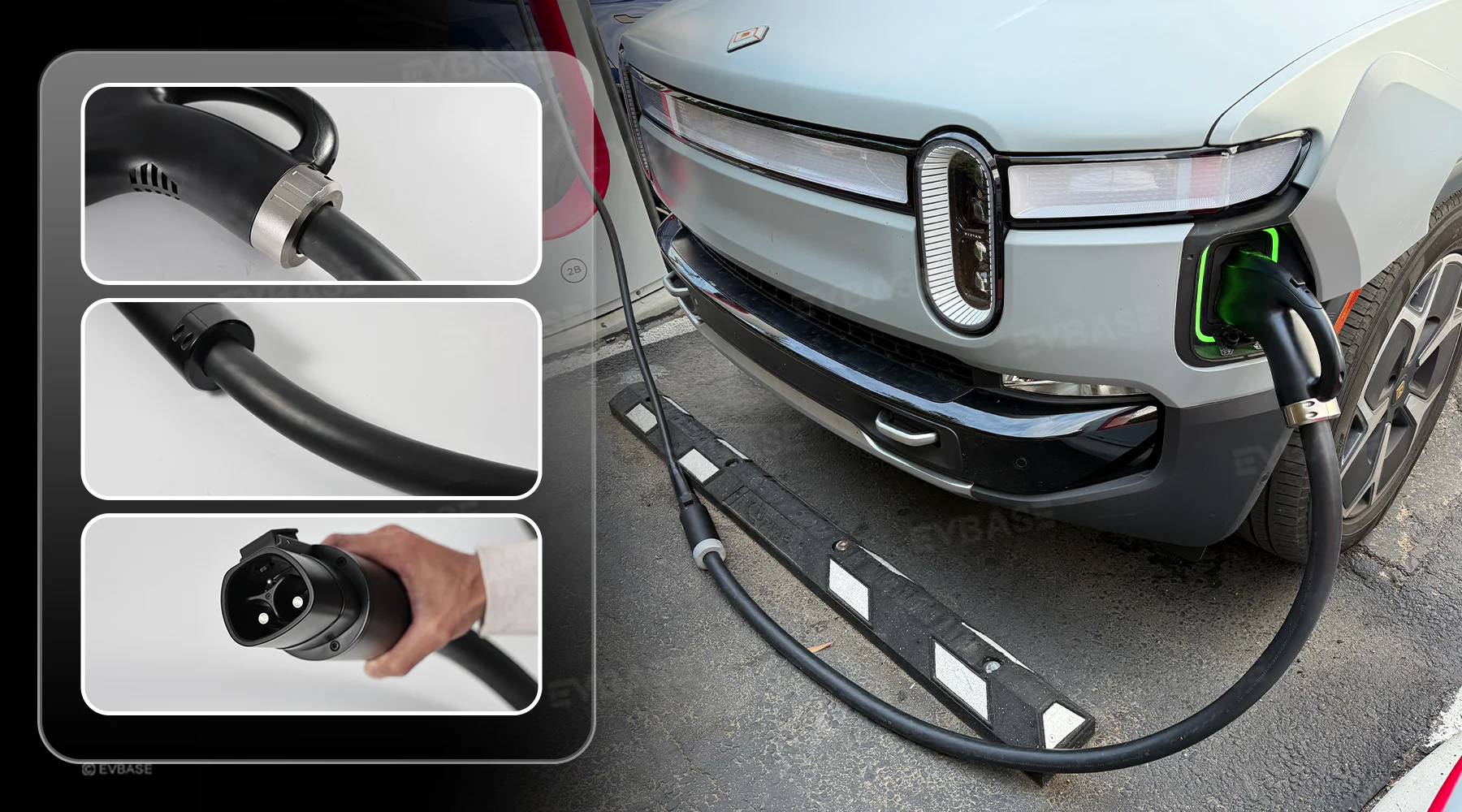
EVBASE NACS to CCS1 Adapter with Extension Cable
Max 350A/1000V with Extension Cable — Charge CCS1 EVs at Tesla Superchargers
* EVBASE affiliate link (via AWIN) — EV Charger Scout may earn a small commission at no extra cost to you.
Asia-Pacific: 800V Infrastructure Landscape
The 800V charging landscape in Asia-Pacific varies dramatically by market.
| Market | 800V-Compatible Network | Max Deployed Power | Notes |
|---|---|---|---|
| South Korea | E-pit (Hyundai/Kia network), SK Rent-a-car, KEPCO EV | 350 kW | E-pit: dedicated 350 kW network for Ioniq/EV6 owners |
| Japan | e-Mobility Power, CHAdeMO 2.0 (rare) | 150 kW (CHAdeMO 2.0) | Japan's CHAdeMO standard lags on 800V capability |
| China | CATL Supercharge, NIO Power, State Grid EVCS | 480 kW (CATL Supercharge pilot) | GB/T 800V capable; CATL's pilot network is fastest globally |
| Australia | Evie Networks, Chargefox (ultra-rapid) | 350 kW (Evie ultra-rapid) | CCS2, growing 350 kW rollout along highways |
| New Zealand | ChargeNet NZ | 150 kW (current max) | 300 kW planned 2026–2027 |
Hyundai's E-pit network in South Korea deserves special mention. Deployed specifically for Ioniq 5, Ioniq 6, Ioniq 5 N, and Kia EV6/EV9 owners, E-pit stations deliver 350 kW at CCS2 connections in Korea. As of 2026, E-pit has over 300 stalls across South Korea — not a large network, but a highly optimised one for exactly the 800V vehicle types that dominate the Korean EV market. The E-pit experience is regarded as one of the smoothest high-power charging interactions available anywhere.
Japan's legacy CHAdeMO infrastructure is largely a dead end for 800V charging. CHAdeMO 2.0 (capable of 400 kW theoretically) has seen almost no deployment in practice. If you're driving an 800V vehicle in Japan, you're likely limited to lower-power CCS2 charging at newer installations. Plan accordingly.
What to Expect: Real-World 800V Charging Session
An 800V vehicle at a 350 kW station behaves differently from a 400V vehicle at the same station. Here's what a realistic session looks like for a Hyundai Ioniq 6 (77 kWh battery, 800V architecture with boost):
- →Preconditioning (optional but valuable) — Navigate to the charging station in the car's navigation system before arrival. The thermal management system warms the battery to optimal charging temperature. At 800V rates, arriving with a cold battery causes the charge rate to ramp up more slowly and peak lower. 10–15 minutes of preconditioning can add 30–50 kW to your peak rate in cold conditions.
- →Plug-in and handshake — CCS2 and NACS charging sessions initiate a brief digital handshake (ISO 15118 communication) where the vehicle and charger agree on maximum voltage, current, and power. This takes 20–45 seconds.
- →Peak rate (15%–50% SoC) — The Ioniq 6 will typically draw 220–235 kW for most of the session between 15% and 50% state of charge. This is the fastest part of the charge.
- →Taper begins (50%–80%) — The charge rate begins stepping down around 50%–55% SoC as thermal management applies constraints. By 80%, you're typically at 100–130 kW on a 350 kW station.
- →80% milestone — 10%→80% in an Ioniq 6 at a 350 kW IONITY or EA station takes approximately 17–22 minutes in warm conditions. Cold weather (below 5°C) extends this to 25–30 minutes without preconditioning.
Choosing a Charging Network for 800V Vehicles: Key Factors
| Factor | Why It Matters for 800V |
|---|---|
| Hardware max output (kW per stall) | 350 kW hardware delivers full potential; 150 kW hardware caps an 800V Taycan below half its capability |
| Power sharing architecture | Some stations share power between adjacent stalls — verify whether peak output applies per-stall or per-cabinet |
| Idle fees | At 800V speeds, 10–20 minute sessions are normal. Networks with short idle grace periods may charge you before you've moved |
| OCPP reliability | Premium hardware with unreliable back-end software is still a failed session. Networks with high uptime scores matter more the higher your vehicle's expectations |
| Contactless payment / Plug and Charge | At 300+ kW speeds, fumbling with apps costs you measurable charge time. Plug and Charge or pre-authenticated sessions are genuinely more convenient |
Use EV Charger Scout's power filter to search for stations with 150 kW minimum output in your area. Filter further by connector type to see which 350 kW stations are accessible to your vehicle. Cross-reference with network uptime data before committing to a route plan.
Is 800V Worth It? The Honest Assessment
For drivers who predominantly home charge and only use public DCFC occasionally, the 800V advantage is noticeable but rarely decisive. Saving 5–8 minutes at an occasional road trip charging stop is a quality-of-life improvement, not a necessity.
For drivers who regularly make long-distance journeys, live in apartments without home charging, or drive high annual mileage, 800V is a meaningful differentiator. Cutting the 20%→80% time from 35–40 minutes (typical at 150 kW) to 18–22 minutes (typical at 350 kW) is the difference between a comfortable break and a session that stretches your patience.
The infrastructure is increasingly ready. IONITY, Electrify America, EA/Hyundai E-pit in Korea, CATL's pilot network in China, and growing V4 Supercharger deployment in North America and Europe mean that the high-power network capable of serving 800V vehicles is no longer a promise — it's a functioning reality on major travel corridors in most high-adoption markets.
800V charging is the closest thing to genuinely transformative in the EV charging space right now. Not because 400V vehicles are inadequate — they're not — but because 800V systems remove the charging stop as a defining constraint of long-distance travel. A 20-minute stop at 350 kW is structurally the same as a fuel stop, minus the pump, the smell, and the price volatility. The vehicles are here. The infrastructure is getting there.
Frequently Asked Questions
Why do 800V EVs charge faster than 400V EVs?
Charging power equals voltage times current, so an 800V system needs only about half the current to deliver the same power. A 400V system delivering 350 kW requires roughly 875 amps, while an 800V system needs only about 437.5 amps. Lower current means less heat, faster charging curves, and the ability to sustain peak charge rates for longer at a given station output.
Which 2026 vehicles actually use 800V architecture?
Current 800V vehicles include the Porsche Taycan and Audi e-tron GT (up to 320 kW), Hyundai Ioniq 5/6 and Ioniq 5 N, Kia EV6 GT and EV9, Genesis GV60, and the Lucid Air on a 900V system. The BMW iX3 Neue Klasse becomes BMW's first true 800V vehicle in late 2026, while several Chinese models like the Zeekr 001 and Xpeng G9 also run 800V.
Which networks can deliver 350 kW or more in North America?
Electrify America has the highest proportion of 350 kW-capable stalls of any independent North American network. Tesla's Superchargers reach 250 kW on most V4 sites and up to 500 kW on true V4 cabinets, while Blink High Power and EVgo offer select 350 kW locations. In Europe, IONITY, Fastned, Allego, and EnBW serve 800V vehicles well.
Does an 800V car charge at full speed on a 400V station?
Not at full speed. Hyundai and Kia's E-GMP platform uses the motor inverter as a boost converter to charge the 800V battery at a 400V station, typically at 150–200 kW rather than the 230+ kW seen on a true 800V cabinet. To get the full benefit of 800V you need hardware rated at 350 kW or higher.
Is buying an 800V EV worth it?
It depends on how you drive. For drivers who mostly home-charge and rarely use public DC fast charging, the advantage is noticeable but not decisive. For frequent long-distance drivers or those without home charging, cutting a 20–80 percent stop from 35–40 minutes at 150 kW to 18–22 minutes at 350 kW is a meaningful differentiator.
More guides on Industry News
Explore the full Industry News topic hub — related guides that build on this one.
NACS vs CCS in 2026: Which Connector Is Winning?
9 min read
Global EV Charging Hits 9 Million Points: What the Milestone Really Means for Drivers
15 min read
2026 Battery Tech and Charging Speeds: What Solid-State EVs Need From Chargers
15 min read
Bidirectional Charging Rewards: Earn Money at These New V2G-Enabled Spots
13 min read
Multi-Fuel Hubs: EV + Hydrogen Stations Arriving Together — Where to Find Them
14 min read
600 kW Ultra-Fast Chargers on US Highways: What They Are and Who Can Use Them
12 min read
Fleet EV Charging Hubs: How Rivian, Ford, and GM Are Solving Commercial Charging in 2026
14 min read
Megawatt Charging for Electric Trucks: New US Stations Opening in California and Texas
13 min read
China's 2026 Megawatt Truck Charging Hubs: What North American Drivers Can Learn
12 min read
V2G Is Live in 2026 – Which Stations Let Your EV Sell Power Back to the Grid
11 min read
Wireless EV Charging Pilots 2026: First Public Spots in the US and Europe
11 min read