 EV Charger Scout
When people talk about EV charging, they're usually thinking about passenger cars. But the most technically demanding — and arguably most consequential — electrification challenge is freight: the Class 7 and Class 8 semi-trucks that move the vast majority of goods across North America. Charging a vehicle with a 600–1,000 kWh battery in a timeframe that actually makes commercial freight viable requires power delivery at a level that passenger car charging infrastructure simply can't provide. That's where megawatt charging comes in — and in 2026, the first real deployments are open in California and Texas.
What Megawatt Charging Is
Megawatt charging refers to DC fast charging capable of delivering 1,000 kW (1 MW) or more per session. The standard underpinning this is MCS — the Megawatt Charging System — developed by CharIN, the industry consortium also responsible for CCS and NACS/J3400. MCS is standardized under SAE J3271 (published March 2025), with corresponding IEC work under IEC 61851-23-3 (infrastructure) and IEC TS 63379 (connector hardware). Together these define a new connector, cable, and communication protocol specifically designed for commercial vehicles.
The MCS connector is physically large — it handles currents up to 3,000 amps at voltages up to 1,250V, which requires liquid-cooled cables. A typical MCS session at full 1 MW output can add 400 miles of range to a Class 8 truck in around 30 minutes. At 1.2 MW — a realistic sustained output for current early deployments — that's roughly 300 miles of range per charging stop, which aligns with the typical mandatory 30-minute rest break in commercial trucking Hours of Service regulations.
The alignment between MCS charging speed and mandated rest breaks is intentional. Charging advocates and the SAE MCS working group specifically designed the target performance window around commercial driver rest requirements: a truck that needs 30 minutes of rest and 30 minutes of charge time fits the same stop. This "charge while you rest" model is the key to making electrified long-haul viable without extending trip times.
The MCS Connector vs. CCS and NACS
MCS is a separate connector standard from CCS or NACS. It is not an adapter-compatible upgrade — the physics of 3,000A at 1,250V require a fundamentally different mechanical interface. MCS connectors are vehicle-inlet mounted (with active locking), liquid-cooled cables, and an automated coupler to reduce strain on drivers who would otherwise lift a very heavy cable repeatedly throughout a shift.
Electric heavy trucks will typically carry both MCS and CCS2 (or NACS in the North American market) — MCS for depot and highway charging hubs, CCS/NACS for opportunistic charging at commercial locations that deploy passenger car-scale infrastructure. The two systems coexist; neither replaces the other.
California: The Early Deployment Leader
California has the largest Class 8 electric truck fleet in the United States by a significant margin, driven by the California Air Resources Board's (CARB) Advanced Clean Trucks regulation and the Port of Los Angeles and Long Beach electrification mandates. By early 2026, the following MCS and high-power commercial EV charging sites are operational or near completion in California:
Home Charging Upgrade · EV Shop

Emporia Universal Dual EV Charger
Best Value Universal — UL + ETL Certified, NACS & J1772 Dual Connector
* Amazon affiliate link — EV Charger Scout may earn a small commission at no extra cost to you.
Trucking Corridors: I-5 and CA-99
The I-5 corridor from San Diego through Los Angeles and up to Sacramento — and the parallel CA-99 serving the Central Valley — carry the highest concentration of commercial freight movement in California. CALSTART, the California Energy Commission, and private operators including Voltera and WattEV have deployed charging hubs specifically sized for electric Class 8 operations along these corridors. Sites near Coalinga, Stockton, and Lebec on I-5 include dedicated truck charging infrastructure with power delivery in the 360–800 kW range per stall (current deployments; MCS upgrades planned for 2026–2027).
Los Angeles Basin Port-Adjacent Hubs
The ports of Los Angeles and Long Beach generate enormous drayage truck activity — short-haul trips moving containers between port terminals and distribution centers. Drayage is an ideal use case for electric trucks because routes are predictable and trucks return to depots regularly for opportunity charging. Several large-scale depot chargers have been installed in Carson, Compton, and Wilmington in 2024–2025, with power levels exceeding 400 kW per charger and plans for MCS connectors in 2026.
PG&E and SCE have both filed infrastructure development plans with CPUC specifically for commercial EV charging at goods movement corridors, which will underpin expanded deployment through 2027.
| Site / Area | Power Level | Operator | Status |
|---|---|---|---|
| Stockton (I-5 hub) | Up to 600 kW CCS | Voltera / WattEV | Operational 2025 |
| Coalinga (I-5 mid-state) | 400 kW CCS, MCS planned | Pilot program | Operational 2025 |
| Los Angeles Port drayage depots | Up to 360 kW CCS | Various | Operational 2025 |
| Sacramento (CA-99 terminal) | 400 kW CCS | WattEV | Operational 2026 |
| Lebec (Tejon Ranch I-5) | MCS + CCS mixed | Private | Opening 2026 |
Texas: Building the Freight Highway
Texas has a different EV charging dynamic from California. The state doesn't have California's mandate structure, but its sheer size — and the volume of freight moving along I-35 (Dallas–San Antonio–Laredo), I-10 (El Paso–Houston–Beaumont), and I-45 (Houston–Dallas) — creates a massive commercial need. Several large logistics operators and energy companies have announced or begun deployment of commercial EV charging hubs in Texas in 2025–2026.
Dallas–Fort Worth Distribution Hub
The DFW metroplex is one of the largest distribution and logistics hubs in the US. Amazon, FedEx, UPS, and multiple third-party logistics operators have electric truck fleets operating in the area. Oncor, the local transmission and distribution utility, has been working with fleet operators on large-scale depot charging installations. Several sites in the Grand Prairie, Arlington, and Garland industrial corridors have 480V three-phase service installations capable of hosting future MCS equipment.
Houston Energy Corridor
Houston's industrial and port environment is increasingly a target for electric truck deployments. The Port of Houston operates one of the most active container terminals in the Gulf Coast, and drayage electrification interest is growing. CenterPoint Energy has a formalized EV infrastructure rate structure that makes utility interconnection for large charging installations more predictable for commercial operators.
As of early 2026, there are no publicly announced MCS-specific deployments in Texas, but several CCS-based high-power (350–500 kW) commercial truck charging sites are under construction or in final permitting along I-35 and near the Houston Ship Channel.
If you're operating or managing an electric truck fleet and looking for real-time station data, EV Charger Scout shows available DC fast charging stations from NREL's Alternative Fuels Station Locator, which includes commercial-vehicle-capable sites. Filter by Level 3 / DC Fast Charge and search along your corridor for the best current infrastructure picture.
The International Context: How the US Compares
China is operating megawatt-scale truck charging at commercial scale and has been since 2023. CATL's EV highway charging network and CRRC's deployed MCS-equivalent systems along Chinese national expressways are measured in thousands of stations — compared to dozens in the US. China's advantage comes from a combination of centralized infrastructure planning, state-owned enterprise coordination, and a much larger domestic heavy EV truck market (BYD, XCMG, SANY, and others move more electric trucks than the rest of the world combined).
Europe's MCS rollout is being driven by AFIR-adjacent requirements and the Green Deal's freight electrification targets. TRATON Group (Scania, MAN, Volkswagen Truck), Daimler Truck, and Volvo AB have all committed to MCS as the European highway charging standard. The MILENCE network — a joint venture between TRATON, Daimler, and Volvo — is deploying high-power commercial truck chargers along TEN-T corridors with MCS support in its 2025–2026 hardware specification.
EV Interior Essentials · EV Shop
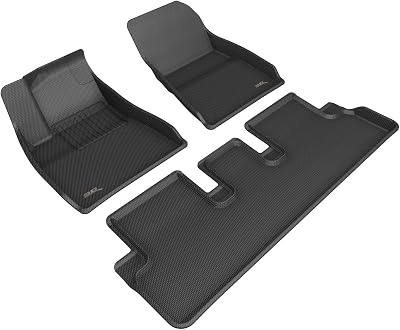
Premium All-Weather Floor Mats
Laser-Measured for Maximum Coverage — Custom-Fit for Your Vehicle
* Amazon affiliate link — EV Charger Scout may earn a small commission at no extra cost to you.
Current Challenges for US MCS Deployment
Grid Capacity and Utility Coordination
A single MCS charger at 1 MW output requires a utility connection roughly equivalent to a small shopping center. A truck stop deploying 10–20 MCS chargers simultaneously is asking for 10–20 MW of peak power capacity. In states with older distribution infrastructure, this triggers expensive grid upgrades — transformer replacements, line extensions — that can add years and millions of dollars to a site's development timeline. California has addressed this partly through CPUC programs that prioritize utility queue improvements for commercial EV charging. In Texas, ERCOT's deregulated market structure means there's no equivalent coordinated incentive.
Vehicle Availability
MCS charging requires an MCS-equipped vehicle. As of early 2026, MCS-native heavy trucks are in limited production. Tesla Semi, which uses a proprietary high-power inlet (not MCS), is in volume production. Freightliner eCascadia, Peterbilt 579EV, and Kenworth T680E use CCS connectors at current production volumes. MCS-capable versions of these trucks are announced for 2026–2027. Volvo VNR Electric and PACCAR's models are on similar timelines for MCS capability.
The Standardization Gap
NACS (J3400) has been adopted for passenger vehicles by most major North American automakers, but heavy truck OEMs haven't committed to NACS for commercial applications — MCS is the intended heavy truck standard. This means the North American heavy trucking sector will have its own connector ecosystem (MCS) separate from passenger vehicles (NACS), which is different from Europe where CCS2 spans both segments at different power levels with MCS as an extension.
What This Means for Passenger EV Drivers in 2026
For most readers of this article — passenger EV owners — megawatt charging is background context rather than something you'll encounter directly. But there's an indirect effect worth understanding: the same heavy infrastructure buildout for commercial truck charging is accelerating grid upgrades and utility program development in freight corridors. This makes sites near major logistics hubs and highways better candidates for passenger car fast charging expansion as well.
More concretely, some next-generation passenger EVs are pushing toward 350–500 kW charge rates, requiring cable and station hardware upgrades that overlap with commercial vehicle charging infrastructure requirements. The Lucid Air, Porsche Taycan, and future 800V platform vehicles from multiple brands are pushing toward 350+ kW — which requires the same liquid-cooled cable technology being deployed for commercial applications.
The trucking electrification buildout matters for everyone driving electric. Follow it.
Frequently Asked Questions
What is megawatt charging (MCS)?
Megawatt charging refers to DC fast charging that delivers 1,000 kW (1 MW) or more per session. It's standardized under the Megawatt Charging System (MCS), developed by CharIN and published as SAE J3271 in March 2025. MCS defines a new connector, liquid-cooled cable, and communication protocol designed specifically for commercial vehicles, handling up to 3,000 amps at voltages up to 1,250V.
How fast can megawatt charging refill a semi-truck?
A full 1 MW MCS session can add about 400 miles of range to a Class 8 truck in around 30 minutes. At a more realistic sustained 1.2 MW for early deployments, that's roughly 300 miles per stop — deliberately aligned with the mandatory 30-minute rest break in commercial trucking Hours of Service regulations, enabling a 'charge while you rest' model.
Is MCS compatible with CCS or NACS connectors?
No. MCS is a separate connector standard and is not an adapter-compatible upgrade — the physics of 3,000A at 1,250V require a fundamentally different mechanical interface. Electric heavy trucks typically carry both MCS and CCS2 (or NACS in North America), using MCS for depot and highway hubs and CCS/NACS for opportunistic charging.
Where are megawatt charging sites deployed in the US?
California leads, driven by CARB's Advanced Clean Trucks regulation and port electrification mandates, with hubs along the I-5 and CA-99 corridors and port-adjacent depots in the LA basin. Texas is building out commercial charging along I-35, I-10, and I-45, though as of early 2026 there are no publicly announced MCS-specific deployments there yet — only CCS-based high-power sites.
Why does megawatt truck charging matter for passenger EV drivers?
Even though you won't use MCS directly, the heavy infrastructure buildout for trucks accelerates grid upgrades and utility programs in freight corridors, making nearby sites better candidates for passenger fast charging expansion. The liquid-cooled cable technology being deployed for trucks also overlaps with the hardware that next-generation 350–500 kW passenger EVs require.
More guides on Industry News
Explore the full Industry News topic hub — related guides that build on this one.
NACS vs CCS in 2026: Which Connector Is Winning?
9 min read
Global EV Charging Hits 9 Million Points: What the Milestone Really Means for Drivers
15 min read
800V EVs in 2026: Which Networks Are Actually Ready for Fastest Charging?
16 min read
2026 Battery Tech and Charging Speeds: What Solid-State EVs Need From Chargers
15 min read
Bidirectional Charging Rewards: Earn Money at These New V2G-Enabled Spots
13 min read
Multi-Fuel Hubs: EV + Hydrogen Stations Arriving Together — Where to Find Them
14 min read
600 kW Ultra-Fast Chargers on US Highways: What They Are and Who Can Use Them
12 min read
Fleet EV Charging Hubs: How Rivian, Ford, and GM Are Solving Commercial Charging in 2026
14 min read
China's 2026 Megawatt Truck Charging Hubs: What North American Drivers Can Learn
12 min read
V2G Is Live in 2026 – Which Stations Let Your EV Sell Power Back to the Grid
11 min read
Wireless EV Charging Pilots 2026: First Public Spots in the US and Europe
11 min read