 EV Charger Scout
A DC fast charging adapter handles currents measured in hundreds of amps. A V3 Tesla Supercharger delivers up to 625A at 400V. A V4 pushes toward 825A at 400V or higher. At those figures, the difference between a well-engineered adapter and a cheap one isn't just performance — it's safety. The adapter is the weakest link in the charging chain, and unlike the charger or the car, it's entirely your choice.
This guide reviews the top NACS-to-CCS1 adapters on the market in early 2026 — the direction most North American CCS1 vehicle owners need — covering the specs that matter, real-world performance, and what to avoid.
What Specs Actually Matter in a NACS Adapter
Before getting into specific products, let's establish what's worth comparing and what's marketing noise.
- →Current rating (amps) — The most important spec. DC fast charging at Supercharger V3 peaks at 625A; V4 is higher. Your adapter must be rated for at least your vehicle's peak acceptance current with significant headroom. An adapter rated to 500A will thermally throttle or fail on sustained high-power sessions. Look for 600A or higher ratings from reputable manufacturers.
- →Voltage rating — 1,000V DC is the standard rating for DCFC-capable adapters. This matches the upper end of current charging systems and provides headroom. Don't buy anything rated below 1,000V DC for fast charging use.
- →Thermal management — High-current connections generate heat. Quality adapters use precision-machined contact pins with high-conductivity copper alloys, and the housing material manages heat dissipation. Cheap adapters use lower-conductivity metals and thin housing that can reach dangerous temperatures during sustained high-power sessions.
- →Locking mechanism — The adapter must lock securely to both the vehicle port and the charger cable. A loose connection causes arc damage to the pins over time and can result in session failures. Adapters with positive mechanical latching on both ends are significantly better than friction-fit only.
- →Certification — UL 2594 and UL 2231 are relevant US safety standards for EV charging equipment. UL certification means independent testing lab verification, not just manufacturer self-certification. In Europe, look for CE marking with supporting documentation. These certifications are not guarantees, but their absence is a red flag.
- →Compatibility list — A reputable manufacturer publishes explicit compatibility by vehicle make, model, and model year. "Works with CCS1 vehicles" is not sufficient. Check that your specific vehicle is listed.
Adapter Reviews: CCS1-to-NACS (for Supercharger Access)
These adapters connect a CCS1 vehicle to a NACS Supercharger cable. The NACS end plugs into the charger cable, and the CCS1 end plugs into your vehicle's port.
Tesla Official NACS Adapter
Tesla's own adapter for non-Tesla CCS1 vehicles is the benchmark. It's engineered to communicate correctly with Tesla's own charging equipment (which has implications for session initialization and billing accuracy), is rated for full V3 and V4 Supercharger use, and is sold through Tesla's website and in Tesla stores. Pricing has settled around $50–$60 USD.
| Spec | Tesla NACS Adapter |
|---|---|
| Current rating | 500A sustained (full V3 compatible) |
| Voltage rating | 1,000V DC |
| Locking mechanism | Positive latch on NACS end, CCS1 engagement latch |
| Thermal management | Machined aluminum body, passive cooling |
| Certification | UL listed |
| Vehicle compatibility | Broad CCS1 vehicle support — check tesla.com for confirmed list |
| Price (approx.) | $50–$60 USD |
- →Pros: Best Supercharger compatibility, proper billing communication, Tesla warranty support, widely available
- →Cons: Only works NACS-to-CCS1 direction (for Superchargers) — not for NACS vehicle at CCS1 station
DC Fast Charging Upgrade · EV Shop
Lectron Vortex Plus NACS-to-CCS Adapter
The Gold Standard — UL 2252 Certified with Safety Interlock
* Amazon affiliate link — EV Charger Scout may earn a small commission at no extra cost to you.
Lectron Vortex Plus
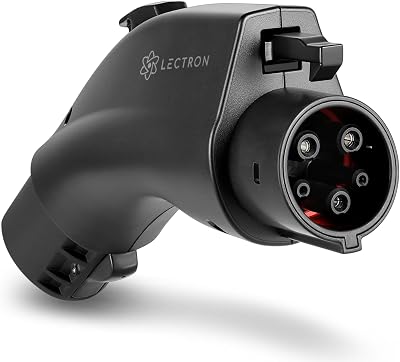
Lectron has established itself as one of the more reputable third-party EV accessory manufacturers. The Vortex Plus is their flagship NACS adapter, updated from the original Vortex with improved thermal management and a positive locking mechanism on both ends. It's rated to 500A / 1,000V and ships with explicit vehicle compatibility documentation. Lectron backs it with a two-year warranty, which is above the industry average for third-party adapters.
| Spec | Lectron Vortex Plus |
|---|---|
| Current rating | 500A |
| Voltage rating | 1,000V DC |
| Locking mechanism | Dual positive latch |
| Thermal management | Improved housing, temperature indicator |
| Certification | UL 2594 listed |
| Vehicle compatibility | Published list — verify before purchase |
| Price (approx.) | $70–$90 USD |
- →Pros: Strong safety record, positive locking, two-year warranty, UL listed, good heat management
- →Cons: Slightly more expensive than the Tesla adapter; third-party compatibility occasionally requires firmware updates
A2Z Typhoon
The A2Z Typhoon is notable for its compact form factor — it's one of the smallest CCS1-to-NACS adapters available, making it less intrusive in the port and slightly easier to handle. Build quality is good, and A2Z publishes detailed compatibility testing notes. It's rated to 500A / 1,000V with a positive locking mechanism and is a solid choice for drivers who prioritize compact design without sacrificing safety.
| Spec | A2Z Typhoon |
|---|---|
| Current rating | 500A |
| Voltage rating | 1,000V DC |
| Locking mechanism | Positive latch |
| Form factor | Most compact in class |
| Certification | UL certified |
| Price (approx.) | $60–$80 USD |
- →Pros: Most compact design, good build quality, UL certified, competitive pricing
- →Cons: Smaller form factor means slightly less surface area for heat dissipation on sustained high-power sessions
INFGO NACS Adapter
INFGO has entered the adapter market with a product that emphasizes thermal management more explicitly than competitors, including a visible temperature indicator and housing designed for heat dissipation during sustained charging. For drivers regularly using 250kW+ stations in hot climates, this emphasis on thermal performance is worth the slight premium.
| Spec | INFGO NACS Adapter |
|---|---|
| Current rating | 500A |
| Voltage rating | 1,000V DC |
| Thermal management | Enhanced — visible temp indicator |
| Locking mechanism | Positive dual latch |
| Certification | UL listed |
| Price (approx.) | $80–$100 USD |
- →Pros: Best thermal management in class, temperature visibility, solid build quality
- →Cons: More expensive; larger form factor than A2Z
EV Interior Essentials · EV Shop

BLACK+DECKER Lithium Handheld Vacuum
Trusted Brand Cordless Vacuum — Lithium, with Brush Attachment
* Amazon affiliate link — EV Charger Scout may earn a small commission at no extra cost to you.
Manufacturer-Issued Adapters (Rivian, Ford)
If your vehicle is a Rivian R1T/R1S or a Ford Mach-E/Lightning and your manufacturer ran an adapter program, the manufacturer-issued adapter is the best choice. These were developed specifically for the vehicles' charging systems and communication protocols, rated for the vehicle's peak DC acceptance rate, and covered by the manufacturer's warranty. Check your owner portal before purchasing any third-party adapter.
NACS-to-CCS1 Direction: For NACS Vehicles at Older CCS Stations
If you have a 2025+ NACS vehicle and encounter older stations that only have CCS1 cables, you need the reverse adapter: NACS on your vehicle side, CCS1 on the cable side. Options here are more limited — check your vehicle manufacturer's accessories store first, then Tesla's adapter catalog. Third-party options exist but are less mature in this direction.
European Context: CCS2 Adapter Considerations
In Europe, the NACS-to-CCS2 adapter market is essentially nonexistent because European EVs already use CCS2 natively — they plug straight into Superchargers and all other European DC fast chargers. European drivers don't need adapters for the same reasons North American CCS1 drivers do.
The one adapter scenario relevant to some European drivers: Tesla sells a CHAdeMO adapter for European Tesla vehicles (which are CCS2). This large, expensive device (~€400) lets European Teslas access CHAdeMO infrastructure, primarily useful when traveling in Japan or accessing legacy European CHAdeMO stalls.
What to Absolutely Avoid
- →No-name adapters under $25 — At DC fast charging currents, cheap contact metals overheat. There are documented cases of cheap adapters melting, fusing to ports, or failing mid-session in ways that require workshop visits to clear. The cost savings are not worth it.
- →Adapters with no published compatibility list — "CCS1 compatible" without specific vehicle testing is not enough. Charging communication is vehicle-specific. An adapter that doesn't correctly communicate your vehicle's identity to the Supercharger can result in billing errors or session refusals.
- →Adapters without certification documentation — If a manufacturer can't point to a UL file number or a CE declaration of conformity with supporting test reports, their self-certification means nothing. Ask for documentation before buying.
- →Used adapters from unknown history — Adapters with damaged pins, heat discoloration, or deformation of the housing should not be used. The damage usually means they've been thermally stressed beyond design limits.
Keep your adapter clean and dry, store it in a protective pouch when not in use, and inspect the pins visually before each use. A bent or corroded pin causes arc damage to both the adapter and the vehicle port — damage that's expensive to repair.
Before relying on a Supercharger stop, use EV Charger Scout to confirm the station supports non-Tesla vehicles and check whether it's a Magic Dock station (adapter built in) or a standard stall where you'll need your own adapter.
Frequently Asked Questions
What current rating should a NACS-to-CCS1 adapter have?
Current rating in amps is the single most important spec. Tesla Supercharger V3 peaks around 625A and V4 is higher, so your adapter must handle at least your vehicle's peak acceptance current with significant headroom. Look for ratings of 600A or higher from reputable manufacturers — an adapter rated to only 500A can thermally throttle or fail on sustained high-power sessions.
Is the official Tesla NACS adapter better than third-party options?
Tesla's own adapter is the benchmark for Supercharger access. It's engineered to communicate correctly with Tesla's charging equipment for proper session initialization and billing, is rated for full V3 and V4 use, and carries Tesla warranty support, typically priced around $50–$60. Reputable third-party options like the Lectron Vortex Plus, A2Z Typhoon, and INFGO are also solid if they're UL listed and publish a vehicle compatibility list.
What cheap adapters should I avoid?
Avoid no-name adapters under about $25, anything without a published vehicle compatibility list, and any product whose maker can't point to a UL file number or CE declaration. At DC fast charging currents, cheap contact metals overheat, and there are documented cases of low-quality adapters melting or fusing to ports. Also avoid used adapters with bent pins, heat discoloration, or housing deformation.
Do European EV drivers need a NACS-to-CCS2 adapter?
Generally no. European EVs already use CCS2 natively and plug straight into Superchargers and other European DC fast chargers, so the NACS-to-CCS2 adapter market is essentially nonexistent. The one relevant scenario is the CHAdeMO adapter Tesla sells for European (CCS2) Teslas, mainly useful for legacy CHAdeMO stalls or travel in Japan.
Should I use a manufacturer-issued adapter if one is available?
Yes. If you drive a Rivian R1T/R1S or a Ford Mach-E/Lightning and your manufacturer ran an adapter program, the manufacturer-issued adapter is the best choice. These were developed specifically for the vehicle's charging system and communication protocols, rated for its peak DC acceptance rate, and covered by the manufacturer's warranty. Check your owner portal before buying any third-party option.
More guides on Gear & Equipment
Explore the full Gear & Equipment topic hub — related guides that build on this one.
CCS2 vs GB/T in Asia: The Complete Adapter Guide for 2026
11 min read
Unlock More Chargers: The Best NACS-to-CCS and CCS-to-NACS Adapters in 2026
12 min read
Toyota's Free NACS Adapters for 2026 Models: Where to Plug In Without Extra Cost
10 min read
Top Portable EV Chargers and Adapters for Road Trips
9 min read