 EV Charger Scout
BMW's Neue Klasse electric platform is the biggest technical reset in the company's EV history. For 2026, the iX3 50 xDrive becomes the first North American Neue Klasse vehicle to reach customers — arriving in summer 2026 and sold as a 2027 model year in the US. The i3 sedan, unveiled in March 2026, follows for US deliveries in early 2027. Both share a brand-new 800V architecture, cell-to-pack battery design, and up to 400 kW DC fast charging that fundamentally changes BMW's place in the charging conversation. This guide covers the charging story for both vehicles, what's actually shipping when, and how these cars behave on real public networks.
Don't confuse the new i3 sedan with the original 2013–2022 i3 city EV — they share only a nameplate. The new i3 (internal code NA0) is a full-size electric sedan positioned against the Mercedes EQE, BMW i5, and Tesla Model S. It rides on the same Neue Klasse platform as the 2026 iX3.
Timing: What's Actually Available When
| Model | Unveiled | US Market Year | US Deliveries Start |
|---|---|---|---|
| iX3 50 xDrive | Sept 2025 | 2027 MY (sold from 2026) | Summer 2026 |
| i3 50 xDrive Sedan | March 18, 2026 | 2027 MY | Q1 2027 (estimated) |
| i3 M Performance variant | TBA | TBA | Late 2027 (estimated) |
BMW USA markets the first Neue Klasse vehicles as 2027 model year cars even though the iX3 reaches driveways in 2026. If you're cross-shopping now, the iX3 is the only one you can actually order and take delivery of in 2026. The i3 sedan is visible in the European launch pipeline (Q3 2026 sales start) but US customers are waiting until 2027.
The 2026 BMW iX3 50 xDrive (2027 MY)
The iX3 is a mid-size electric SUV built on an entirely new dedicated EV platform — not the shared ICE/EV X3 platform of the previous iX3. The Neue Klasse iX3 introduces BMW's sixth-generation eDrive with 4695 cylindrical cells integrated directly into the pack, a nominal 699-volt system architecture (an 800V-class system by industry convention), and the kind of DC charging speeds that previously belonged to Porsche and Hyundai Motor Group.
2026 iX3 50 xDrive Charging Specs
| Spec | Detail |
|---|---|
| Usable battery (US) | 112.2 kWh |
| Usable battery (Europe) | 108.7 kWh |
| Architecture | 800V (699V nominal) Neue Klasse Gen6 eDrive |
| Peak DC fast charge rate | 400 kW |
| 10–80% DC time | ~19–21 minutes |
| Average 10–80% rate | ~236 kW |
| AC Level 2 rate | 11 kW |
| EPA range (BMW estimate) | Up to ~400 miles |
| WLTP range | Up to ~500 miles (800 km) |
| Connector (North America) | NACS (J3400) |
| Connector (Europe) | CCS2 |
| Plug & Charge (ISO 15118) | Standard |
| Bidirectional | V2L, V2H, V2G (V2G subject to market rollout) |
The 2026 BMW i3 Sedan (Arriving 2027 in US)
The i3 sedan shares the Neue Klasse Gen6 eDrive architecture with the iX3 but with an even longer range thanks to a larger pack and the inherent aerodynamic advantage of a sedan body. BMW's internal EPA estimate targets up to 440 miles per charge — putting it in the same conversation as the Lucid Air and the long-range Mercedes EQS.
DC Fast Charging Upgrade · EV Shop
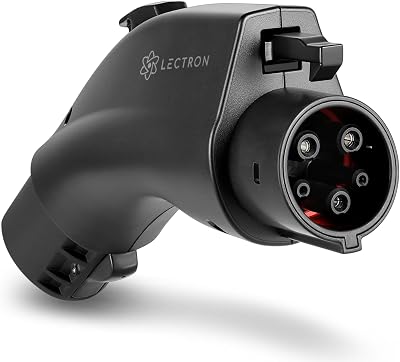
Lectron Vortex Plus NACS-to-CCS Adapter
The Gold Standard — UL 2252 Certified with Safety Interlock
* Amazon affiliate link — EV Charger Scout may earn a small commission at no extra cost to you.
i3 50 xDrive Charging Specs (Provisional)
| Spec | Detail |
|---|---|
| Usable battery | ~108 kWh (provisional) |
| Gross battery | ~116 kWh |
| Architecture | 800V Neue Klasse (with DC-DC for 400V station compatibility) |
| Peak DC fast charge rate | 400 kW |
| 10–80% DC time | ~21 minutes |
| 10-minute DC top-up | Adds ~249 miles WLTP |
| AC Level 2 rate | 11 kW standard, 22 kW optional |
| EPA range (BMW estimate) | Up to ~440 miles |
| WLTP range | 503–562 miles depending on trim |
| Connector (North America) | NACS (J3400) |
| Connector (Europe) | CCS2 |
| Bidirectional | V2L (3.7 kW), V2H, V2G |
| Cell type | 4695 cylindrical NMC, cell-to-pack |
BMW includes a DC-DC converter as standard equipment on the Neue Klasse cars, so the 800V battery can still charge at 400V stations — including older Tesla Superchargers that operate at ~500V cabinet voltage. This is genuinely different from Mercedes' approach, which requires more explicit station-side matching.
What 400 kW DC Charging Actually Looks Like
Both cars share a 400 kW peak DC figure — a number matched in production today only by the Lucid Air Sapphire (at specific stations) and a handful of Chinese-market EVs. For North American public charging, the practical peak you'll see is limited by whatever network hardware you're plugged into:
| Charging Scenario | Realistic Peak for Neue Klasse BMW |
|---|---|
| Tesla Supercharger V3 (250 kW cabinet) | ~250 kW (cabinet-limited) |
| Tesla Supercharger V4 post / V3 cabinet | ~250 kW |
| Tesla Supercharger V4 post / V3 cabinet (boosted) | ~325 kW (cabinet still limits below 400 kW) |
| True V4 Supercharger cabinet (rolled out from Sept 2025) | Up to 400 kW (vehicle-limited) |
| Electrify America 350 kW stall | ~350 kW (station-limited) |
| IONITY 400 kW Alpitronic HYC400 (Europe) | Full 400 kW |
| Ionna hub (new BMW/GM/Hyundai joint venture) | Up to 400 kW where hardware supports it |
The real-world takeaway: you won't see 400 kW everywhere, but you'll see more than 250 kW at a growing percentage of sites through 2026–2027 as the true V4 Supercharger cabinet rollout and new 400 kW third-party hardware expand.
Which Networks Work Best for Neue Klasse BMWs
- →Tesla Supercharger — Direct NACS plug-in access at all V2, V3, and V4 locations. BMW supports Plug & Charge at Supercharger V4 sites — the car authenticates automatically when plugged in, no app tap required after initial Tesla account linking.
- →Ionna — BMW is one of the eight founding partners (BMW, GM, Honda, Hyundai, Kia, Mercedes-Benz, Stellantis, and Toyota). Ionna's charging hubs are designed around exactly the kind of 350–400 kW, 800V-capable vehicles BMW is now shipping. Ionna stations support both NACS and CCS1 natively.
- →Electrify America — Still the largest independent 150–350 kW network in North America. EA has been deploying NACS cables at new installations through 2025–2026. The Neue Klasse BMW with its 11 kW AC and 400 kW DC capability will peak near EA's 350 kW stall limit.
- →EVgo — EVgo's dual-connector stalls provide NACS access at most new sites. The iX3 and i3 pull full rated power at EVgo's 350 kW dispensers.
- →ChargePoint — ChargePoint NACS is deployed at select DCFC locations. Their Level 2 network uses J1772 — the iX3 and i3 each ship with a J1772 adapter.
BMW Charging My BMW App and ChargeNow
BMW's "Charging My BMW" app (also integrated into iDrive) handles public charging through the ChargeNow network aggregator, which bundles access to thousands of charging points across multiple networks under one billing umbrella. This works well in Europe and is reasonable in North America for networks that participate.
For Tesla Superchargers specifically, US owners still need the Tesla app to add the vehicle as a non-Tesla and attach payment — the BMW app doesn't initiate Supercharger sessions in North America as of early 2026. Think of it as two separate relationships: the Tesla app for Superchargers, the BMW app or ChargeNow for everything else.
- 1Set up the Tesla app with your BMW iX3 or i3 added as a non-Tesla vehicle.
- 2Create or log into your ChargeNow account via the Charging My BMW app or the iDrive screen.
- 3Download the Electrify America and EVgo apps as backups — direct network apps sometimes unlock promotional rates.
- 4Register your vehicle's VIN with each network you plan to use — this enables Plug & Charge where supported.
- 5Use EV Charger Scout or ABRP for multi-network trip planning that accounts for the car's 400 kW peak capability.
Roadside Safety Pick · EV Shop

Airmoto Cordless Tire Inflator
Compact Cordless Air Compressor — Digital Pressure, Auto Shutoff
* Amazon affiliate link — EV Charger Scout may earn a small commission at no extra cost to you.
European and Global Buyers: The CCS2 Story
European, UK, and Australian iX3 and i3 models use CCS2 — the standard for those markets. There is no NACS in Europe in any meaningful sense. Tesla's European Supercharger network accepts CCS2 natively, so BMW owners in Europe already have full Supercharger access without any adapter.
For European buyers, IONITY is the single most important charging network — their Alpitronic HYC400 hardware delivers the full 400 kW the Neue Klasse cars can accept, and their route coverage across 24 EU countries is purpose-built for exactly this class of vehicle. Fastned and Allego fill in the rest.
In China, BMW sells Neue Klasse vehicles with GB/T connectors alongside domestic partners' charging infrastructure. Chinese public charging is dominated by State Grid, NIO Power, and CATL's 480 kW pilot supercharge network — the Neue Klasse's 400 kW capability finds good homes there.
| Market | i3 Connector | iX3 Connector | Supercharger Access |
|---|---|---|---|
| North America | NACS (J3400) | NACS (J3400) | Direct plug-in |
| Europe / UK | CCS2 | CCS2 | Direct CCS2 at EU Superchargers |
| Australia | CCS2 | CCS2 | Direct CCS2 at AU Superchargers |
| China | GB/T | GB/T | GB/T chargers; separate Tesla CN access |
Real-World Charging Behavior: What to Expect
Gen6 eDrive's charging curve management is a significant step forward for BMW. Battery preconditioning kicks in automatically when you route to a fast charger in the navigation system, typically 20–30 minutes before arrival. Without preconditioning — starting a fast charge session without navigating there first — peak charging rate can be reduced substantially in cold weather.
- →Battery temperature is still the single biggest variable in DC charging speed. Cold batteries charge slowly regardless of network hardware.
- →Both cars support 11 kW AC as standard; the i3 can be optioned up to 22 kW — useful at European three-phase destinations and rare but real 22 kW public AC stations.
- →BMW's iDrive charging screen shows the active power being delivered in real time. Use it to verify you're getting the power you expect at 350+ kW stations.
- →At Tesla V4 Superchargers, Plug & Charge (ISO 15118) works on both Neue Klasse models — plug in and the session authenticates without touching the Tesla app.
- →State of charge above 80% reduces peak DC charge rate significantly. For road trips, charging to 70–80% and moving is almost always faster than charging from 80% to 100%.
EV Charger Scout shows all NACS-capable and CCS public charging stations near any location. Enter your destination and filter to show only DCFC stations at 250 kW or higher to see where your Neue Klasse BMW can actually stretch its legs.
Bottom Line
The Neue Klasse iX3 and i3 are the first BMW EVs that genuinely compete at the top of the charging-speed table. Their 800V architecture, 400 kW peak DC capability, and 11/22 kW AC charging put them in Porsche Taycan and Lucid Air territory — at what will be mainstream BMW pricing.
If you're buying in the US, the iX3 is here in 2026 (as a 2027 MY). The i3 sedan follows in early 2027. Both benefit from BMW's native NACS port for North America, Ionna network ownership, and the full Supercharger/EA/EVgo public charging footprint without needing external adapters for the dominant networks.
Frequently Asked Questions
When do the 2026 BMW iX3 and i3 actually arrive in the US?
The iX3 50 xDrive is the first North American Neue Klasse vehicle, arriving in summer 2026 and sold as a 2027 model year. The i3 sedan, unveiled in March 2026, follows for US deliveries in early 2027. If you're shopping now, the iX3 is the only one you can order and take delivery of in 2026.
How fast do the Neue Klasse BMWs charge?
Both the iX3 and i3 use an 800V (699V nominal) Gen6 eDrive architecture with a 400 kW peak DC fast charge rate and a roughly 19–21 minute 10–80% time. In the real world you won't see 400 kW everywhere — peak power is limited by the network hardware, so you'll see up to 250 kW at most current Superchargers and up to 350–400 kW at true V4 cabinets and 400 kW third-party stations.
What connector do North American BMW iX3 and i3 models use?
North American iX3 and i3 models ship with a native NACS (J3400) port, giving direct plug-in access at Tesla Supercharger V2, V3, and V4 locations. They also include a J1772 adapter for AC Level 2 charging. European, UK, and Australian models use CCS2 instead.
Can these 800V BMWs charge at older 400V stations?
Yes. BMW includes a DC-DC converter as standard equipment on the Neue Klasse cars, so the 800V battery can still charge at 400V stations, including older Tesla Superchargers that operate at around 500V cabinet voltage. This is different from approaches that require more explicit station-side voltage matching.
Which charging networks work best for the iX3 and i3?
Tesla Superchargers via the native NACS plug, plus Ionna (BMW is a founding partner), Electrify America, EVgo, and ChargePoint all work. BMW supports Plug & Charge at Supercharger V4 sites for automatic authentication after initial account linking. For Tesla Superchargers in North America, US owners still need the Tesla app to add the vehicle as a non-Tesla and attach payment.
More guides on Network Access
Explore the full Network Access topic hub — related guides that build on this one.
Non-Tesla EVs at Superchargers: Which Brands Have Access Now (March 2026)
10 min read
UK Ultra-Rapid Charging: The Best 350 kW+ Stations and Motorway Routes to Map Now
14 min read
Charging Your Rivian or Ford at Tesla Superchargers: Complete 2026 Guide
11 min read
Stellantis EVs (Jeep, Dodge, Ram) Now on Tesla Superchargers: How to Find Compatible Stations Today
11 min read