 EV Charger Scout
Toyota moved more cautiously into the NACS transition than some of its competitors — which is very on-brand for a company that spent two decades building a reputation around deliberate, incremental product development. But for 2026, Toyota has done something that most manufacturers haven't: offered a free NACS adapter program for select existing models alongside transitioning new production to native NACS ports. Here's exactly what models are included, how to get the adapter, where you can charge with it, and what the experience looks like in practice.
Toyota's Approach: Two Tracks at Once
Toyota's NACS strategy runs on two parallel tracks. For new 2026 model year vehicles, select Toyota EVs ship with native NACS ports for North America. For eligible 2023–2025 models with CCS1 ports, Toyota announced a free adapter program — supplying owners with a CCS1-to-NACS adapter at no cost through the dealer network. This dual approach is notably more considerate of existing owners than many competitor programs, which left CCS1 owners to source their own adapters.
Which Toyota EVs Are Eligible
Free Adapter Program (CCS1 to NACS)
| Model | Eligible Years | Connector | Adapter Provided |
|---|---|---|---|
| Toyota bZ4X | 2023–2025 | CCS1 (North America) | Yes — free through dealer |
| Subaru Solterra | 2023–2025 | CCS1 (North America) | Yes — free through Subaru dealer (same platform) |
| Lexus RZ 450e | 2023–2025 | CCS1 (North America) | Yes — free through Lexus dealer |
Native NACS for 2026 Models (North America)
| Model | Market Year | Connector | Notes |
|---|---|---|---|
| Toyota bZ (formerly bZ4X) | 2026 | NACS (native, SAE J3400) | Renamed from bZ4X; first Toyota EV with factory NACS |
| Toyota C-HR+ (US-market BEV) | 2026 | NACS (native) | New compact BEV built on same bZ platform |
| Lexus RZ (refreshed) | 2026 | NACS (native) | Updated with NACS port and higher AC rate |
| Crown Signia / Plug-in Hybrid | 2026 | J1772 AC only | No DC fast charge; not part of NACS program |
Toyota also sells bZ3, bZ3C, and bZ3X models in China through its GAC and FAW joint ventures — those are China-market cars with GB/T connectors and are not sold in North America.
The Subaru Solterra is mechanically identical to the bZ4X (shared platform, shared battery, shared motor) and is included in the free adapter program through Subaru dealers, not Toyota dealers. If you have a Solterra, contact your Subaru dealership — the process and eligibility are the same.
How to Get the Free Adapter
- 1Confirm eligibility: Check Toyota's official website or contact your local dealer with your VIN. Eligibility is tied to vehicle VIN, model year, and purchase market.
- 2Contact your Toyota dealer. The adapter distribution is handled through the dealership network — you don't order directly from Toyota corporate.
- 3Provide your vehicle's VIN and proof of ownership (registration or title is typically sufficient).
- 4The adapter ships to the dealership or, depending on your market, directly to your address. Delivery timelines have varied — some owners report same-week availability, others waited several weeks during peak program enrollment.
- 5Inspect the adapter when it arrives. Verify the manufacturer (Toyota specifies OEM-quality adapters — not generic third-party units) and confirm that both connector ends and the locking mechanism are undamaged.
- 6Register the adapter in your Toyota app account if prompted — some markets use serial number tracking for warranty purposes.
The free adapter program has geographic scope — it applies to North American market vehicles (US and Canada). Owners in other markets where the bZ4X was sold with different connectors (CCS2 in Europe, or GB/T in some Asian markets) are not part of this specific program. Check Toyota's regional programs for your local market.
DC Fast Charging Upgrade · EV Shop
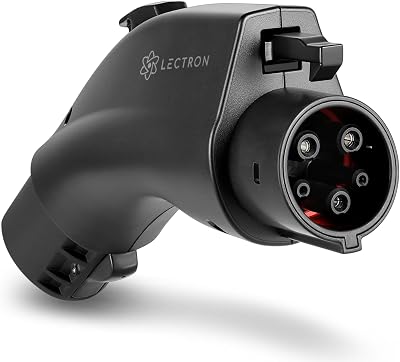
Lectron Vortex Plus NACS-to-CCS Adapter
The Gold Standard — UL 2252 Certified with Safety Interlock
* Amazon affiliate link — EV Charger Scout may earn a small commission at no extra cost to you.
Using the Adapter at Public Chargers
The Toyota-supplied NACS adapter converts your vehicle's CCS1 port to accept NACS connectors. In practice, this means you can plug into any NACS cable — at a Tesla Supercharger, Electrify America NACS stall, EVgo NACS stall, or any other network that has deployed NACS hardware — without bringing your own adapter.
At Tesla Superchargers
For bZ4X, Solterra, and Lexus RZ owners using the Toyota-supplied adapter, Tesla Supercharger access works the same as any other non-Tesla NACS vehicle:
- →Download the Tesla app and create a Tesla account.
- →Add your Toyota bZ4X (or Solterra / Lexus RZ) as a non-Tesla vehicle in the app.
- →Add a payment method.
- →Navigate to a Supercharger in the Tesla app or on the car's navigation — the app shows real-time stall availability.
- →At the station, plug the NACS cable into your adapter (which is inserted into your car's CCS1 port), then initiate the session in the Tesla app.
Keep the adapter in the vehicle at all times. The adapter stays on the car's port, and the NACS cable from the station plugs into it — don't carry it loose in the trunk where it can be forgotten. Some Toyota owners use a small cable tether to secure the adapter.
At Other NACS Networks
The adapter works identically at any NACS station. Electrify America, EVgo, ChargePoint DCFC, and the growing Ionna network all have NACS cables at stations where the hardware has been deployed. Use each network's app or RFID card to initiate the session — the adapter is purely a hardware converter and has no effect on the network authentication process.
Charging Speeds: What bZ4X and Lexus RZ Can Actually Accept
Understanding your vehicle's maximum charge rate is important — the adapter doesn't change what the vehicle can accept, it only changes which physical cable you can connect to. The Toyota bZ4X and Lexus RZ 450e are limited to 150 kW DC fast charging as their maximum rate, regardless of whether they're connected via their native CCS1 port or through the NACS adapter.
At Tesla V3 Superchargers (250 kW rated), you'll receive the bZ4X's 150 kW maximum. At V4 Superchargers (250 kW rated), same result. At a 50 kW public DCFC station, you'll be limited by the station's output. The practical takeaway: any station rated 150 kW or higher will give you the bZ4X's full DC charging speed. The adapter doesn't create a bottleneck if the station is well-provisioned.
| Vehicle | Max DC Rate | AC Rate | 10–80% at Max DC |
|---|---|---|---|
| bZ4X (2023, AWD) | 100 kW | 7.6 kW | ~45 minutes |
| bZ4X (2024–2025, FWD & AWD) | 150 kW | 7.6 kW | ~30 minutes |
| bZ4X (2026, native NACS) | 150 kW | 11 kW | ~30 minutes |
| Lexus RZ 450e | 150 kW | 7.6 kW (11 kW on 2026+) | ~30 minutes |
| Subaru Solterra | 150 kW | 7.6 kW | ~30 minutes |
North American bZ4X and Solterra models (2023–2025) use a 7.6 kW onboard AC charger. The 11 kW onboard charger is new for the 2026 native-NACS bZ4X. If your Level 2 charging seems slower than expected, verify that your home or destination circuit is actually supplying at least 32A @ 240V — the car's 7.6 kW ceiling is typically not the bottleneck. International (Europe, Japan) bZ4X models use an 11 kW three-phase AC charger from launch.
Roadside Safety Pick · EV Shop

Airmoto Cordless Tire Inflator
Compact Cordless Air Compressor — Digital Pressure, Auto Shutoff
* Amazon affiliate link — EV Charger Scout may earn a small commission at no extra cost to you.
International Toyota EV Owners: A Different Picture
Outside North America, the Toyota NACS adapter program and NACS transition don't apply — and that's entirely appropriate, because NACS is not a standard outside North America.
Europe and the UK
European market bZ4X, Lexus RZ, and upcoming bZ3C models use CCS2 — the European standard. CCS2 is the connector accepted at IONITY, Fastned, BP Pulse, Osprey, and the growing number of 150–300 kW highway charging networks across the EU and UK. Tesla's European Supercharger network accepts CCS2 natively, so European Toyota EV owners already have full Supercharger access without any adapter.
IONITY in particular is expanding aggressively across Europe in 2025–2026, with 400 kW-capable hardware at new sites along major highway corridors. European bZ4X owners are limited to 150 kW regardless of station capability, but the infrastructure is there when Toyota moves to higher-power future vehicles.
Japan
Japan is Toyota's home market and uses a mix of CHAdeMO (the legacy standard, used by Nissan Leaf among others) and CCS2 at newer installations. Japanese market Toyota EVs tend to use CHAdeMO or AC Type 1 (J1772) depending on model. Japan's public charging infrastructure is extensive in urban areas but thinner on highway corridors compared to Europe or the US. CHAdeMO remains relevant in Japan despite losing ground globally.
Australia and New Zealand
Australian market Toyota bZ4X models use CCS2. The Australian fast charging network — including Tesla Superchargers — accepts CCS2. No adapter is needed for Supercharger access in Australia with a CCS2 bZ4X.
China
Toyota sells EVs under the bZ brand in China, but these use GB/T connectors and are produced in partnership with GAC Toyota and FAW Toyota for the Chinese market. China has an enormous public charging infrastructure dominated by GB/T-standard stations. The NACS transition is irrelevant in the Chinese market.
Tips for Toyota EV Owners Getting Started
- →Claim the free adapter now even if you haven't planned a Supercharger trip yet. Adapter availability at dealers isn't unlimited — early program participants report shorter wait times.
- →Store the adapter permanently in your charge port or frunk. Forgetting it at home on a road trip is a surprisingly common complaint.
- →Register for the Tesla app before your first trip. The setup process takes 10 minutes and is easiest to do at home rather than at a charging station.
- →Toyota's onboard navigation includes charging point data. Use it to see nearby DCFC options, but cross-reference with EV Charger Scout for connector type confirmation before committing to a station.
- →For long trips, plan around 150 kW-capable stations. The bZ4X charges quickly relative to its battery size, and 30-minute stops at adequate DCFC stations are realistic.
EV Charger Scout pulls station data from NREL and OpenChargeMap. Filter by CCS1 or NACS depending on whether you're using the adapter or have a 2026 native NACS model. The station detail panel shows per-port connector types and maximum power levels.
Frequently Asked Questions
Does Toyota offer a free NACS adapter, and which models qualify?
Yes. Toyota announced a free CCS1-to-NACS adapter program for eligible 2023–2025 North American models with CCS1 ports: the Toyota bZ4X, the Subaru Solterra (through Subaru dealers), and the Lexus RZ 450e. The adapter is supplied at no cost through the dealer network, which is notably more considerate of existing owners than many competitor programs.
How do I get the free Toyota NACS adapter?
Confirm eligibility using your VIN on Toyota's website or with your local dealer, since eligibility is tied to VIN, model year, and purchase market. Contact your Toyota dealer (or Subaru dealer for a Solterra), provide your VIN and proof of ownership, and the adapter ships to the dealership or your address. Delivery times have varied from same-week to several weeks during peak enrollment.
Which 2026 Toyota EVs come with native NACS ports?
For 2026, select Toyota EVs ship with native NACS (SAE J3400) ports in North America, including the Toyota bZ (renamed from bZ4X), the new C-HR+ BEV built on the same platform, and the refreshed Lexus RZ. The Crown Signia plug-in hybrid uses J1772 AC only with no DC fast charging and is not part of the NACS program.
How fast do the bZ4X and Lexus RZ charge?
The bZ4X and Lexus RZ 450e are limited to 150 kW DC fast charging as their maximum rate, regardless of whether they connect via their native CCS1 port or the NACS adapter (the 2023 AWD bZ4X is capped at 100 kW). The adapter doesn't change what the vehicle can accept, so any station rated 150 kW or higher delivers the car's full DC speed.
Does Toyota's NACS adapter program apply outside North America?
No. The free adapter program and NACS transition apply only to North American (US and Canada) market vehicles, because NACS is not a standard elsewhere. European and Australian bZ4X and Lexus RZ models use CCS2 and already access Tesla Superchargers natively, Japanese models often use CHAdeMO or J1772, and Chinese bZ-brand EVs use GB/T connectors.
More guides on Gear & Equipment
Explore the full Gear & Equipment topic hub — related guides that build on this one.