 EV Charger Scout
Walk into an IKEA in the Netherlands or Sweden and you'll find a row of ultra-fast EV chargers in the car park, free to use while you browse. Walk into a Walmart in Texas and you might find ChargePoint DC fast chargers going in near the entrance. Stop at a Buc-ee's on the US interstate and you'll see a bank of Tesla V4 Superchargers outside the country's biggest gas station convenience store. This isn't coincidence — it's a commercial strategy with a name: Charging-as-a-Service, or CaaS, and it's reshaping who pays for public EV infrastructure and why.
What Charging-as-a-Service Actually Means
Charging-as-a-Service is a business model where a third-party provider installs, owns, operates, and maintains EV charging equipment at a host location — typically a retailer, employer, hotel, or municipality — and the host pays little to nothing upfront. The CaaS provider recovers costs through one or more of these mechanisms: charging drivers per kWh or per session, selling data and analytics to the host, sharing charging revenue with the host, or charging a subscription/software fee to the host while offering free or subsidized power to drivers.
For retailers, CaaS is appealing because it converts the EV charging question from a capital expenditure ("how do we fund this?") into an operational benefit ("our customers stay longer and spend more"). The math is straightforward: a 30-minute DC fast charge session is 30 minutes of additional dwell time. A customer who spends 30 extra minutes in your store doesn't just replace what they spent on charging — they typically spend significantly more.
The Global Retail Charging Landscape
IKEA — Europe and Beyond
IKEA has been one of the most aggressive global retailers in deploying CaaS-model EV charging at its stores. Through its partnership with various charge point operators — Vattenfall InCharge in Scandinavia, Osprey in the UK, and local operators elsewhere — IKEA stores across Europe offer free or heavily subsidized AC Level 2 charging while you shop. Select UK and Nordic stores have added DC fast chargers (50–150 kW CCS2) for quicker top-ups.
IKEA's model is primarily "free charging as a customer benefit" — the cost is absorbed as a marketing expense and customer retention investment rather than recovered through per-kWh pricing. It positions IKEA as an EV-friendly retailer in markets where EV adoption is high and the competition for EV-driving customers is meaningful.
DC Fast Charging Upgrade · EV Shop
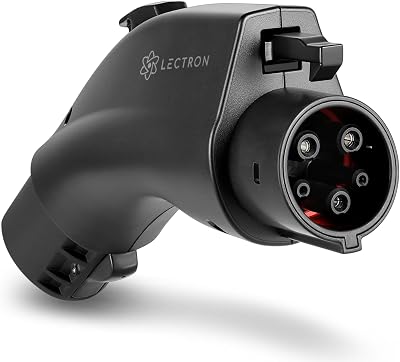
Lectron Vortex Plus NACS-to-CCS Adapter
The Gold Standard — UL 2252 Certified with Safety Interlock
* Amazon affiliate link — EV Charger Scout may earn a small commission at no extra cost to you.
Walmart — US and International
Walmart struck a major deal with Tesla to bring Superchargers to hundreds of US Walmart locations in 2023–2024, with the deployment accelerating through 2025 and 2026. Tesla installs, operates, and maintains the V3 Supercharger stations (up to 250 kW) in Walmart car parks. Walmart receives foot traffic from EV owners who charge and shop simultaneously. Tesla gets premium, high-visibility charging locations with excellent grid infrastructure already in place. Both parties benefit — neither has to fully fund the other's share.
Separately, ChargePoint has partnered with Walmart for Level 2 and DC fast chargers at additional locations, giving EV drivers multiple charging options at Walmart's largest stores. Internationally, Walmart's joint ventures in Canada have integrated ChargePoint infrastructure at select stores.
Buc-ee's — US Interstate
Buc-ee's — the Texas-founded travel center chain famous for massive stores, spotless restrooms, and dozens of fuel pumps — has embraced EV charging as a strategic differentiator. Its partnership with Tesla for V4 Superchargers at new and existing locations is arguably the most impactful retail-EV partnership in the US given Buc-ee's positioning on major highway corridors in the South and Midwest. Buc-ee's stores are purpose-built for long dwell times — they typically have 50+ food options, full BBQ kitchens, and extensive merchandise — making them ideal CaaS hosts. A 20-minute charge session at a Buc-ee's Supercharger is a genuine rest stop, not dead time.
Starbucks + Volvo — US Coffee and Charge
In 2023, Starbucks and Volvo partnered with ChargePoint to install DC fast chargers at over 60 Starbucks locations along the I-5 corridor from Seattle to Los Angeles. This initiative — called "Charging + Coffee" internally — is a pure CaaS arrangement: ChargePoint installs and operates, Starbucks provides the location and customer draw, and Volvo contributed sponsorship funding to accelerate the rollout. Other EV brands' customers can use the chargers, but the original partnership was positioned around the Volvo EX90 and XC40 Recharge audience.
IKEA + BP Pulse — UK Rollout
In the UK, BP Pulse has partnered with IKEA for ultra-rapid charging (up to 150 kW) at multiple IKEA stores. The BP Pulse CaaS model charges drivers per kWh rather than offering free charging, with the revenue shared between IKEA and BP Pulse. This hybrid model — where the retailer participates in revenue rather than just absorbing cost — is increasingly common for DC fast chargers where the energy cost per session is substantial.
Why Retailers Are Including Free Adapters
One of the more surprising developments of 2025–2026 is the emergence of free adapter programs at the point of retail CaaS deployment. As North America transitions from CCS1 to NACS as the dominant connector on new EVs, many existing Electrify America and ChargePoint DC fast chargers still offer CCS1 as their primary connector — or have NACS cables now added but older CCS1-only equipment still in service. Retailers who want to serve the broadest EV customer base regardless of connector type are tackling this with adapter programs.
| Retailer / Program | Region | Adapter Offered | How to Access |
|---|---|---|---|
| Toyota Bento Experience Centers (select) | US (California, Texas) | CCS1-to-NACS for bZ4X / Lexus RZ | On-site loaner — leave ID, charge, return adapter |
| General Motors Dealer Loaner Program | US | CCS-to-NACS bridge adapter | At participating dealers with Ultium fast charging |
| Electrify America NACS Adapter Kit | US | NACS-to-CCS for non-NACS vehicles | Purchase program at EA stations; discount offered |
| Costco Member Discount | US, Canada | Partner discount on Lectron / A2Z NACS adapters | In-store and online for Costco members |
| IKEA Sweden (pilot) | Sweden | CCS1-to-CCS2 for international visitors | Request at customer service — pilot program only |
These programs reflect the messy reality of a connector transition mid-stream: the infrastructure is ahead of or behind the vehicles, depending on the exact combination. Free or discounted adapters reduce friction for customers who would otherwise drive past a charger they can't use.
EV Tech Pick · EV Shop
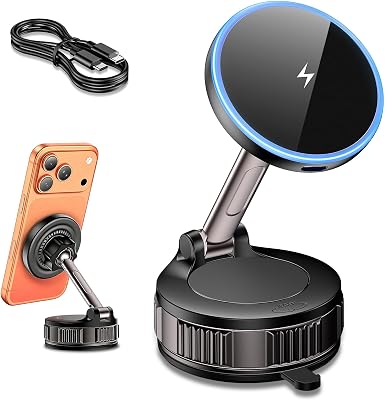
ESR Magnetic Wireless Car Charger Mount
Strongest Magnetic Wireless Charger — Adjustable Arm, Fast Charging
* Amazon affiliate link — EV Charger Scout may earn a small commission at no extra cost to you.
The CaaS Models — A Plain-English Breakdown
| Model | Who Pays for Hardware | Who Owns Chargers | Driver Cost | Example |
|---|---|---|---|---|
| Free-to-driver (retailer funded) | Retailer | CaaS provider or retailer | Free (for customers) | IKEA Nordic, older Walmart Level 2 |
| Driver-pay (CaaS revenue share) | CaaS provider | CaaS provider | Per kWh or per session | BP Pulse at IKEA UK, ChargePoint at Target |
| Landlord partnership (revenue split) | Shared CaaS + retailer | CaaS provider | Per kWh (market rate) | Tesla at Buc-ee's, Electrify America at Whole Foods |
| Employer / office CaaS (subsidized) | Employer via subscription | CaaS provider | Subsidized or free for employees | ChargePoint for Business, JuiceBox at tech campuses |
| Government-funded (NEVI, AFIR) | Government grants + private | Usually private operator | Market rate (regulated caps) | NEVI stations at qualifying US highway locations |
What This Means for EV Drivers Practically
The expansion of retail CaaS has a direct practical impact on how you plan your charging stops:
- →More chargers at places you already go. Grocery stores, big-box retailers, and home improvement stores are adding fast chargers. Your weekly shopping trip becomes a partial charge opportunity — particularly useful for households without home charging.
- →Amenity quality is often higher than standalone charging locations. A Buc-ee's, Costco, or IKEA charging stop comes with food, restrooms, and entertainment. The 15–20 minute DC fast charge fits naturally into a rest stop.
- →Pricing is increasingly variable. Some retail CaaS chargers are free for customers; others charge market rates. Look for "customer-only" restrictions on some retail chargers — some large retailers limit free charging to verified shoppers.
- →Adapter programs reduce connector anxiety. If you're driving an older CCS1 vehicle in a market transitioning to NACS, check whether your destination retailer has an adapter loan program before leaving home.
Large retailers like Walmart and IKEA often have multiple charging stations — both older Level 2 and newer DC fast. When you arrive, check EV Charger Scout for the station near your destination before you pull in. The map and port details tell you which connector types and power levels are on-site, so you know whether you need an adapter before you arrive rather than discovering it at the charger.
Limitations and Honest Caveats
- →Retail CaaS chargers are often shared with the parking lot's general traffic. During peak shopping hours, EV charging bays can fill with ICE vehicles (ICE-ing) — a persistent problem in markets without enforced EV-only parking.
- →"Free" retail charging is not always unconditional. Some programs require a minimum purchase, loyalty program membership, or specific vehicle brand to qualify.
- →Reliability standards vary by CaaS operator. A retailer's primary incentive is foot traffic — charger uptime isn't always their first priority. Major operators (Tesla, ChargePoint, Electrify America) generally have stronger service level commitments than smaller regional operators.
- →CaaS adapter programs are mostly informal and pilot-stage. Don't plan a critical charging stop around borrowing a loaner adapter — call ahead to confirm availability.
Never leave your EV unattended at a retail charger with a borrowed adapter or loaner equipment without securing both. Charger handles with adapters attached can be confused for abandoned equipment by other drivers. Lock or secure any adapter before walking away.
EV Charger Scout shows stations at and near major retail locations. Search by address or use the map to explore charging options before your next shopping trip — filter by connector type and minimum power level to find DC fast options that fit your time budget.
Frequently Asked Questions
What is Charging-as-a-Service (CaaS)?
Charging-as-a-Service is a business model where a third-party provider installs, owns, operates, and maintains EV charging equipment at a host location — typically a retailer, employer, hotel, or municipality — with the host paying little to nothing upfront. The provider recovers costs by charging drivers per kWh or session, selling data to the host, sharing revenue, or charging the host a software fee while offering free or subsidized power to drivers.
Why are retailers like Walmart and IKEA adding EV chargers?
For retailers, CaaS turns charging from a capital expense into an operational benefit: a 30-minute fast charge means 30 minutes of additional dwell time, and customers who stay longer typically spend more. Walmart partnered with Tesla for Superchargers at hundreds of US stores, Buc-ee's added V4 Superchargers along highway corridors, and IKEA offers free or subsidized charging across Europe as a customer-retention investment.
Is retail charging always free?
No — pricing is increasingly variable. Some retail CaaS chargers, like IKEA's Nordic Level 2 stations, are free as a customer benefit, while others such as BP Pulse at IKEA UK charge per kWh with revenue shared between the retailer and operator. Some retailers also limit free charging to verified shoppers or require a minimum purchase or loyalty membership.
Why are some retailers offering free or discounted adapters?
As North America transitions from CCS1 to NACS, charging hardware and vehicles don't always match, so some retailers run adapter programs to serve the broadest customer base. Examples include on-site loaner adapters at select Toyota experience centers, GM dealer loaner programs, Electrify America's NACS adapter kit, and Costco member discounts on Lectron or A2Z adapters. Most loaner programs are informal and pilot-stage, so call ahead to confirm availability.
What are the downsides of relying on retail charging?
Retail chargers are often shared with general parking traffic and can be blocked by ICE vehicles during peak shopping hours. Reliability varies because a retailer's primary incentive is foot traffic rather than charger uptime, though major operators like Tesla, ChargePoint, and Electrify America generally have stronger service commitments. Loaner adapter programs are mostly informal, so don't plan a critical stop around borrowing one.
More guides on Tips & Guides
Explore the full Tips & Guides topic hub — related guides that build on this one.
EV Charging Without a Garage: Apartment, Condo & Street Parking Options
12 min read
EV Charging Etiquette in 2026: The Rules That Actually Matter (And How to Handle Violations)
13 min read
Peak Summer Heat Charging Tips: Avoid Overheating at High-Power Stations
13 min read
EV Charging Stations: The 2026 Complete Guide to Finding, Using, and Avoiding the Worst Ones
13 min read
Find EV Charging Stations Near Me: Real Owner Tips for 2026
12 min read
2026 EV Range Anxiety Fixes: 10-Minute Top-Ups at the World's Fastest Stations
13 min read