 EV Charger Scout
Searching "EV charging stations near me" and staring at a map full of dots that may or may not work, may or may not accept your connector, and may or may not be occupied — that's the experience too many EV drivers have in 2026. The information exists; the problem is knowing how to filter it, what signals to trust, and when to look ahead instead of scrambling on the fly. This guide is practical and specific: here's how actual EV owners find the stations they need, avoid the ones that waste their time, and build a system that makes public charging nearly invisible in daily life.
Start With the Right Tool for Each Situation
There's no single "best" app for finding EV charging stations because different situations call for different tools. Understanding when to use what saves time:
| Situation | Best Tool | Why |
|---|---|---|
| Finding stations near your current location | EV Charger Scout or PlugShare | Largest global databases, vehicle-specific filtering |
| Planning a long drive with charge stops | ABRP (A Better Route Planner) | Optimizes stops using your car's actual range curve and weather |
| Checking if specific stalls are occupied right now | EV Charger Scout (live status) or network's own app | Real-time data where available |
| Checking recent reliability of a specific station | PlugShare check-ins | Crowd-sourced driver reports |
| Starting a session and monitoring it remotely | Network's own app (Electrify America, EVgo, ChargePoint, etc.) | Direct connection to the charger's systems |
| Finding chargers at hotels while traveling | PlugShare + filter for destination chargers | Best coverage of hotel and accommodation chargers |
Set up EV Charger Scout with your specific vehicle once, and every station search shows only the connectors your car accepts — no more arriving at a Level 2 station only to find it's J1772 when your car needs CCS. The filter saves time on every single search.
How to Find EV Charging Stations Near You Right Now
On EV Charger Scout
- 1Open the app (web, iOS, or Android) — no account needed
- 2Tap the location button or search for your address
- 3Set your vehicle in the filter panel to see only compatible stations
- 4Enable Live Status filter to prioritize stations with real-time port availability
- 5Tap any station to see connector details, network, address, and charger speed
- 6Tap the Calculator tab in the station detail to estimate cost and session time before you plug in
On PlugShare
- 1Set your car in the vehicle settings (enables the compatibility filter)
- 2Use the Filters button — enable Level 2 or DCFC depending on what you need
- 3Check the 'Last Checked In' column — anything under 48 hours is fresh data
- 4Read the two or three most recent comments for any station you're considering
- 5If the most recent comment is 'broken' or 'offline' from the past week — skip it
EV Tech Pick · EV Shop
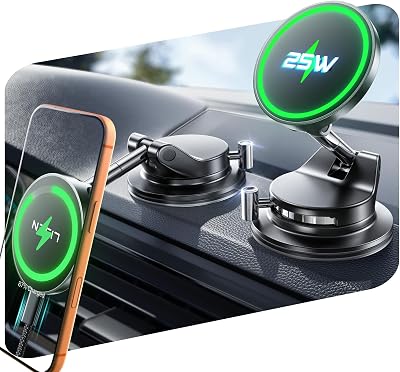
LISEN SuctionPro Wireless Magnetic Car Charger Mount
Magnetic Wireless Charging + Mount — Works with MagSafe iPhones
* Amazon affiliate link — EV Charger Scout may earn a small commission at no extra cost to you.
How to Build a Personal Charging Map for Your Daily Life
One of the most underrated habits of experienced EV drivers: they know their charging options before they need them. This sounds obvious, but most new EV owners don't do it until they've had a stressful near-empty moment that forces the issue. Here's a better approach.
Spend 20 minutes after you first get your EV mapping out the Level 2 and DC fast options within your typical driving radius. Identify:
- →Your primary backup station: The closest reliable Level 2 or DCFC within 5 km of your home that you'd use if home charging fails (power outage, charger fault, etc.).
- →Your workplace / regular stop charger: If your employer has chargers, register for the network. If not, identify the best Level 2 within walking distance of your office.
- →Your errand chargers: The shopping center, supermarket, or gym near you that has Level 2. These are "charge while I'm already here" opportunities.
- →Your nearest DC fast charger: Know where it is, which network it belongs to, whether it accepts ad-hoc payment, and roughly how many stalls it has.
Finding Stations in Specific Real-World Scenarios
At Hotels and Accommodation
If you're staying overnight anywhere, an EV-capable outlet or Level 2 charger can fully restore your range by morning. Before booking, check PlugShare with the "Destination Charger" filter on or filter for Tesla Destination Chargers. Many hotels advertise chargers but don't specify speed — anything labeled as "EV charging" from a hotel should be confirmed before you arrive. A 120V Level 1 outlet in a US hotel is essentially useless for a full restore; a 240V Level 2 is what you're looking for.
In Europe, most newer hotels have Type 2 Level 2 chargers or partnerships with IONITY/Shell Recharge. In Asia, Japan leads with a mix of CHAdeMO DCFC and Type 2 at many business hotels. In South Korea, virtually all major hotel chains in cities have parking garage chargers. Australia's hotel coverage is improving rapidly in Melbourne, Sydney, and Brisbane specifically.
At Shopping Centers and Retail Locations
Retail charging is growing the fastest of any segment in 2026. Walmart has deployed thousands of DC fast chargers across US stores through its partnership with EVgo and Tesla. IKEA has Level 2 chargers at many global locations. Target, Walgreens, and Whole Foods locations carry ChargePoint Level 2. Costco has begun adding Electrify America DC fast chargers at select Canadian and US locations.
The key thing to know about retail charging: chargers are placed to keep you in the store, not optimally for driving routes. Plan your shopping trip around when you need to add range — charge while you shop, not afterward. Most retail Level 2 chargers add 25–40 km per hour, so a 45-minute grocery run typically adds 15–25 km.
On the Road Between Cities
This is where planning pays off most. For US interstate travel, Tesla Superchargers are the most densely networked along I-95, I-80, I-10, and other major corridors. Electrify America covers most major highway exits. ChargePoint DCFC covers more urban and suburban areas. For non-Tesla EVs, the combination of Electrify America + EVgo + ChargePoint covers the overwhelming majority of interstate corridors.
In Europe, the IONITY highway charging network covers the major trans-European motorways in 24 countries with consistent 150–350 kW speeds. Shell Recharge, BP Pulse, and Fastned supplement IONITY on secondary routes. The Combined Charging System (CCS2) connector is compatible across all European networks.
| Region | Best Highway Network | Coverage App |
|---|---|---|
| United States | Tesla Supercharger (best density), Electrify America (widest coverage) | EV Charger Scout, ABRP, PlugShare |
| Canada | Tesla Supercharger + ChargePoint | EV Charger Scout, PlugShare |
| Europe (motorways) | IONITY (premium), Shell Recharge, Fastned | EV Charger Scout, Plugsurfing, Chargemap |
| United Kingdom | BP Pulse, Pod Point, Tesla | Zap-Map + EV Charger Scout |
| Australia | NRMA fast chargers, Tesla Supercharger, Evie Networks | PlugShare + EV Charger Scout |
| South Korea | E-pit (Hyundai/Kia), Everon, ChargeEV | Tmap EV (Korean), EV Charger Scout |
| Japan | NCS CHAdeMO network, Toyota dealer network | GoGoEV (Japanese), EV Charger Scout |
Home Charging Upgrade · EV Shop
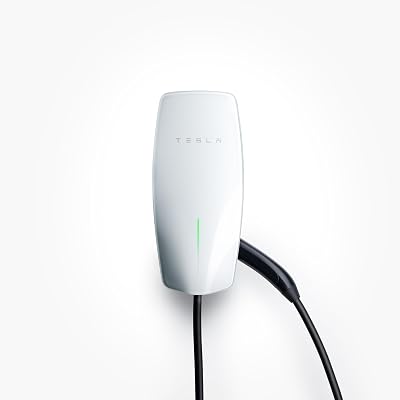
* Amazon affiliate link — EV Charger Scout may earn a small commission at no extra cost to you.
Finding Free EV Charging
Free charging is less common than it was in the early EV years, but it still exists. In the US, many Whole Foods, IKEA, and Cracker Barrel locations still offer free Level 2 via ChargePoint. Some municipalities offer free curbside Level 2. California has programs for income-qualified drivers to access free or subsidized public charging. In Europe, some supermarkets and destinations offer free Level 2 as a customer benefit. Filter PlugShare for "Free" under pricing to find free stations near any location.
Free public chargers often attract overstay — drivers who plug in, top up, and then leave their car blocking the charger for hours. If a free station you need is occupied by a car that's clearly not actively charging, check whether the location has an idle fee policy. Many ChargePoint stations now charge per minute after the session completes to encourage turnover.
What to Do When the Charger You Need Is Occupied or Broken
This happens. Having a plan for when it does removes the stress entirely:
- 1Check if the station has multiple stalls — a single broken port at a 6-stall site is a minor inconvenience, not a crisis
- 2Open EV Charger Scout or PlugShare and find your next-closest option before you decide whether to wait
- 3For busy stations, the network app sometimes shows a waitlist or estimated wait time (EVgo and Electrify America both have this feature)
- 4If you have enough range, move to the backup station you identified in advance rather than waiting for an unknown duration
- 5Report the broken charger in PlugShare — the 30-second check-in helps the next driver behind you
Range anxiety is almost entirely a planning problem, not an infrastructure problem. Drivers who plan their stops in advance rarely experience stressful charging situations. The goal is to arrive at every charger with 20–30% battery remaining, charge to 80%, and leave — the whole process takes 25–40 minutes at a DC fast charger and is barely noticeable when it's part of a meal stop or errand.
Tips for Urban Drivers Without Home Charging
Apartment and condo living without dedicated charging is genuinely harder, and the advice to "just charge at home" isn't available to everyone. Practical strategies for urban EV drivers:
- →Identify 2–3 reliable Level 2 stations near your home and make these your baseline rather than a fallback. Treat them like a gas station you visit on a schedule, not an emergency resource.
- →Charge during errands, not as a separate trip. Every time you're parked for 30+ minutes during the day, that's a charging opportunity. Build the habit of plugging in whenever you park at a compatible location.
- →Look into curbside charging programs. London, Amsterdam, Paris, Oslo, and many US cities have EV curbside charger installation programs — sometimes at no cost to residents. Contact your local transport authority.
- →Ask your landlord or strata about a ChargePoint or similar installation. Many building owners are receptive when you present the cost structure (often the EV owner pays for installation, the building keeps the charger). ChargePoint and Blink both have programs specifically designed for multi-unit dwellings.
- →Consider workplace charging your primary charge. If your employer has free or subsidized Level 2, commuting with 30% and leaving with 80% costs you nothing and covers most typical driving needs.
EV Charger Scout shows 500,000+ stations across 60+ countries. Set your vehicle once, get compatible results every search. Live port status where available — no account needed, works worldwide.
Frequently Asked Questions
What is the best tool for finding EV charging stations near me?
There's no single best app because different situations call for different tools. For finding stations near your current location, EV Charger Scout or PlugShare offer the largest databases and vehicle-specific filtering. For long drives, A Better Route Planner optimizes stops around your car's range curve, while a network's own app is best for starting and monitoring a session remotely.
How do I make sure I only see chargers my car can use?
Set your specific vehicle once in EV Charger Scout, and every search shows only the connectors your car accepts. This prevents arriving at a Level 2 station only to find it's J1772 when your car needs CCS. On PlugShare you can do the same by setting your car in the vehicle settings to enable the compatibility filter.
How can I find free EV charging?
Free charging is less common than in the early EV years but still exists. In the US, many Whole Foods, IKEA, and Cracker Barrel locations still offer free Level 2 via ChargePoint, and some municipalities offer free curbside charging. Filter PlugShare for “Free” under pricing to find free stations near any location.
What should I do if the charger I need is occupied or broken?
First check whether the station has multiple stalls, since one broken port at a six-stall site is a minor issue. Open EV Charger Scout or PlugShare to find your next-closest option before deciding to wait, and move to a backup station you identified in advance if you have enough range. Reporting a broken charger in PlugShare also helps the next driver.
How can urban drivers without home charging manage?
Identify two or three reliable Level 2 stations near home and treat them like a scheduled gas station rather than a fallback. Charge during errands whenever you're parked for 30+ minutes, look into curbside charging programs, and consider workplace charging as your primary source. Asking a landlord or strata about a ChargePoint installation is another practical option.
More guides on Tips & Guides
Explore the full Tips & Guides topic hub — related guides that build on this one.
EV Charging Without a Garage: Apartment, Condo & Street Parking Options
12 min read
EV Charging Etiquette in 2026: The Rules That Actually Matter (And How to Handle Violations)
13 min read
Peak Summer Heat Charging Tips: Avoid Overheating at High-Power Stations
13 min read
EV Charging Stations: The 2026 Complete Guide to Finding, Using, and Avoiding the Worst Ones
13 min read
2026 EV Range Anxiety Fixes: 10-Minute Top-Ups at the World's Fastest Stations
13 min read
Charging-as-a-Service: Why Retailers Are Adding Free Adapters and What It Means for You
13 min read