 EV Charger Scout
Range anxiety is the single most cited reason people hesitate to buy an electric vehicle. The fear of running out of charge before reaching a station — or arriving at a station only to wait 45 minutes for a meaningful top-up — has slowed EV adoption despite the mathematics of daily driving showing that most people never come close to their vehicle's maximum range on a regular day. In 2026, the hardware exists to eliminate that anxiety for most drivers. The problem is knowing where the actually-fast stations are and what you genuinely need to use them.
The Psychology of Range Anxiety (and Why It's Often Wrong)
Studies from the UK, Germany, and the US consistently show that most EV owners drive fewer than 50 miles on a typical day — comfortably within the range of even the shortest-range EVs on the market. Yet a significant portion of those same owners report feeling range anxious on long trips, even when they're within easy reach of a fast charger.
The anxiety is real even when the math isn't scary. It comes from a combination of charger reliability uncertainty (will the station work when I get there?), unfamiliarity with charging speeds (how long will it actually take?), and the asymmetry between what a gas station does — 5 minutes for a full tank — and what most Level 2 chargers do. The solution to range anxiety in 2026 isn't better EVs. It's knowing where the genuinely fast chargers are and what 10 minutes at one of them actually delivers.
What a "10-Minute Charge" Actually Means
A 10-minute charge at a 350 kW DC fast charger with a vehicle that accepts 250 kW puts roughly 40 kWh into the battery — equivalent to 130–180 miles of range depending on the vehicle's efficiency. That's not a full charge, but for a highway driver who started at 20% and hits a charger 150 miles into a 500-mile trip, 10 minutes is enough to get comfortably to the next stop or all the way to the destination.
The catch is the phrase "a vehicle that accepts 250 kW." Most EVs currently on the road accept significantly less. Here's the breakdown of what the most popular EVs can actually receive at peak conditions:
| Vehicle | Max Charge Rate | 10-Min Gain (est.) | Protocol |
|---|---|---|---|
| Porsche Taycan / Taycan Cross Turismo | 320 kW | ~80 miles | CCS2 / CCS1 |
| Lucid Air Grand Touring | 300 kW | ~100 miles | CCS1 |
| Hyundai Ioniq 5 / Kia EV6 (800V) | 250 kW | ~70 miles | CCS2 / CCS1 |
| Kia EV9 (800V) | 240 kW | ~65 miles | CCS2 / CCS1 |
| Tesla Model S Plaid (V4 Supercharger) | 250 kW | ~70 miles | NACS |
| Tesla Model 3 / Y (V3+) | 250 kW | ~65 miles | NACS |
| BMW iX / i5 | 195 kW | ~50 miles | CCS2 / CCS1 |
| Ford Mustang Mach-E | 150 kW | ~40 miles | CCS1 |
| Chevy Blazer EV | 190 kW | ~50 miles | CCS1 (NACS via adapter; native NACS delayed) |
| Rivian R1T / R1S (Gen 2) | 220 kW | ~55 miles | CCS1 (NACS via adapter) |
| VW ID.4 (2025+) | 175 kW | ~45 miles | CCS2 / CCS1 |
Peak charge rates only occur in a narrow state-of-charge window — typically 10–30% SoC. As the battery fills, the charge rate tapers significantly. The miles-gained estimate above assumes you arrive at approximately 15–20% SoC. Arriving above 30% will meaningfully reduce how much energy the battery accepts in the first 10 minutes.
The World's Fastest Charging Networks in 2026
DC Fast Charging Upgrade · EV Shop
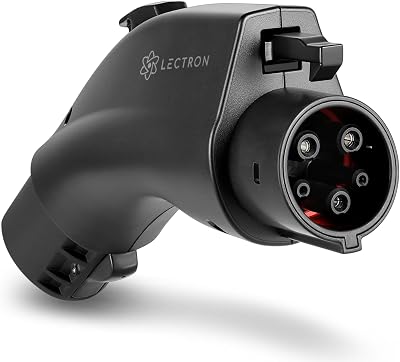
Lectron Vortex Plus NACS-to-CCS Adapter
The Gold Standard — UL 2252 Certified with Safety Interlock
* Amazon affiliate link — EV Charger Scout may earn a small commission at no extra cost to you.
United States — Electrify America (EA)
Electrify America operates the highest average power level of any third-party charging network in the United States, with most Express stations now equipped with 350 kW chargers (though vehicles are limited to their onboard acceptance rate). EA's network covers all major highway corridors and most urban areas. Its reliability has historically been a concern — J.D. Power and independent tracking showed EA below-average uptime in 2022–2023 — but hardware upgrades through 2025 have significantly improved reliability.
EA stations that deliver a genuine 10-minute fast top-up: look for the Express 350 designation. The locations are visible on EV Charger Scout using the 200+ kW minimum power filter.
United States — Tesla Supercharger V3 and V4
Tesla's Supercharger network remains the gold standard for reliability and coverage in North America, with over 27,500 stalls across the US. V3 Superchargers deliver up to 250 kW. The "V4" experience varies: most V4 sites use V4 posts with V3 cabinets (effectively 250 kW, or up to 325 kW at boosted installations from January 2025 onward). Tesla's true V4 cabinet, rated up to 500 kW per stall, began rolling out in September 2025 and is currently usable in practice only by the Cybertruck. For most owners, a 10-minute V3/V4 stop delivers approximately 60–90 miles depending on the model.
Non-Tesla CCS1 vehicles can now access Superchargers via NACS adapters or at Magic Dock stalls, making this network available to Hyundai, Ford, GM, Rivian, and others that have adopted the NACS connector or compatible adapters.
Europe — IONITY
IONITY is Europe's fastest public highway charging network, jointly operated by BMW, Ford, Hyundai, Kia, Mercedes, and VW Group. Its stations deliver up to 350 kW per stall using CCS2 connectors. For an Ioniq 5 or Porsche Taycan at 250–320 kW peak rate, a 10-minute IONITY stop genuinely adds 150–200 km of range. IONITY's coverage spans 24 countries across Europe with over 4,800 charging points at 700+ sites — predominantly on highway corridors — and a growing number of stalls rated up to 400 kW.
Europe — Tesla Supercharger V4
Tesla's V4 Supercharger rollout in Europe is notably faster than in the US. V4 units are CCS2-compatible by default — meaning any CCS2 EV in Europe can use them without an adapter. With power delivery up to 500 kW per stall (vehicle-limited to their acceptance rate), V4 Superchargers are increasingly the fastest available option in many European markets for both Tesla and non-Tesla drivers.
South Korea — E-pit (Hyundai/Kia Ultra-Fast)
Hyundai's E-pit ultra-fast charging network in South Korea is purpose-built for the brand's 800V vehicles — Ioniq 5, Ioniq 6, EV6, EV9, and Genesis models. E-pit stations deliver up to 350 kW and are located at highway rest areas, major city centers, and Hyundai retail locations. For Ioniq 6 owners — which has a best-in-class charging curve — an E-pit session can add over 100 km in under 5 minutes under ideal conditions.
Home Charging Upgrade · EV Shop
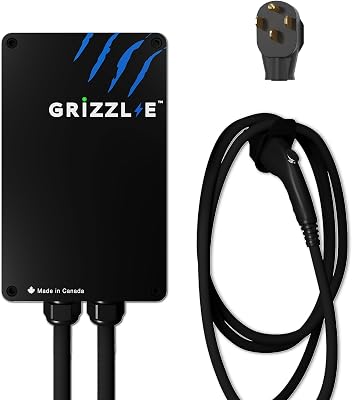
Grizzl-E Classic
Most Durable Level 2 — Cast Aluminum, NEMA 4, No-App Reliability
* Amazon affiliate link — EV Charger Scout may earn a small commission at no extra cost to you.
Australia — Chargefox Ultra-Rapid and NRMA EV Fast Chargers
Australia's fast charging network matured significantly in 2025–2026. Chargefox operates the country's most comprehensive ultra-rapid network with 350 kW chargers at highway locations on the Sydney–Melbourne and Brisbane–Sydney corridors. The NRMA (National Roads & Motorists' Association) is rolling out a separate ultra-rapid network with similar specs. Both networks use CCS2, which is the dominant DC fast standard in Australia. Tesla Superchargers (CCS2 in Australia) are also an option for compatible vehicles.
China — State Grid and Private Ultra-Fast Hubs
China operates the world's largest EV charging infrastructure by volume. State Grid's ultra-fast charging hubs — particularly in Guangdong, Zhejiang, and Jiangsu provinces — routinely deliver 480 kW using GB/T DC connectors. BYD's own ultra-fast charging standard ("Flash Charging") goes even further, with select hubs rated at 1,000 kW for compatible BYD vehicles. For international EV drivers in China, GB/T adapters are available from local retailers, but North American CCS1 EVs face connector compatibility challenges that require careful planning.
10 Practical Fixes for Range Anxiety Right Now
- 1Plan your fast charger stops, not your full-charge stops. Highway driving is most efficient with multiple shorter stops. A 10-minute hit at 20% SoC is faster and better for battery health than a 40-minute charge from 20% to 90%.
- 2Use the 20–80% rule on road trips. Lithium batteries charge fastest between 20% and 80%. Stopping at 20% and leaving at 80% minimizes time at the charger and maximizes charge rate throughout the session.
- 3Precondition the battery in cold weather. Cold lithium batteries accept charge very slowly. Use your vehicle's scheduled departure feature to warm the battery while still plugged in at home — or use the navigation destination feature, which triggers thermal management on most modern EVs.
- 4Filter to 150+ kW chargers in EV Charger Scout. The minimum power filter eliminates Level 2 and slow DC chargers from your results, showing only stations that can deliver a meaningful fast top-up.
- 5Know your adapter situation before you leave. If you drive a CCS vehicle, a NACS adapter unlocks Tesla's entire Supercharger network — often the most reliable option on any highway corridor.
- 6Have a backup station in mind. Check live status on your primary station before you commit. If all ports show In Use, a second option within 5–10 miles means you're never stuck waiting.
- 7Download network apps for backup payment. Plug-and-charge works at Electrify America and Ionna for most NACS vehicles. For CCS vehicles, having ChargePoint, EA, and the relevant network app reduces the risk of payment failure at an unmanned highway charger.
- 8Pick stations at highway exits with amenities. A 10-minute charge is a bathroom-and-coffee stop, not a delay. Charging next to a restaurant converts wait time into useful time.
- 9Check real-time status before you arrive. Use live status in EV Charger Scout to see available, in-use, and out-of-service connectors before you commit to a route.
- 10Charge the night before a road trip. Starting at 100% (or your daily max, typically 90%) before a long trip gives you maximum range for the first leg and reduces the number of stops needed.
The fastest charge rate you'll ever see on your vehicle happens in the first few minutes below 30% SoC. Arrive at 15–20% and your 10-minute gain is maximized. If you're arriving at 40% or above because you're anxious about running out, you're waiting longer for less energy — the opposite of what you want.
What the Future Looks Like
True V4 Superchargers rolling out in the US at 500 kW per stall, 400 kW IONITY Alpitronic hardware in Europe, and CATL's 480 kW pilot supercharge network in China are already fast enough that for most 2026 passenger EVs, the vehicle — not the charger — is the limiting factor. The next frontier is vehicles that accept higher rates: the new BMW Neue Klasse, Lucid, and several Chinese EVs now accept 400+ kW, with the megawatt-class charging the trucking industry is deploying waiting further out.
In parallel, software improvements in battery thermal management, state-of-charge estimation, and charging curve optimization are continuing to increase how much energy EVs can accept in the first 10 minutes of a session. For most drivers buying a new EV in 2026, range anxiety at the highway level is already an obsolete fear — the infrastructure just needs to be better communicated and more reliably located.
EV Charger Scout's minimum power filter lets you set a floor of 100, 150, 200, or 250 kW — instantly surfacing only the stations capable of delivering a meaningful 10-minute top-up. Combine with live status to confirm ports are available before you commit.
Frequently Asked Questions
How much range can a 10-minute fast charge actually add?
A 10-minute charge at a 350 kW DC fast charger with a vehicle that accepts 250 kW puts roughly 40 kWh into the battery — about 130–180 miles of range depending on efficiency. The catch is that most EVs on the road accept significantly less than 250 kW, so real gains vary widely by vehicle. For many popular models a 10-minute stop adds closer to 40–80 miles.
Why is my real-world charging speed slower than the charger's rating?
Peak charge rates only occur in a narrow state-of-charge window, typically 10–30%, and the rate tapers significantly as the battery fills. The charger's headline number (such as 350 kW) is also capped by your vehicle's onboard acceptance rate. Arriving above 30% state of charge meaningfully reduces how much energy the battery accepts in the first 10 minutes.
Which networks deliver the fastest charging in 2026?
In the US, Electrify America runs the highest average power among third-party networks with widespread 350 kW Express stations, while Tesla's Supercharger network leads on reliability and coverage. In Europe, IONITY offers up to 350 kW (with some 400 kW stalls) and Tesla V4 units deliver up to 500 kW. South Korea's E-pit, Australia's Chargefox and NRMA networks, and China's State Grid hubs round out the global fastest options.
How can I reduce range anxiety on a road trip right now?
Plan shorter, more frequent fast-charger stops rather than full charges, and use the 20–80% rule since batteries charge fastest in that band. Precondition the battery in cold weather, keep a backup station in mind, and filter to 150+ kW chargers in EV Charger Scout. Checking real-time status before you arrive removes most of the uncertainty.
Why does arriving with a lower battery actually help?
The fastest charge rate you'll ever see happens in the first few minutes below 30% state of charge. Arriving at 15–20% maximizes your 10-minute gain, while arriving at 40% or above means you wait longer for less energy. Topping up in short bursts at low state of charge is also better for battery health than charging all the way to 90%.
More guides on Tips & Guides
Explore the full Tips & Guides topic hub — related guides that build on this one.
EV Charging Without a Garage: Apartment, Condo & Street Parking Options
12 min read
EV Charging Etiquette in 2026: The Rules That Actually Matter (And How to Handle Violations)
13 min read
Peak Summer Heat Charging Tips: Avoid Overheating at High-Power Stations
13 min read
EV Charging Stations: The 2026 Complete Guide to Finding, Using, and Avoiding the Worst Ones
13 min read
Find EV Charging Stations Near Me: Real Owner Tips for 2026
12 min read
Charging-as-a-Service: Why Retailers Are Adding Free Adapters and What It Means for You
13 min read