 EV Charger Scout
EV charging connectors are genuinely confusing, and that confusion compounds when you cross borders. Depending on where in the world you live, you might be dealing with NACS, CCS1, CCS2, CHAdeMO, GB/T, or some combination of adapters that cover them. This guide cuts through the alphabet soup and explains what each standard is, who has which one, and exactly when and how you'd need an adapter — whether you're charging in California, Kent, Kyoto, or Canberra.
No fluff. Just the connectors, the standards, and the practical decisions.
The Global Connector Standards — What Each One Actually Is
NACS / SAE J3400 (North America, Australia — growing)
NACS stands for North American Charging Standard. Tesla developed it internally and used it on every vehicle sold in North America from 2012 onward. It's a compact, oval-shaped connector that handles both AC Level 2 and DC fast charging through the same physical port — one plug for everything. In 2023, SAE International formally adopted it as SAE J3400, which triggered a wave of automaker commitments. It's now the dominant standard for new EV production in North America and is gaining ground in Australia and parts of Asia.
CCS1 / Combo 1 (North America)
CCS1 (Combined Charging System, Combo 1) stacks a J1772 AC connector on top with two large DC fast-charge pins below it. It was the dominant DC fast charging standard for non-Tesla EVs sold in North America from roughly 2015 to 2024 and is still fitted to millions of vehicles on the road today.
CCS2 / Combo 2 (Europe, Australia, many global markets)
CCS2 uses the European Type 2 (Mennekes, IEC 62196-2) AC connector on top with the same DC fast-charge pins below. This is the dominant standard across the European Union, the UK, Norway, Switzerland, and most of the Middle East. It's also the standard mandated for public DC fast chargers in Australia. The DC charging behavior is nearly identical to CCS1 — the difference is purely the AC portion at the top.
Critically: Tesla vehicles in Europe and Australia use CCS2, not NACS. Tesla transitioned European and Australian vehicles to CCS2 hardware starting in late 2022, and most Superchargers in those regions were retrofitted with CCS2 cables at the same time. This means European EV drivers generally do not deal with NACS at all.
CHAdeMO (Japan, parts of Asia — legacy)
CHAdeMO was developed by a consortium of Japanese automakers (Toyota, Nissan, Mitsubishi, Subaru) and was once a major competing DC fast charging standard globally. It features a large, round, non-combined connector — separate from the AC charging port. You'll still find CHAdeMO stalls widely in Japan and across parts of Southeast Asia, South Korea, and New Zealand. In Europe and North America, CHAdeMO has largely been phased out of new installations, though legacy stalls remain at many older locations.
The Nissan LEAF (pre-2023 editions in many markets) is the most common CHAdeMO vehicle still on public roads globally. The Mitsubishi Outlander PHEV also uses CHAdeMO for DC fast charging in markets where it was offered with that capability.
GB/T (China)
GB/T (Guobiao standard) is China's national EV charging standard, mandated for all EVs sold and charged in mainland China. There are separate GB/T connectors for AC and DC charging. Vehicles built primarily for the Chinese market — including China-spec Tesla Model 3/Y, BYD, NIO, Xpeng, and Li Auto — use GB/T and charge on China's extensive GB/T charging infrastructure. Chinese-market vehicles sold abroad may have different connectors depending on the destination market.
DC Fast Charging Upgrade · EV Shop

Lectron CCS-to-NACS Adapter for Tesla
UL 2252 Certified — Charge Your Tesla at Any CCS DC Fast Charger
* Amazon affiliate link — EV Charger Scout may earn a small commission at no extra cost to you.
Type 2 / Mennekes (Europe — AC only)
The Type 2 connector (IEC 62196-2, called "Mennekes" after the German manufacturer) handles AC charging up to 22kW (three-phase) across Europe. Every EV sold in Europe uses Type 2 for AC charging, regardless of what DC fast charging standard it uses. Charging at home wallboxes, workplace chargers, and slower public AC stations all use Type 2 in European markets.
Size is the most practical factor: the NACS connector is about the size of a USB-C plug, while CCS1 is significantly larger and heavier. Tesla also released NACS to SAE royalty-free, removing licensing friction. And critically — Tesla's Supercharger network was already the best DC fast charging network in the US. Adopting NACS meant gaining access to it.
Who Has What Connector — by Market
North America (USA, Canada, Mexico)
| Vehicle | Connector | Notes |
|---|---|---|
| Tesla (all years, all models — US/CA/MX) | NACS | Native at all Superchargers in North America |
| Ford F-150 Lightning 2022–2023 | CCS1 | Adapter needed for Superchargers |
| Ford F-150 Lightning 2024 | CCS1 or NACS | Mixed production — check your build |
| Ford F-150 Lightning 2025+ | NACS | Native Supercharger access |
| Ford Mustang Mach-E 2021–2023 (US) | CCS1 | Adapter needed for Superchargers |
| Ford Mustang Mach-E 2024 (US) | CCS1 or NACS | Mixed production run |
| Ford Mustang Mach-E 2025+ (US) | NACS | Native |
| Rivian R1T / R1S pre-2024 build | CCS1 | Rivian mailed free NACS adapter to these owners |
| Rivian R1T / R1S 2024+ build | NACS | Native — verify in-app |
| Rivian R2 | NACS | Launched with NACS standard |
| Chevrolet Equinox EV / Blazer EV 2024 | CCS1 | Transitional year |
| GM vehicles 2025+ (US) | NACS | All Chevy, GMC, Cadillac EVs from 2025 onward |
| Hyundai IONIQ 5/6, Kia EV6 (2022–2024, US) | CCS1 | Some 2025+ models switched — confirm spec |
| Volkswagen ID.4, Audi Q4 e-tron (US) | CCS1 | No NACS transition for current models |
| BMW iX, i4, i5, i7 (US, through 2025) | CCS1 | BMW committed to NACS for future models |
| Lucid Air (US) | CCS1 | Lucid committed to NACS for future vehicles |
Europe and UK
| Vehicle | AC Connector | DC Connector | Notes |
|---|---|---|---|
| Tesla Model 3/Y/S/X/Cybertruck (EU/UK, post-late 2022) | Type 2 | CCS2 | Superchargers in Europe use CCS2 cables |
| Ford Mustang Mach-E (EU/UK) | Type 2 | CCS2 | No adapter needed at EU Superchargers |
| Volkswagen ID.4, ID.3, ID.5 | Type 2 | CCS2 | CCS2 is standard across all EU VW Group EVs |
| Hyundai IONIQ 5/6, Kia EV6 (EU) | Type 2 | CCS2 | Standard — compatible with all EU DCFC |
| Renault Megane E-Tech, Zoe | Type 2 | CCS2 / AC only | Zoe has no DC; Megane has CCS2 |
| BMW iX, i4, i5, i7 (EU) | Type 2 | CCS2 | Standard across BMW EV range in Europe |
| Mercedes EQS, EQE, EQA (EU) | Type 2 | CCS2 | Standard |
| Polestar 2, 3, 4 (EU) | Type 2 | CCS2 | Standard |
| Audi Q4/Q6/Q8 e-tron (EU) | Type 2 | CCS2 | Standard across Audi EV range |
| Nissan LEAF (EU, pre-2023) | Type 2 | CHAdeMO | Legacy DC standard — fewer stalls available now |
| Nissan Ariya (EU) | Type 2 | CCS2 | Ariya switched to CCS2 |
Japan and Parts of Asia
| Vehicle | AC Connector | DC Connector | Notes |
|---|---|---|---|
| Nissan LEAF (Japan) | Type 1 (J1772) | CHAdeMO | CHAdeMO widely supported in Japan |
| Mitsubishi Outlander PHEV (Japan) | Type 1 | CHAdeMO | DC via CHAdeMO where offered |
| Toyota bZ4X / Lexus RZ (Japan) | Type 1 | CHAdeMO | Japan spec — export markets vary |
| Tesla Model 3/Y (Japan) | Type 2 / NACS | CCS2 / NACS | Japan Superchargers support both |
| Hyundai IONIQ 5 (South Korea) | Type 1 | CCS1 or CHAdeMO | Varies by trim and market year |
Australia and New Zealand
Australia is in an interesting transitional period. CCS2 is the mandated standard for new public DC fast chargers under Australian government infrastructure funding, and most new EVs sold there use CCS2. However, some older installations and some Japanese-market vehicles sold in Australia used CHAdeMO. NACS is beginning to appear as Tesla starts deploying it in AU alongside CCS2.
| Vehicle | DC Connector (AU) | Notes |
|---|---|---|
| Tesla Model 3/Y/S/X (AU) | CCS2 | AU Superchargers have CCS2 cables |
| MG ZS EV, MG4 (AU) | CCS2 | Standard for AU market |
| BYD Atto 3, Seal, Dolphin (AU) | CCS2 | AU-spec uses CCS2 |
| Nissan LEAF e+ (AU) | CHAdeMO | Legacy — CHAdeMO stalls available but declining |
| Hyundai IONIQ 5/6 (AU) | CCS2 | Standard for AU market |
China
All EVs sold and charged in mainland China use GB/T, period. This includes Chinese-market Teslas, BYD, NIO, Xpeng, Li Auto, Zeekr, and all other brands. China's public charging infrastructure (which is the world's largest by a wide margin — over 10 million public charging points as of 2025) is entirely GB/T. If you're visiting China with a non-GB/T vehicle, you will need an adapter, which are available through vehicle manufacturers or Chinese charging operators.
If you're unsure which connector your car has, look at the charge port opening. CCS1 is a large combined socket with two rectangular DC pins at the bottom. CCS2 has a Type 2 upper portion (round, 7-pin) with the same DC lower pins. NACS is small and oval, about the width of two fingers. CHAdeMO is a large round independent connector, separate from the AC port.
The Key Adapter Scenarios — by Region
North America
- →CCS1 vehicle at a Tesla Supercharger — You need a CCS1-to-NACS adapter. Tesla Superchargers in North America use NACS cables. Without an adapter, you cannot connect. This is the most common adapter scenario for US/Canadian EV drivers.
- →NACS vehicle at an older CCS-only DCFC — Some older Electrify America, EVgo, and Blink stations only have CCS1 cables. You need a NACS-to-CCS1 adapter (your car's NACS port to a CCS1 cable). This is becoming less common as major networks retrofit stations with NACS cables.
- →CCS1 vehicle at a non-Supercharger DCFC — No adapter needed. ChargePoint, EVgo, Electrify America, and Blink all natively support CCS1.
- →NACS vehicle at a Supercharger — No adapter. Plug directly in.
Europe and UK
- →CCS2 vehicle at a Supercharger (EU/UK) — No adapter needed. Tesla's European Superchargers use CCS2 cables and have supported non-Tesla vehicles since 2022. Just create a Tesla account and charge.
- →CCS2 vehicle at IONITY, Allego, Fastned, bp pulse, etc. — No adapter needed. All major European fast charging networks use CCS2 as their standard DC connector.
- →CHAdeMO vehicle (e.g. older Nissan LEAF) at a CCS2-only charger — You need a CHAdeMO-to-CCS2 adapter, which is rare and expensive. In practice, most European CHAdeMO drivers stick to CHAdeMO stalls, which are still present but declining. This is the most constrained situation for a European EV driver in 2026.
- →Tesla vehicle (EU, CCS2) at a CHAdeMO station — Tesla sells a CHAdeMO adapter for their European vehicles. It's a large, expensive device (~€400) and not widely used — Supercharger coverage in Europe is extensive enough that most owners don't need it.
Japan and Asia
- →CHAdeMO vehicle in Japan — No adapter needed for most Japanese DC fast chargers. Japan's infrastructure is still predominantly CHAdeMO, particularly at highway rest areas and dealerships.
- →CHAdeMO vehicle trying to use CCS2 chargers — CHAdeMO-to-CCS2 adapters do not exist in a standardized form. CHAdeMO and CCS2 are not electrically compatible in the same way CCS1 and CCS2 are. Stick to CHAdeMO infrastructure.
- →CCS2 vehicle (e.g. a European IONIQ 5 imported to Japan) — CCS2 infrastructure in Japan is growing but still sparse compared to CHAdeMO. Adapters between CCS2 and CHAdeMO are limited.
EV Tech Pick · EV Shop
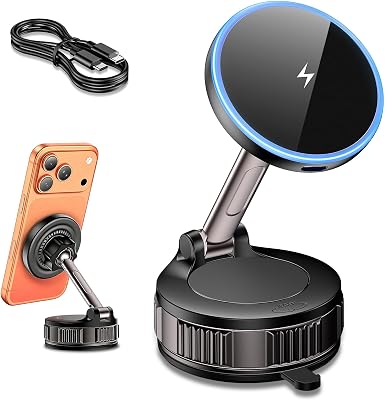
ESR Magnetic Wireless Car Charger Mount
Strongest Magnetic Wireless Charger — Adjustable Arm, Fast Charging
* Amazon affiliate link — EV Charger Scout may earn a small commission at no extra cost to you.
Using Tesla Superchargers — Key Differences by Region
Tesla's global Supercharger network opened to non-Tesla EVs starting in late 2021 (with the Netherlands pilot), and by 2024 the program had expanded to most of Europe, North America, Australia, and parts of Asia. But the technical details differ significantly by region:
| Region | Supercharger Cable Type | Non-Tesla Access | Adapter Required? |
|---|---|---|---|
| USA / Canada | NACS | Yes — most V3/V4 stations | Yes, if your car has CCS1 |
| Europe / UK | CCS2 | Yes — all V3/V4 stations | No — CCS2 vehicles plug straight in |
| Australia | CCS2 (+ NACS at some sites) | Yes | No for CCS2 vehicles |
| Japan | NACS / CCS2 (mixed) | Expanding | Depends on vehicle and station |
| China | GB/T | Yes — via Tesla's CN network | No — GB/T vehicles plug straight in |
| Middle East | CCS2 | Expanding | No for CCS2 vehicles |
Magic Dock: A North America-Specific Solution
Tesla has installed a feature called Magic Dock at hundreds of Supercharger locations in the US. It's a built-in CCS1 adapter docked on the Supercharger cable — no adapter to bring. Use the Tesla app to unlock it, attach it to your CCS1 vehicle, and charge. Magic Dock is a North American concept; in Europe, the stall cable is already CCS2, so no built-in adapter is needed.
Getting Your CCS Vehicle onto a Supercharger (Anywhere)
Regardless of your region, you need a Tesla account to use a Supercharger as a non-Tesla driver. The process is the same everywhere:
- 1Go to tesla.com and create a free account, or do it in the Tesla app.
- 2Add a payment method. Tesla accepts major credit cards globally; some regions support additional local payment methods.
- 3In the app, go to Charging → Add Non-Tesla. This links your account to non-Tesla access.
- 4At the stall, use the Tesla app to start the session, or use the stall's touchscreen where available.
Not all Supercharger stalls in all regions support non-Tesla vehicles. Older V1 and some V2 stalls were not retrofitted for external access. Check the Tesla app or EV Charger Scout before relying on a specific station for a critical charging stop.
Practical Tips Before You Plug In — Everywhere
- 1Research your destination country's standard before you travel with an EV. The connector on your vehicle may not match local infrastructure.
- 2Check adapter compatibility lists on your manufacturer's website rather than assuming 'CCS-to-CCS' works — CCS1 and CCS2 are not the same connector.
- 3Set up all required charging network accounts before you travel: Tesla, IONITY, Electrify America, ChargePoint, Fastned, bp pulse, and others all require registration.
- 4Carry your adapter in a protective pouch. High-current adapters get warm during DC fast charging and can collect debris that causes port damage.
- 5If a charger rejects your car with an adapter, move to a different stall before assuming incompatibility. Individual stalls can have firmware issues; the next one usually works.
- 6In Japan and parts of Asia, use PlugShare or EV Charger Scout to confirm stall types before committing to a route — CHAdeMO and CCS2 stalls are often co-located but the ratio varies significantly by location.
Where Things Stand in 2026
Globally, the connector situation is consolidating — but not uniformly. In North America, NACS/SAE J3400 has won and new vehicle production has shifted almost entirely to it. CCS1 will persist on millions of existing vehicles for another decade, making adapters a practical reality for the medium term.
In Europe, CCS2 remains the standard and is not under meaningful competitive pressure. The EU has legislated CCS2 as the required DC fast charging standard for new public chargers, which locks in the infrastructure for years. CHAdeMO is in managed decline — still usable, but not the future.
In China, GB/T dominates completely and has no imminent threat to its position. Japan is in a genuine transition, with CHAdeMO legacy infrastructure coexisting with growing CCS2 and NACS deployments.
For anyone charging primarily in their home country, one standard and one adapter scenario covers the vast majority of situations. The complexity hits when you travel internationally — and that's when checking EV Charger Scout for local network availability and connector types becomes genuinely useful.
EV Charger Scout aggregates station data from NREL and OpenChargeMap, covering charging networks globally. Filter by connector type to see which stations work with your vehicle, and check the Ports tab in the station detail panel for per-stall connector details before you commit to a stop.
Frequently Asked Questions
What's the difference between NACS, CCS1, and CCS2?
NACS (SAE J3400) is the compact Tesla-developed connector that's now the dominant standard for new EVs in North America. CCS1 is the larger North American combo connector used by most non-Tesla EVs from roughly 2015 to 2024. CCS2 uses the European Type 2 AC connector on top of the same DC pins and is the standard across the EU, UK, and Australia — so even Tesla vehicles in Europe and Australia use CCS2, not NACS.
Do I need an adapter to use a Tesla Supercharger in Europe?
No. Tesla's European and Australian Superchargers use CCS2 cables, and so do the EVs sold in those regions, so a CCS2 vehicle plugs straight in. You only need to create a Tesla account and add a payment method. The adapter conversation is primarily a North American one, where CCS1 vehicles need a CCS1-to-NACS adapter for Superchargers.
Which connector do EVs in China use?
All EVs sold and charged in mainland China use GB/T, China's national standard, with separate connectors for AC and DC. This includes China-spec Teslas, BYD, NIO, Xpeng, and Li Auto. If you visit China with a non-GB/T vehicle you'll need an adapter, available through manufacturers or Chinese charging operators.
Can a CHAdeMO car use a CCS2 charger with an adapter?
Not easily. CHAdeMO and CCS2 are not electrically compatible the way CCS1 and CCS2 are, and standardized CHAdeMO-to-CCS2 adapters are rare and expensive where they exist at all. In practice, most CHAdeMO drivers — like older Nissan LEAF owners — stick to the declining but still-present CHAdeMO infrastructure.
How can I tell which connector my car has?
Look at the charge port opening. CCS1 is a large combined socket with two rectangular DC pins at the bottom, while CCS2 has a round 7-pin Type 2 upper portion with the same DC pins below. NACS is small and oval, about the width of two fingers, and CHAdeMO is a large round connector that sits separate from the AC port.
More guides on Charging 101
Explore the full Charging 101 topic hub — related guides that build on this one.
You Just Bought Your First EV – Now What? The Complete New Owner Guide & Checklist
13 min read
EV Charging Station Types Explained: Level 1, Level 2, and DC Fast Charging
8 min read
EV Battery Life in 2026: How Long It Really Lasts and 7 Proven Ways to Slow Degradation
14 min read
Tesla Charging in North America: The Owner's Guide to NACS, Adapters, and What's New in 2026
13 min read
2026 EV Connector Guide: Which Cars Use NACS, CCS, J1772, and More
10 min read