 EV Charger Scout
The most common question from people considering an electric vehicle is some version of: "how long does the battery really last?" It's a fair question — the battery is the most expensive component in the car, and concern about degradation shapes how people use, charge, and value EVs. The honest 2026 answer: EV batteries last significantly longer than early adopters feared, degradation is real but manageable, and the specific charging and storage habits you build now directly determine how much capacity your battery retains in year eight, ten, or fifteen. Here's what the data actually says and what you can do about it.
How EV Battery Degradation Actually Works
An EV's lithium-ion battery pack slowly loses usable capacity over time. This isn't a cliff — it's a gradual, measurable slope. The rate of degradation depends on chemistry (NMC, LFP, NCA), thermal management quality, usage patterns, and charging behavior. A battery that has degraded 10% still holds 90% of its original capacity — if your car started with 400 km (250 mi) of range, 10% degradation means ~360 km (225 mi). Most drivers don't notice 10% degradation in daily use.
Degradation happens through two main mechanisms:
- →Calendar aging: Chemical reactions inside the cell happen slowly over time, regardless of whether the car is being driven. Higher temperatures and high state-of-charge storage both accelerate calendar aging.
- →Cycle aging: Each charge-discharge cycle causes microscopic structural changes in the electrodes. Charging to very high or very low extremes, and fast charging at high temperatures, accelerate cycle aging.
What the Real-World Data Shows
Long-term fleet studies and owner data from vehicles with several years on the road are now revealing a consistent picture:
| Vehicle / Study | Mileage / Age | Capacity Retained | Source |
|---|---|---|---|
| Tesla Model S/X (fleet avg) | ~200,000 km / 125,000 mi | ~88–90% | Tesla Impact Report 2024 |
| Tesla Model 3/Y (fleet avg) | ~150,000 km / 93,000 mi | ~91–93% | Recurrent 2025 survey |
| Nissan Leaf (24 kWh, no TMS) | ~100,000 km / 62,000 mi | ~75–80% | UK fleet data, 2023 |
| Nissan Leaf e+ (62 kWh, with TMS) | ~100,000 km / 62,000 mi | ~88–91% | Owner data, FleetLogger |
| Hyundai Ioniq 5 (LFP variant) | ~80,000 km / 50,000 mi | ~96–97% | Early owner telematics |
| Chevrolet Bolt EV (NMC) | ~160,000 km / 100,000 mi | ~85–89% | Recurrent 2025 data |
| Renault Zoe (older battery lease) | ~150,000 km / 93,000 mi | ~82–86% | European fleet reports |
The Nissan Leaf's early generations are the most cited cautionary tale — the 24 kWh version had no active thermal management, meaning the battery cells had no cooling or heating system. This accelerated degradation significantly, particularly in hot climates like Arizona, California, and parts of Southern Europe. The lesson was learned by the industry: every subsequent mainstream EV includes active liquid thermal management, and the data shows markedly better retention as a result.
LFP (lithium iron phosphate) batteries — used in the base Model 3, some Ioniq 6 variants, and most BYD and Chinese-market EVs — degrade more slowly than NMC chemistry and can be charged to 100% daily without significant impact. If your EV uses LFP chemistry, you don't need to limit yourself to 80% in daily charging.
7 Proven Ways to Slow Battery Degradation
Home Charging Upgrade · EV Shop

ChargePoint Home Flex
Best J1772 — Up to 50A, Energy Star Certified, Any Non-Tesla EV
* Amazon affiliate link — EV Charger Scout may earn a small commission at no extra cost to you.
1. Keep Your Daily Charge Limit at 80%
For EVs with NMC or NCA chemistry (most non-LFP vehicles), charging to 80% instead of 100% for daily use meaningfully reduces cell stress. The electrodes operate in a lower-stress voltage range between 20% and 80% SoC. Tesla calls this "Daily" vs "Trip" charge mode. Most other EVs let you set a charge limit in the vehicle app. The reduction in degradation from staying between 20–80% versus 0–100% regularly is estimated at 15–25% less capacity loss over 10 years by several battery research groups.
2. Avoid Frequent DC Fast Charging as Your Primary Charging Method
DC fast charging delivers high current to the battery, which generates heat and causes slightly more electrode stress than AC Level 2 charging. Studies from Idaho National Laboratory (INL) found measurable differences in degradation between vehicles charged primarily on Level 2 versus primarily on DCFC over a 50,000-mile test period. The practical rule: use DCFC for road trips and genuine range emergencies, not for your regular daily top-up. Level 2 at home or workplace should be your baseline.
3. Don't Regularly Drain to Below 10–15%
The lower the state of charge, the higher the internal stress on the cells. Running your battery to near-empty regularly accelerates the same degradation mechanisms as charging too high. Keep the floor at 15–20% during normal driving. This is especially important in cold weather, when the battery is already under additional stress.
4. Park in Moderate Temperatures When Possible
Heat is the single biggest enemy of lithium-ion battery longevity. Sustained exposure to high temperatures — above 35°C (95°F) — while parked accelerates calendar aging significantly. If you live in a hot climate, park in shade or a covered garage whenever possible. Studies from University of California-San Diego found that ambient storage temperature was the single strongest predictor of long-term battery capacity loss across vehicle fleets.
Cold temperatures are less damaging to long-term battery health but do affect short-term performance — cold batteries deliver less range and charge more slowly. Preconditioning (warming the battery while still plugged in before departure) addresses the performance side without accelerating degradation.
5. Use Scheduled Charging
Every modern EV lets you schedule charging to complete just before your departure time rather than immediately when plugged in. This has two benefits: it lets the car complete charging at the cheaper overnight utility rate, and it means the battery sits at 80% (or your target charge limit) for the minimum time before you drive. Sitting at 100% SoC for extended periods is more stressful on the cells than reaching 100% right before you need it.
6. Precondition Before DC Fast Charging
Most EVs from 2022 onward support navigation-assisted battery preconditioning — when you route to a DC fast charger, the car automatically warms (or cools) the battery to optimal charging temperature before you arrive. This significantly improves charge speeds and reduces the thermal stress of rapid charging. On vehicles that support it, always navigate to your charger rather than just arriving unannounced. Tesla does this automatically; BMW, Hyundai, Kia, and most European EVs do too via their navigation or EV charging route apps.
7. Monitor Battery Health Regularly
Keep track of your battery's state. Most EVs display estimated range and charge level, but actual usable kWh can be checked through the vehicle app, OBD2 readers, or third-party tools:
- →Tesla: The Tesla app's Battery Health section shows estimated degradation. Third-party apps like TeslaFi track detailed history over time.
- →GM vehicles (Bolt, Equinox EV): MyChevrolet / MyGMC app shows battery charge and range info. Third-party OBD2 tools (Torque Pro with Bolt-specific PIDs, or Car Scanner) can read pack health on the 2017+ Bolt.
- →Hyundai / Kia / Genesis: BlueLink / UVO app. Third-party apps like EV Battery Spy (iOS/Android) work via OBD2 adapter for many brands.
- →Nissan Leaf: LeafSpy Pro is the definitive Leaf battery monitoring tool — shows cell-level data and historical degradation via a Bluetooth OBD2 adapter.
- →Most other brands: ABRP, Tronity, and similar telemetry services track actual usable kWh over time and can alert you to unusual degradation rates.
If you're buying a used EV, pay for a battery health report or check the battery capacity yourself using an OBD2 reader before purchasing. The original warranty capacity is documented in the owner's manual — compare against measured capacity to know exactly what you're getting.
DC Fast Charging Upgrade · EV Shop
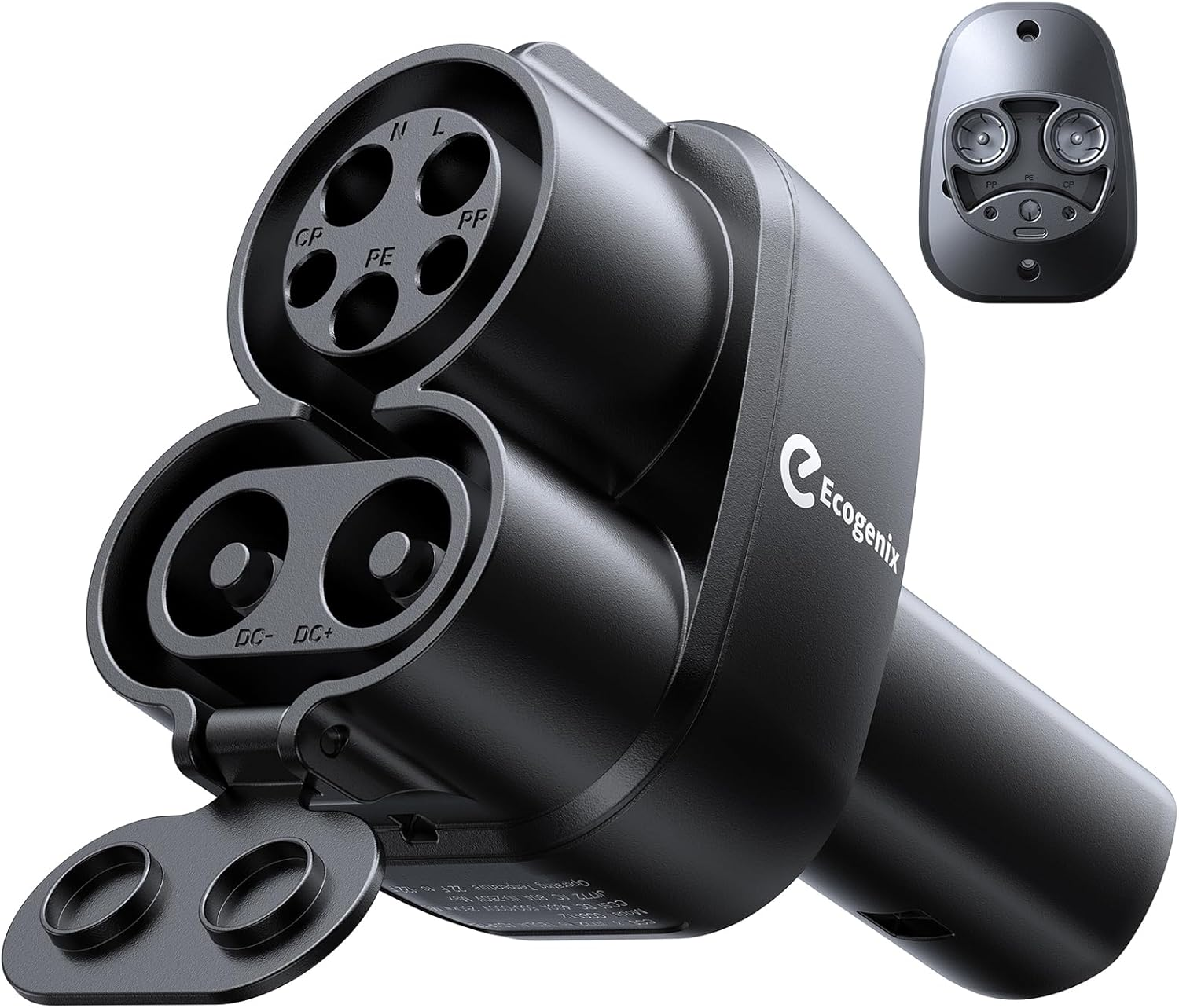
Ecogenix 2-in-1 CCS & J1772 to NACS Adapter
One Adapter, Two Standards — CCS DC Fast + J1772 Level 2
* Amazon affiliate link — EV Charger Scout may earn a small commission at no extra cost to you.
Battery Warranties: What They Actually Cover
Every new EV sold globally comes with a battery warranty, but the terms vary significantly. Understanding what yours covers is important before assuming the manufacturer will replace a degraded battery.
| Manufacturer | Warranty Period | Capacity Threshold for Replacement |
|---|---|---|
| Tesla | 8 years / 150,000–240,000 km (varies by model) | Replacement if drops below 70% of original |
| Hyundai / Kia | 8 years / 160,000 km | Replacement if drops below 70% |
| General Motors (Bolt, Equinox EV) | 8 years / 160,000 km | Replacement if drops below 60% (legacy Bolt) / 70% (new models) |
| Ford (Mustang Mach-E, F-150 Lightning) | 8 years / 160,000 km | 70% capacity threshold |
| Volkswagen Group (EU) | 8 years / 160,000 km | 70% capacity threshold |
| BYD (China / global) | 6–8 years depending on model | 70% capacity threshold |
| Nissan Leaf (2018+) | 8 years / 160,000 km | Nine capacity bars (approx 75%) |
The 70% threshold sounds like a lot of degradation before you qualify for a replacement. In practice, modern EVs with active thermal management rarely hit 70% in the warranty period. The warranty exists for early failure cases, not normal gradual aging. If your battery falls to 75% by year 6, you are outside warranty coverage but likely still have a very functional vehicle.
Battery warranties typically require the vehicle to have been serviced according to the manufacturer's schedule and may be voided by third-party battery modifications. Keep your service records. If you suspect abnormally fast degradation, raise it with the dealer while still under warranty.
How Long Will Your EV Battery Actually Last?
Based on 2025–2026 fleet data, a modern EV with active thermal management, driven by someone who follows reasonable charging habits, should retain:
- →90–93% capacity after 5 years / 80,000 km (50,000 mi)
- →82–88% capacity after 10 years / 160,000 km (100,000 mi)
- →75–82% capacity after 15 years / 240,000 km (150,000 mi)
These are ranges, not guarantees — the spread depends on climate, charging habits, and vehicle chemistry. At 75% remaining capacity after 15 years, a car that started with 400 km of range delivers ~300 km. For most daily drivers, that's still entirely adequate. The battery is unlikely to need replacement before the vehicle would otherwise need major mechanical work.
The question most people are really asking is: will I need to replace the battery pack before the car is otherwise at end-of-life? For modern EVs with good thermal management, the answer is almost certainly no — provided you avoid the specific charging patterns that accelerate degradation significantly.
Use the Charging Calculator to estimate cost and session length for any charging stop — so you stop at 80%, plan the right amount of time, and never overcharge at a DC fast charger. Free, no account required, works worldwide.
Frequently Asked Questions
How long does an EV battery actually last?
Most modern EV batteries are expected to outlast the usable life of the car — commonly well over 100,000–200,000 miles while retaining the majority of their capacity. Real-world data shows gradual capacity loss rather than sudden failure, and degradation typically slows after the first year or two.
How much battery capacity will I lose over time?
Studies of real fleets show average degradation of roughly 1–2% of capacity per year, though it varies by model, climate, and charging habits. That means many EVs still retain around 90% of capacity after several years of normal use.
What's the best way to slow battery degradation?
Keep the daily charge limit around 80%, avoid routinely running the battery to 0%, minimize frequent DC fast charging when you don't need it, and avoid leaving the car at a very high or very low state of charge in extreme heat. Moderate, consistent habits matter more than any single rule.
Does fast charging damage my battery?
Occasional DC fast charging is fine and what the system is designed for. Relying on it for the majority of your charging, especially in hot conditions, can accelerate degradation modestly over time. Using Level 2 charging at home for daily needs is gentler on the battery.
What does an EV battery warranty cover?
Most manufacturers warranty the battery for a set period and mileage (commonly 8 years / 100,000 miles, sometimes more) and guarantee it won't drop below a certain capacity threshold — often around 70% — during that window. Check your specific warranty for the exact terms and capacity guarantee.
More guides on Charging 101
Explore the full Charging 101 topic hub — related guides that build on this one.
You Just Bought Your First EV – Now What? The Complete New Owner Guide & Checklist
13 min read
EV Charging Station Types Explained: Level 1, Level 2, and DC Fast Charging
8 min read
Tesla Charging in North America: The Owner's Guide to NACS, Adapters, and What's New in 2026
13 min read
2026 EV Connector Guide: Which Cars Use NACS, CCS, J1772, and More
10 min read
NACS vs. CCS Adapters: A Global Guide for EV Drivers
10 min read