 EV Charger Scout
For most of the EV era, "fast charging" meant a 400-volt battery pulling a few hundred kilowatts on a hot day. The next generation of EVs is rewriting those numbers. Production cars from Hyundai, Kia, Genesis, Porsche, Lucid, Audi, and now several Chinese brands operate at 800V. Lucid's Air uses a roughly 924V architecture. The Megawatt Charging System for heavy trucks pushes to 1,250V and beyond. By 2030, 1,000V-class passenger architectures will be common. The interesting question isn't whether your next EV will need a higher-voltage charger — it's whether the chargers being built right now can deliver. The short answer: many already can. Here's the honest 2026 picture for drivers worldwide.
What "1,000V+" Actually Means
A vehicle's voltage class refers to the operating voltage of the high-voltage battery pack, not the AC voltage at the wall. A 400V-class EV's pack typically operates between 250V and 450V depending on state of charge. An 800V-class pack operates between roughly 500V and 920V. Lucid's near-1,000V architecture pushes that ceiling higher. Heavy-duty MCS systems for Class 7 and 8 trucks are built to handle up to 1,250V at up to 3,000A — a different specification entirely from passenger DC fast charging.
Higher voltage is desirable because charging power equals voltage times current (P = V × I). Doubling voltage at the same current doubles power, while keeping cable thickness, connector size, and thermal load manageable. An 800V pack pulling 500A delivers 400 kW through cables and connectors that are no thicker than a 400V system pulling 250A would need for 100 kW. That's why every car company aiming for sub-20-minute road-trip charging is moving up the voltage ladder.
Production EVs Operating at 800V or Above (2026)
| Vehicle | Architecture | Peak DC charging |
|---|---|---|
| Porsche Taycan / Audi e-tron GT | 800V (J1 platform) | 270 kW (320 kW updated Taycan) |
| Hyundai Ioniq 5 / 6 / 9 | 800V (E-GMP) | 235 kW (Ioniq 5/6); 350 kW peak hardware on Ioniq 9 |
| Kia EV6 / EV9 / EV5 | 800V (E-GMP) | 235 kW (EV6); 230 kW (EV9) |
| Genesis GV60 / G80 EV / GV70 EV | 800V (E-GMP) | 235 kW |
| Lucid Air / Gravity | ~924V class | 300+ kW (Air); higher peaks claimed for Gravity |
| Porsche Macan EV / Audi Q6 e-tron | 800V (PPE platform) | 270 kW (Macan); 270 kW (Q6 e-tron) |
| GMC Hummer EV / Chevy Silverado EV | 800V (Ultium high-tier) | 350 kW peak |
| Stellantis STLA Large EVs (e.g., Dodge Charger Daytona EV, Jeep Wagoneer S) | 400V → 800V depending on trim | Up to 350 kW on 800V variants |
| BYD Han L / Tang L / Sealion 7 (China) | 800V class | Up to 1,000 kW peak claimed via BYD's flash-charge platform on supporting hardware |
| Zeekr 001 / 007, NIO ET9 | 800V class | 350 kW+ at supporting Chinese stations |
| Xpeng G9 / G6, Avatr 11 | 800V class | Up to 480 kW at Xpeng S4 supercharger sites |
The peak charging numbers above are hardware capability under ideal conditions — battery state of charge in the optimal window, battery preconditioned to the right temperature, charger and grid able to deliver, and no other vehicle drawing from the same cabinet. Real-world peaks are typically 70–90% of these numbers, and average session power is lower still.
What Today's Public Chargers Can Actually Deliver
The CCS2 standard (used in Europe, the UK, Australia, and elsewhere) and the SAE J3400/NACS standard (used in North America) both formally support up to 1,000V DC at up to 500A — that's a 500 kW theoretical maximum per port. Most stations deployed before 2023 cap well below that, but the 2024–2026 deployment wave has pushed limits sharply higher.
| Charger model | Max voltage | Max power per port | Where deployed |
|---|---|---|---|
| ABB Terra 360 / HP | 1,000 V | Up to 360 kW (Terra 360) / 350+ kW (HP) | Global — Ionity, Ionna, Electrify America selectively, EVgo |
| Alpitronic Hypercharger HYC400 | 1,000 V | 400 kW | Europe widespread; growing in NA |
| Kempower Power Unit + Satellite | 1,000 V | 400 kW peak per dispenser | Europe primary; Nordics dominant |
| Tritium PKM150 / RT175-S / MSC | 950 V (PKM150) / 1,000 V (newer) | 150 kW (PKM150) / 350 kW (newer) | NA NEVI sites; AU; selective EU |
| Tesla V4 Supercharger cabinet | 1,000 V capable | Currently delivers up to 325 kW; hardware capable of 615 kW | NA, EU rollout in progress |
| BTC Power 350 kW HPC | 1,000 V | 350 kW | NA NEVI and EVgo sites |
| Star Charge / Wallbox / Delta high-power lines | 920–1,000 V | 240–360 kW | Global; varies by region |
DC Fast Charging Upgrade · EV Shop
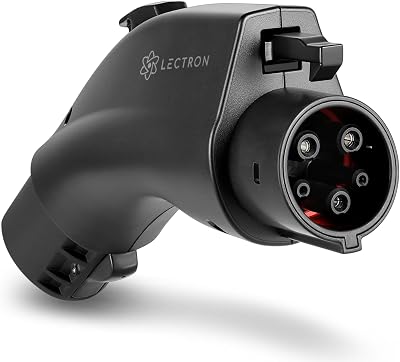
Lectron Vortex Plus NACS-to-CCS Adapter
The Gold Standard — UL 2252 Certified with Safety Interlock
* Amazon affiliate link — EV Charger Scout may earn a small commission at no extra cost to you.
The Real Bottleneck Isn't the Voltage Number
A 2026 ABB Terra 360 with a 1,000V-capable architecture is more than enough on the voltage axis to handle any production EV — including Lucid's 924V Air and any 800V Hyundai E-GMP vehicle. So the voltage ceiling isn't the practical limit. The actual limits drivers run into in 2026 are:
- 1Per-cabinet power sharing — Most "350 kW" stations have a cabinet that delivers 350–400 kW shared across two dispensers. If both dispensers are in use, each car gets roughly half. This is the most common reason a real-world session looks slower than the headline peak.
- 2Battery preconditioning — A cold battery cannot accept fast power. EVs that don't precondition (warm the pack on the way to a charger) routinely deliver 30–50% lower peak power, even at a 1,000V capable station.
- 3Charge curve, not peak — Every production EV's charge speed tapers as the battery fills. The 350 kW headline number is usually only available between 5% and ~25% state of charge. Above 50%, almost every car drops to 100 kW or less.
- 4Grid and transformer limits — Some sites have multiple high-power ports but a transformer that limits the total facility draw. Drivers see the per-port number; what matters is the total kW available across the whole site.
- 5Connector and cable thermal limits — Sustained current above about 500A requires liquid-cooled cables, which most older stations don't have. Without liquid cooling, the station throttles current as the cable warms up.
The marketing numbers on charger pedestals and apps are headline peaks. If your trip planning depends on hitting them, build in a 20–30% buffer. A conservative plan that assumes 70% of the headline rate is one that almost always works out.
How to Future-Proof Your Charging Decisions in 2026
If You're Buying an EV This Year
- →Check the architecture, not just the peak kW — A vehicle described as "350 kW capable" on an 800V architecture will often outperform a 400V vehicle with the same headline number, especially in the 25–60% state of charge band where most road-trip charging actually happens.
- →Verify preconditioning behavior — Ask whether the vehicle preconditions the battery automatically when navigation is set to a fast charger. Most premium 800V cars do; many entry-level EVs don't, and that single feature gap can cut your real-world fast-charging speed in half.
- →Native connector matters — In North America, a 2025+ NACS-native EV unlocks Tesla Superchargers without an adapter, on top of every NEVI station's NACS port. In Europe, every modern EV is CCS2 native. Don't pay extra for legacy connectors unless your specific use case requires them.
If You're Installing Home Charging
- →Level 2 home charging (240V single-phase in NA, 230V single- or 400V three-phase in EU/UK/AU) is unaffected by the high-voltage DC trends. A modern 11–22 kW Level 2 charger will continue to serve any future EV, including 1,000V architecture vehicles, because home charging uses the car's onboard AC charger, not the high-voltage DC system.
- →If you're future-proofing the panel and conduit during a remodel, run wire suitable for 50A or 60A even if the charger you install today is 32A. Adding a higher-amperage charger later then becomes a hardware swap rather than a wall-opening rebuild.
- →If you're considering bidirectional V2H or V2G capability, look for a charger and home setup explicitly designed for it (e.g., Wallbox Quasar 2, Ford Charge Station Pro paired with Sunrun Home Integration System, the Andersen A2 announced for European V2H). These are still niche but maturing fast.
EV Interior Essentials · EV Shop
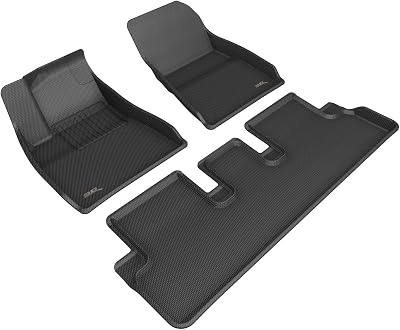
Premium All-Weather Floor Mats
Laser-Measured for Maximum Coverage — Custom-Fit for Your Vehicle
* Amazon affiliate link — EV Charger Scout may earn a small commission at no extra cost to you.
If You're Planning a Long Road Trip
- →Don't assume every charger marked 350 kW will deliver 350 kW to your car. Use route planners (A Better Route Planner, your vehicle's onboard routing, or EV Charger Scout's station detail panel) to see real-world session reports.
- →Filter for the highest-power stations on the route — but plan for the average to be 60–80% of headline. A 350 kW pedestal that averages 220 kW is still vastly faster than a 50 kW station running flat-out.
- →Pre-condition the battery before arrival when your car supports it. The single largest delta between a slow charging session and a fast one is usually battery temperature.
Megawatt Charging: The Truck-Side Story
The Megawatt Charging System (MCS) is a separate standard from CCS or NACS, designed for heavy-duty Class 7/8 trucks. The MCS connector and protocol support up to 1,250V DC at up to 3,000A, for a theoretical maximum of 3.75 MW. First commercial-scale deployments came online in 2023–2025, with operators including TeraWatt Infrastructure (US), Milence (Europe — a joint venture of Daimler Truck, TRATON, and Volvo Group), and several Chinese national carriers.
MCS is not interoperable with passenger CCS or NACS — it's a different physical connector. If you drive a passenger EV, MCS sites won't help you. They're worth understanding because they're driving the development of grid-side hardware (transformers, switchgear, energy storage buffers) that will eventually find its way into next-generation passenger sites with megawatt-class capability.
Looking Past 2026: What's Actually Coming
- 1Solid-state and silicon-anode batteries — Toyota, BMW, Stellantis, NIO, and CATL have all announced solid-state and silicon-anode timelines targeting volume production between 2027 and 2030. Higher voltage tolerance is one of the structural benefits — expect production cars at 1,000V+ class architectures by the end of the decade.
- 2Stationary battery buffers at sites — Many of the highest-power sites already use on-site stationary batteries to smooth grid demand. This becomes essential for megawatt-class delivery and lets sites operate where the grid alone could not provide the peak capacity.
- 3Wider liquid-cooled connector adoption — Liquid cooling is currently standard on 350 kW+ pedestals. As 500 kW+ becomes routine, every high-power dispenser will be liquid-cooled.
- 4Plug & Charge as the default — ISO 15118 Plug & Charge is rolling out broadly across CCS networks. NACS Plug & Charge (Tesla's "tap and go" experience) is being formalized for the rest of the NACS ecosystem. By 2028, fishing your phone out of your pocket to start a charge should be the exception, not the rule.
EV Charger Scout's connector and minimum-power filters let you see only the stations that match your specific vehicle and charging speed needs. Tap any station to see live port-level availability where supported by TomTom, plus the rated power per individual port — so you can plan for the real charging speed, not just the headline number.
Practical Bottom Line
The 2026 EV charging network is far more ready for the 1,000V era than most marketing copy suggests. Most stations built since 2023 already support up to 1,000V on the hardware side; the practical gap is in cabinet-level power, battery preconditioning, and per-session sharing. For an EV you're buying today, prioritize architecture (800V or higher), preconditioning behavior, and native connector type for your home region. For long-haul trips, plan around the average rate not the peak. And whatever charging hardware you're installing at home or at a depot, run conduit and panel capacity for tomorrow's draw, not today's.
Frequently Asked Questions
What does an 800V or 1,000V EV architecture actually mean?
A vehicle's voltage class refers to the operating voltage of its high-voltage battery pack, not the AC voltage at the wall. A 400V-class pack typically operates between 250V and 450V, while an 800V-class pack runs between roughly 500V and 920V, and Lucid's near-1,000V architecture pushes higher. Heavy-duty truck MCS systems are a different specification entirely, handling up to 1,250V.
Why are carmakers moving to higher-voltage architectures?
Charging power equals voltage times current, so doubling voltage at the same current doubles power while keeping cable thickness, connector size, and thermal load manageable. An 800V pack pulling 500A delivers 400 kW through cables no thicker than a 400V system would need for 100 kW. That's why every company aiming for sub-20-minute road-trip charging is moving up the voltage ladder.
Can today's public chargers handle 1,000V vehicles?
Many already can. Both the CCS2 and SAE J3400/NACS standards formally support up to 1,000V DC at up to 500A — a 500 kW theoretical maximum per port. Most stations built since 2023, including ABB Terra 360, Alpitronic, and Kempower units, already support up to 1,000V on the hardware side, so the voltage ceiling is rarely the practical limit.
If the voltage isn't the limit, why is my charge slower than advertised?
The real bottlenecks are per-cabinet power sharing (many 350 kW stations split that power across two dispensers), cold-battery preconditioning, and the charge curve that tapers as the battery fills. Grid and transformer limits at a site, plus connector and cable thermal limits without liquid cooling, also throttle delivered power. The article recommends planning around 60–80% of headline rates.
How should I future-proof an EV purchase or home charging today?
When buying, check the architecture rather than just peak kW, verify the car preconditions its battery automatically, and choose a native connector for your region — NACS in North America or CCS2 in Europe. For home charging, a modern 11–22 kW Level 2 charger will serve any future EV including 1,000V architectures, since home charging uses the car's onboard AC charger. When remodeling, run conduit and panel capacity for 50A–60A even if today's charger is smaller.