 EV Charger Scout
EVgo spent much of 2022 and 2023 in an awkward position: a charging network with solid urban coverage and a good reliability reputation, but limited in one critical way — every stall was CCS1 only. That locked out the fastest-growing segment of the EV market: Tesla owners who weren't going to bother with an adapter to use a third-party network when Superchargers were already everywhere. With the NACS transition, EVgo had both an opportunity and an obligation to update its hardware.
The 2025–2026 expansion represents EVgo's most significant infrastructure investment since the company went public. Here's what they're building, where it's going, and what it means for EV drivers — across North America and beyond.
What EVgo Is Deploying
EVgo's NACS expansion consists of two parallel efforts: adding NACS connectors to existing stations and building new dual-connector (CCS1 + NACS) or NACS-only stalls at new locations. The scale is significant. The company announced a target of 500+ new NACS ports deployed across its network in 2025–2026, concentrated initially in high-traffic urban and suburban markets before extending to highway corridors.
The deployment model varies by station type. At existing urban charging hubs, EVgo is retrofitting selected stalls with dual-cable heads — one CCS1 cable and one NACS cable per dispenser, both active simultaneously. At new greenfield installations and recent rebuilds, they're deploying newer dispensers with native NACS capability alongside CCS1 as standard configuration.
Power Levels at New NACS Stalls
The new NACS dispensers at EVgo's expanded network are rated at 350kW per port, matching the highest-power CCS installations in the North American market. In practice, delivered power is limited by your vehicle's acceptance rate — most current EVs max out between 150kW and 270kW. But 350kW-rated infrastructure is "future-proof" in that it won't be the bottleneck as vehicle technology improves over the next decade.
Key Markets Getting NACS First
EVgo's NACS rollout has prioritized markets with high EV adoption rates and existing EVgo station density. The first wave of significant deployment included:
California (Los Angeles, San Francisco Bay Area, San Diego)
California represents EVgo's most active market, with the highest station density and highest session volumes. The LA metro area saw the earliest NACS deployments, with a particular focus on EVgo's larger urban hubs at major retail locations. California's progressive EV mandate environment also provides regulatory tailwind for infrastructure investment.
DC Fast Charging Upgrade · EV Shop

Lectron CCS-to-NACS Adapter for Tesla
UL 2252 Certified — Charge Your Tesla at Any CCS DC Fast Charger
* Amazon affiliate link — EV Charger Scout may earn a small commission at no extra cost to you.
Texas (Austin, Dallas-Fort Worth, Houston)
Texas has seen among the fastest EV adoption growth in the US over 2024–2025, particularly in Austin and the DFW metroplex. EVgo has been expanding its Texas presence significantly, and the NACS rollout has followed the expansion rather than preceding it. New Texas installations are predominantly dual-connector from the start.
Illinois (Chicago metro)
Chicago is EVgo's primary Midwest anchor, with stations throughout the metro area and along I-90/94 and I-55 corridors. The Illinois NACS deployment is particularly important for highway charging between Chicago and other Midwest metros where Supercharger coverage is thinner.
Arizona (Phoenix, Scottsdale, Tempe)
Phoenix's warm climate and high EV adoption make it a natural deployment priority. The desert Southwest also has fewer competing charging networks than coastal markets, which increases the strategic value of EVgo's presence there.
New York/New Jersey Metro
Dense population, high EV penetration, and limited home charging availability (many residents live in apartments) make the NYC metro a high-priority market. EVgo has substantial station presence here and has been updating stations across Manhattan, Brooklyn, Queens, and New Jersey.
Pacific Northwest (Seattle, Portland)
Washington and Oregon have among the highest EV adoption rates per capita in the US, and both states have strong policy environments for EV infrastructure investment. EVgo's NACS deployment in the Pacific Northwest targets both urban hubs and highway corridor stations along I-5.
| Market | Deployment Phase | Station Focus |
|---|---|---|
| Los Angeles metro | First wave, ongoing | Retail hubs, highway access |
| Bay Area (SF/SJ/Oakland) | First wave, ongoing | Urban stations, EV-dense corridors |
| Phoenix / Scottsdale | First wave | Suburban retail, highway |
| Chicago metro | First wave | Urban hubs, I-90/I-55 corridor |
| Austin / DFW / Houston | Second wave, expanding | Urban + highway mix |
| NYC / NJ metro | Second wave, ongoing | Dense urban, apartment-adjacent |
| Seattle / Portland | Second wave | Urban + I-5 corridor |
| San Diego | Ongoing | Urban retail, I-5 corridor |
| Denver / Boulder | Second wave | Urban + mountain corridor access |
What Dual-Connector Deployment Means in Practice
Most of EVgo's NACS deployment is dual-connector rather than NACS-only. This is a deliberate choice driven by the multi-year reality of operating in a mixed-connector market. Millions of CCS1 vehicles are still on the road and will be for years. Removing CCS1 access to add NACS only would alienate existing customers. Dual-connector stalls serve everyone.
At a dual-connector EVgo stall, the physical setup typically has two cable "pigtails" hanging from the dispenser head — one ending in a CCS1 connector, one in a NACS connector. Both are active simultaneously from the same 350kW dispenser. Power allocation between the two cables on a single dispenser varies by hardware generation — some dispensers split power when both cables are in active use; newer generations deliver full rated power to each independently.
When using a dual-connector EVgo stall, check which cable delivers your connector type. Both are connected to the same dispenser, so confirm you're using the correct one before initiating the session in the app.
Home Charging Upgrade · EV Shop
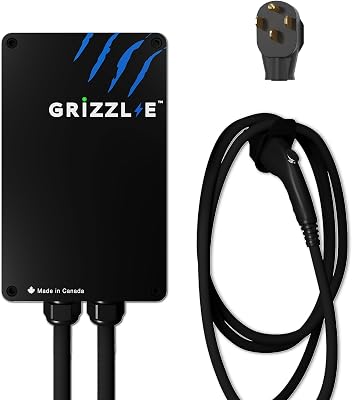
Grizzl-E Classic
Most Durable Level 2 — Cast Aluminum, NEMA 4, No-App Reliability
* Amazon affiliate link — EV Charger Scout may earn a small commission at no extra cost to you.
The EVgo App: What to Set Up Before Using NACS Stalls
- 1Download the EVgo app and create an account.
- 2Add a payment method. EVgo offers pay-per-session at a standard rate and an EvGo Plus membership at a reduced per-kWh rate with a monthly fee — the membership pays off quickly if you charge at EVgo regularly.
- 3Add your vehicle. The EVgo app uses your vehicle details to set the session correctly and display accurate charging curves.
- 4Enable location permissions so the app can find nearby stations and guide you to open stalls.
- 5At the station, select a stall in the app, confirm the connector type (NACS), and initiate the session before plugging in. Some dispensers require app initiation before the cable activates.
Reliability: EVgo's Track Record
Third-party EV charging reliability surveys — including the J.D. Power EV Charging Satisfaction Study and independent data from PlugShare and ChargePoint — consistently rate EVgo above the non-Tesla DCFC network average for uptime and successful charge session rates. The company has invested in remote monitoring and 24/7 support staffing, and their app reports uptime metrics more transparently than most competitors.
That said, no public charging network approaches the Supercharger network's reliability figures. EVgo's stated target of 98%+ uptime across its network is a goal for the NACS expansion, and the infrastructure upgrades that accompany new hardware installations tend to improve reliability at those specific locations.
The Broader Context: What Other Networks Are Doing
EVgo isn't the only non-Tesla network expanding NACS. The picture across the major North American networks:
- →Electrify America — Has been deploying dual-connector NACS+CCS1 stalls at new sites and retrofitting high-traffic existing stations. EA's highway network is strategically critical, and NACS deployment there is prioritized.
- →ChargePoint — Primarily a Level 2 network with a DCFC tier. ChargePoint has deployed NACS at DC fast charging locations and offers network software to operators wanting to add NACS hardware.
- →Blink — Smaller network, NACS deployment less advanced than EVgo or EA. Check individual station listings in EV Charger Scout for current connector availability.
- →Shell Recharge (formerly Volta) — Shell acquired Volta's network in North America and has been upgrading locations with NACS capability.
- →IONITY (Europe) — IONITY, Europe's highway DCFC network, uses CCS2. NACS is not relevant in European markets — CCS2 is already accessible to all vehicles, including Teslas. IONITY's expansion focus in 2026 is on higher-power dispensers (up to 350kW CCS2) and extending coverage into Eastern and Southern Europe.
International Perspective: Why NACS Expansion Is a North American Story
Outside North America, the "NACS expansion" narrative simply doesn't apply. European networks are expanding their CCS2 infrastructure. Australian networks are deploying CCS2 under national funding programs. Japanese infrastructure is still predominantly CHAdeMO with growing CCS2 additions. None of these markets are adding NACS.
For international drivers: the relevant equivalent of "EVgo's NACS expansion" in Europe is IONITY's continued rollout of 350kW CCS2 stalls along European highways. The outcome is similar — higher power, more ports, broader coverage — just using a different connector.
EV Charger Scout includes EVgo station data in its database. Filter by connector type to find EVgo stations with NACS capability in your area, and check the station detail panel for current port configuration and power levels.
Frequently Asked Questions
How many NACS ports is EVgo adding in its 2025–2026 expansion?
EVgo announced a target of 500+ new NACS ports deployed across its network in 2025–2026. The rollout is concentrated initially in high-traffic urban and suburban markets before extending to highway corridors. It represents EVgo's most significant infrastructure investment since the company went public.
How fast are EVgo's new NACS stalls?
The new NACS dispensers are rated at 350kW per port, matching the highest-power CCS installations in North America. In practice, delivered power is limited by your vehicle's acceptance rate — most current EVs max out between 150kW and 270kW. The 350kW rating means the charger won't be the bottleneck as vehicle technology improves.
What does a dual-connector EVgo stall mean for me?
Most of EVgo's NACS deployment is dual-connector rather than NACS-only, so existing CCS1 vehicles keep their access. At a dual-connector stall, two cable pigtails hang from the dispenser — one CCS1 and one NACS — both active from the same 350kW dispenser. Power allocation between the two cables varies by hardware generation, so check that you grab the correct cable for your connector before starting the session.
Which markets are getting EVgo NACS chargers first?
EVgo prioritized markets with high EV adoption and existing station density. California (LA, the Bay Area, San Diego) led the first wave, followed by Phoenix, Chicago, Texas metros, the NYC/NJ area, and the Seattle/Portland corridor. New installations in these areas are predominantly dual-connector from the start.
Does EVgo's NACS expansion apply outside North America?
No — the NACS expansion is a North American story. European networks such as IONITY are expanding CCS2 infrastructure, Australian networks are deploying CCS2, and Japan remains predominantly CHAdeMO with growing CCS2. None of these markets are adding NACS, since CCS2 is already accessible to all vehicles including Teslas.
More guides on Network News
Explore the full Network News topic hub — related guides that build on this one.
US Charging Network Uptime & Reliability Rankings: Q1 2026
12 min read
India's EV Charging Boom 2026: Top Networks, Connector Standards, and Visitor Tips
13 min read
Ultra-Fast 400 kW Charging in Europe: Ionity Corridors Every EV Driver Needs to Know
12 min read
Ionna Network Hits Top 10: Fastest Growing DC Chargers in the US Right Now
10 min read