 EV Charger Scout
India's EV charging infrastructure has gone from a patchwork of isolated pilot stations to a functioning — if still uneven — national network in just a few years. The pace of change is striking: in 2020, there were roughly 1,500 public charging points across the country. By early 2026, that number has grown to over 25,000 registered public charge points, with government and private operators adding thousands more each year. For EV drivers living in India, or visitors arriving with their own electric vehicle, the picture in 2026 is significantly better than it was — but it requires understanding which networks are reliable, what connector standards are in use, and where the coverage gaps still sit.
The State of India's EV Market in 2026
India's EV adoption is being driven primarily from two directions: two- and three-wheelers (which make up the vast majority of EV registrations by volume) and passenger cars targeting urban buyers. Tata Motors leads the passenger car segment with the Nexon EV, Punch EV, and Tiago EV. MG Motor India, Hyundai, Kia, BYD, and premium brands like Volvo and BMW round out the four-wheel EV market. The commercial sector — electric buses and delivery three-wheelers — is expanding rapidly under FAME II (Faster Adoption and Manufacturing of Hybrid and Electric Vehicles) incentives.
Two-wheelers and three-wheelers predominantly charge at home using standard 5A or 15A household sockets — dedicated public charging for this segment is limited. This article focuses on passenger car and commercial EV charging at public stations, which is the relevant segment for most readers planning travel or relocation.
Connector Standards in India
India's connector landscape is in transition, and understanding it is essential before planning a trip. There are three relevant standards you'll encounter:
Bharat DC-001 (BDC)
The Bharat DC-001 standard is India's indigenously developed DC fast charging connector, mandated by the Ministry of Power for publicly funded charging stations under FAME II. It operates at up to 15 kW DC output, which is modest by global standards but was designed for the Indian market's early-phase infrastructure. Bharat DC-001 is a Type A connector physically similar to the Chinese GB/T standard at lower power levels. Many legacy government-deployed stations use this connector exclusively, which means they're only useful for EVs that include a Bharat DC port.
CCS2 (IEC 62196 Combined Charging System Type 2)
CCS2 has become the de facto standard for DC fast charging at commercial EV charging stations in India, particularly for passenger cars. All Tata EVs from 2022 onward include CCS2 DC inlet alongside the Type 2 AC inlet. Hyundai Ioniq 5, Kia EV6, BYD Atto 3, MG ZS EV, and most other imported passenger EVs use CCS2 for DC fast charging. For drivers visiting from Europe or other CCS2 markets, their vehicles are compatible with India's commercial charging network without requiring any adapter.
Type 2 AC (IEC 62196-2)
Type 2 AC charging is the standard for AC Level 2 public charging across India's commercial network. Most public charging hubs at malls, hotels, and tech parks deploy Type 2 sockets at 7 kW or 22 kW (where three-phase supply is available). All current-generation Indian-market passenger EVs include a Type 2 AC inlet, and the Type 2 socket is compatible with European EVs without adaptation.
NACS (the J3400 connector used by Tesla in North America and increasingly by other North American automakers) is not present in India. If you're arriving with a North American NACS-native vehicle, you'll need a NACS-to-CCS2 adapter for DC fast charging. These are not widely available locally; bring one from your home market.
On-The-Go Charging · EV Shop

SEGUMA Level 1/2 Tesla Portable Charger — NACS
Dual-Voltage NACS Charger — Works at 120V & 240V, 25 ft Cable
* Amazon affiliate link — EV Charger Scout may earn a small commission at no extra cost to you.
Major Charging Networks in India
Tata Power EZ Charge
Tata Power is the largest EV charging network operator in India by installed station count, with over 6,000 charging points across more than 500 cities as of early 2026. Its EZ Charge network spans highways, residential complexes, commercial buildings, malls, and fuel station forecourts. Tata Power operates both AC Type 2 chargers (7–22 kW) and DC fast chargers (up to 120 kW CCS2).
The network is accessible through the Tata Power EZ Charge app, which shows live station availability, allows remote session start, and supports UPI payment — the dominant digital payment method in India. Credit card and debit card options are also available. For Tata EV owners, the app is deeply integrated; for owners of other brands, it works equally well through the standard CCS2 or Type 2 connection.
Charge+Zone
Charge+Zone is one of India's fastest-growing commercial charging operators, focused primarily on highway corridors and urban fast charging hubs. Its network spans most major national highways and is expanding into Tier 2 and Tier 3 cities. Charge+Zone operates CCS2 DC fast chargers at 60–100 kW, with some premium highway sites at 150 kW. Their app provides real-time availability and session management, and QR code tap-to-charge (without pre-registration) is available at many sites.
BPCL EV (Bharat Petroleum)
Bharat Petroleum Corporation Limited has rolled out EV charging stations at selected fuel station forecourts under its BPCL EV brand. These are strategically located on national highways and within cities where BPCL operates stations. BPCL's advantage is geographic coverage along routes where private operators haven't yet deployed — particularly on NH-8 (Delhi–Mumbai), NH-44 (Delhi–Kanyakumari), and similar arterial highways. Power output ranges from 7 kW AC to 60 kW DC CCS2.
EESL (Energy Efficiency Services Limited)
EESL is a government-owned entity responsible for a significant portion of India's publicly subsidized EV charging deployment under FAME II. EESL stations are typically located at government buildings, state electricity board premises, and some highway service areas. Their stations predominantly offer CCS2 DC and Type 2 AC, though some older deployments include Bharat DC-001. EESL stations are accessible through the eCharge+ app and via partner platforms.
Ather Grid
Ather Energy is primarily a two-wheeler EV manufacturer, but its Ather Grid network — designed for its own scooters — has grown into a useful urban fast charging option in cities like Bangalore, Chennai, Hyderabad, Pune, and Delhi NCR. Ather Grid isn't directly relevant for four-wheel EV drivers, but it's worth noting as a sign of how dense urban EV infrastructure is becoming in India's top metro areas.
MG, BYD, and OEM-Affiliated Stations
Several automakers have deployed proprietary or partner-network charging stations. MG Motor India has installed CCS2 chargers at dealerships and selected highway locations for MG ZS EV and Comet EV owners. BYD India has partnered with Tata Power and Charge+Zone for dealer-based fast charging. Hyundai and Kia owners can use the broader CCS2 network without manufacturer-specific limitations.
National Highway Coverage: The Real Picture
India's government has set targets for charging infrastructure every 25 km on national highways by 2025. As of early 2026, this target has been met on a subset of high-priority corridors — primarily the Golden Quadrilateral (connecting Delhi, Mumbai, Chennai, and Kolkata) and some dedicated expressways like the Delhi–Mumbai Expressway and the Yamuna Expressway. On these routes, Tata Power, Charge+Zone, and BPCL stations are deployed at regular intervals.
Outside these priority corridors, coverage is patchier. Northeast India, the hill states (Uttarakhand, Himachal Pradesh, Sikkim, Manipur), and rural stretches of southern and central India still have significant gaps. If you're planning a long-distance drive in India, route planning with real-time station data is genuinely necessary — don't rely on 2024 data, as new stations open frequently.
| Route | Coverage Quality | Key Networks |
|---|---|---|
| Delhi–Mumbai (NH-48) | Good — stations every 40–80 km | Tata Power, BPCL, Charge+Zone |
| Delhi–Bengaluru (NH-44) | Moderate — improving throughout 2026 | Tata Power, Charge+Zone, EESL |
| Mumbai–Pune Expressway | Good — dense urban corridor | Tata Power, Charge+Zone, MG |
| Chennai–Hyderabad (NH-65) | Moderate — some gaps in AP | Tata Power, BPCL |
| Bangalore–Mysuru (Expressway) | Good | Tata Power, Charge+Zone |
| Northeast India (all routes) | Sparse — limited to urban stations | EESL, selective Tata Power |
The PlugShare app has growing Indian coverage and is a useful secondary check for crowd-sourced user reviews. OpenChargeMap, which feeds EV Charger Scout's international station data, includes a growing number of Indian stations — particularly in metro areas. Cross-referencing both platforms is the most reliable approach for planning in India.
EV Tech Pick · EV Shop
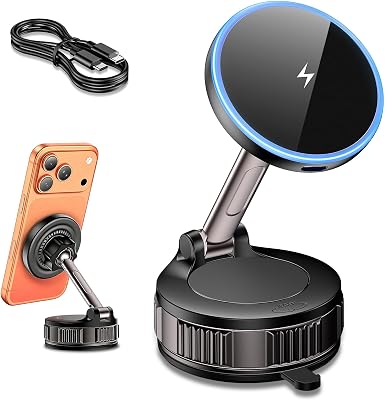
ESR Magnetic Wireless Car Charger Mount
Strongest Magnetic Wireless Charger — Adjustable Arm, Fast Charging
* Amazon affiliate link — EV Charger Scout may earn a small commission at no extra cost to you.
Tips for International Visitors Driving in India
Car Rental Considerations
EV rental options in India are growing but limited compared to Europe or North America. Zoomcar and a few local operators have added Tata Nexon EVs and MG ZS EVs to their fleets in major cities. If renting, confirm whether the rental includes access to a network charging card or if you need to set up your own app account. Most rental EVs are set up for Tata Power EZ Charge — setting up the app before you arrive saves time.
Payment Apps
UPI (Unified Payments Interface) is by far the most seamless payment method at Indian EV chargers. International visitors without a UPI-linked Indian bank account will need to use credit or debit card payment — which most commercial stations accept — or set up an international card-linked wallet within the charging app. Tata Power EZ Charge and Charge+Zone both accept international Visa and Mastercard. Check that your card's international transaction and contactless limits are set appropriately before your trip.
Adapters to Bring
- →European CCS2 vehicles: No adapter needed. Your CCS2 connector is fully compatible with India's commercial fast charging network.
- →North American CCS1 vehicles: A CCS1-to-CCS2 adapter is needed for DC fast charging. These are not common in India — source one before departure.
- →North American NACS vehicles: A NACS-to-CCS2 adapter for DC fast charging. Bring from your home market.
- →Japanese CHAdeMO vehicles: CHAdeMO is rare at Indian commercial stations and not widely deployed. If your vehicle has only CHAdeMO DC capability, verify station compatibility extensively before planning long-distance travel.
- →Type 2 AC inlet (all modern EVs): Your standard Type 2 cable (or the cable provided with your rental) works at all Indian commercial AC charging stations. A Type 2 to domestic Indian socket adapter is available locally and useful for emergency slow charging at hotels.
Power quality at some Indian highway charging stations can be inconsistent — voltage fluctuations, brief outages, and session interruptions are more common than on established European or North American networks. Most EV onboard chargers and DC-DC converters handle this gracefully, but if you have a particularly sensitive vehicle, carry a contact number for the network operator and your vehicle's roadside assistance.
What's Coming: India EV Infrastructure 2026 and Beyond
The Indian government's PM E-DRIVE scheme, announced in late 2024, allocated significant funds specifically for public charging infrastructure on highways and in cities — building on FAME II and targeting 72,000 new charge points within a defined period. The priority sectors include national highway fast charging every 25 km (on a revised, larger set of corridors), metro and Tier 1 city urban charging networks, and charging infrastructure at government buildings and state transport corporation depots.
International fast charging brands are also entering the market. Exicom, Delta Electronics, and ABB all have significant manufacturing and deployment operations in India. By 2027–2028, the combination of policy support, private investment, and growing EV sales volumes is likely to push India's public charging network to a scale where highway range anxiety is genuinely addressed on major corridors — while rural and remote areas remain a longer-term project.
For EV drivers and visitors planning a trip to India today, the infrastructure is good enough for metro-to-metro travel on priority routes and increasingly functional for longer journeys on major national highways — provided you plan carefully, carry backup payment options, and use real-time data rather than static maps.
Frequently Asked Questions
What charging connectors are used in India in 2026?
India uses three relevant standards. CCS2 has become the de facto DC fast charging standard for passenger cars at commercial stations, and Type 2 is the standard for AC Level 2 charging. The indigenous Bharat DC-001 connector (up to 15 kW) is still found at many legacy government-deployed stations under FAME II.
Can a European CCS2 vehicle charge in India without an adapter?
Yes. CCS2 is the de facto standard at India's commercial fast charging stations, so European CCS2 vehicles are compatible with the commercial network without any adapter. Type 2 AC charging is also compatible, since modern Indian-market EVs and European EVs both use Type 2 inlets.
Which are the major EV charging networks in India?
Tata Power EZ Charge is the largest operator, with over 6,000 charging points across more than 500 cities. Other major networks include Charge+Zone (focused on highway corridors), BPCL EV at Bharat Petroleum forecourts, and the government-owned EESL. Most offer app-based session management and accept UPI as well as card payments.
How good is highway charging coverage in India?
Coverage is strong on priority corridors like the Golden Quadrilateral and dedicated expressways, where stations appear at regular intervals. Outside these, coverage is patchier — the Northeast, hill states, and rural stretches still have significant gaps. Route planning with real-time station data is genuinely necessary for long-distance trips.
What should I bring if I arrive in India with a NACS vehicle?
NACS (the J3400 connector) is not present in India, so you'll need a NACS-to-CCS2 adapter for DC fast charging. These are not widely available locally, so bring one from your home market. Note that even with an adapter, you should verify station compatibility before relying on it for long-distance travel.
More guides on Network News
Explore the full Network News topic hub — related guides that build on this one.
US Charging Network Uptime & Reliability Rankings: Q1 2026
12 min read
Ultra-Fast 400 kW Charging in Europe: Ionity Corridors Every EV Driver Needs to Know
12 min read
EVgo's NACS Expansion in 2026: What It Means for Your EV
8 min read
Ionna Network Hits Top 10: Fastest Growing DC Chargers in the US Right Now
10 min read