 EV Charger Scout
Ionna launched publicly in 2024 as a joint venture between eight of the world's largest automakers — BMW, GM, Honda, Hyundai, Kia, Mercedes-Benz, Stellantis, and Toyota (which joined as an investor in July 2024). The logic was simple: none of these companies wanted to build their own charging networks from scratch, but all of them recognized that the quality and reliability gap between the Tesla Supercharger experience and the average third-party DCFC was costing them sales. Ionna was their answer. By 2026, it has moved from concept to real infrastructure fast enough to rank among the top ten fastest-growing DC charging networks in North America. Here's what the network actually offers and how to get the most out of it.
What Ionna Is and Why It Exists
Ionna is not a rebranded or merged existing network — it's purpose-built from the ground up, with a design brief that explicitly targets Tesla Supercharger-level reliability and user experience. The founding automakers didn't just contribute capital; they contributed operational requirements. Every Ionna station is designed to meet specifications that the founding OEMs agreed would make the network genuinely competitive.
The founding partners collectively represent a significant fraction of all non-Tesla EVs on North American roads. Having all of them aligned on a single network standard — rather than supporting fragmented investments in ChargePoint, Blink, EVgo separately — concentrates resources in a way that previous joint EV infrastructure efforts (like the earlier ChargePoint investments) never quite managed.
Founding Members
- →BMW Group (BMW, MINI)
- →General Motors (Chevrolet, Cadillac, GMC, Buick EVs)
- →Honda and Acura
- →Hyundai Motor Group (Hyundai, Kia, Genesis)
- →Mercedes-Benz
- →Stellantis (Jeep, Dodge, Ram, Chrysler, Alfa Romeo EVs)
- →Toyota Motor North America (Toyota, Lexus) — joined July 2024
Other manufacturers are permitted to join the network through commercial agreements. Ford, Rivian, Tesla, and Volkswagen Group EVs can all use Ionna stations — the network is open to any NACS or CCS1 vehicle. Kia is also a founding-member brand through Hyundai Motor Group.
Station Hardware: What Makes Ionna Different
Ionna's station design specification is notably ambitious. The target hardware at each Ionna location:
| Spec | Detail |
|---|---|
| Per-stall power rating | Up to 400 kW |
| Connectors per stall | NACS + CCS1 (dual-cable) |
| Minimum stalls per site | Typically 8–12 at launch sites |
| Uptime target | 97%+ (monitored, with remote diagnostics) |
| Payment methods | Credit card tap, app, RFID |
| Covered canopy | Planned standard at all locations |
| Lighting | Full-site lighting, 24-hour operation |
| Amenities proximity | Siting requirement: restrooms within walking distance |
The 400 kW per-stall rating is not shared infrastructure — each cable has independent power delivery, meaning adjacent vehicles don't compete for output. This is the same architecture used by Tesla's V4 Supercharger and is a significant departure from older shared-cabinet designs where two vehicles split a fixed power budget.
The covered canopy is a bigger quality-of-life improvement than it sounds. Charging in rain, direct sun at 40°C (104°F), or snow without cover is genuinely unpleasant. Ionna's siting standard requiring coverage at all locations puts it ahead of the majority of existing DCFC operators, which often site equipment without cover.
DC Fast Charging Upgrade · EV Shop
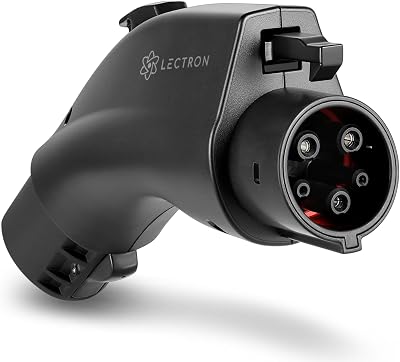
Lectron Vortex Plus NACS-to-CCS Adapter
The Gold Standard — UL 2252 Certified with Safety Interlock
* Amazon affiliate link — EV Charger Scout may earn a small commission at no extra cost to you.
Network Growth: Where Ionna Is Deploying
Ionna's rollout strategy is corridor-first — prioritizing Interstate highway routes before filling in urban density. This is the opposite of EVgo's historically urban-first model and is more aligned with Electrify America's approach. The rationale: range anxiety on long trips is the primary barrier to EV adoption, and highway corridor coverage directly addresses it.
Priority Corridors (2025–2026)
- →I-95 corridor (Northeast US) — Boston to Miami, with concentration in the Mid-Atlantic. High EV density, high route utilization.
- →I-5 corridor (West Coast) — Seattle to San Diego. Already well-served but Ionna is adding capacity in between existing options.
- →I-75 / I-85 (Southeast) — Atlanta, Charlotte, Nashville, and connecting routes where charging density has lagged the rest of the country.
- →I-10 (Sun Belt) — Los Angeles to Jacksonville, covering Phoenix, El Paso, San Antonio, Houston, and New Orleans.
- →I-80 / I-90 (Northern Midwest) — Chicago to the coasts, addressing a corridor historically underserved by non-Tesla DCFC.
- →Texas triangle (Dallas–Houston–San Antonio–Austin) — One of the highest-growth EV markets in the country.
Urban and suburban infill is the second phase, with major metro areas getting additional Ionna locations at retail centers, parking structures, and destination sites from 2026 onward.
How to Use Ionna Stations
- 1Download the Ionna app (iOS and Android) or visit ionna.com to set up an account.
- 2Add a payment method. Ionna supports credit card, debit card, and app payment. There is no membership required — pay-as-you-go pricing is available at all locations.
- 3At the station, find an open stall. Ionna stalls are numbered and the app shows real-time availability.
- 4Plug in using the appropriate cable — NACS or CCS1 depending on your vehicle. Both cables are always present at each stall.
- 5Initiate the session in the app, via the touchscreen on the dispenser, or by tapping an NFC-capable payment card or phone on the payment terminal.
- 6The dispenser screen shows real-time power delivery, estimated completion time, and cost. The Ionna app mirrors this information.
Plug & Charge at Ionna
Ionna supports ISO 15118 Plug & Charge — the protocol where the vehicle and charger communicate directly to handle authentication without any app or card involvement. Vehicles that support Plug & Charge at Ionna include the Hyundai Ioniq 5, 6, and 9, Kia EV6 and EV9, Genesis GV60, BMW iX, and Cadillac Lyriq among others. At a Plug & Charge-capable stall, simply connect the cable — charging starts automatically within a few seconds.
Pricing Structure
Ionna prices per kWh at most US locations (states that prohibit kWh-based pricing — Texas, for example — charge per minute instead). The base rate for non-members is competitive with Electrify America and EVgo. Founding OEM vehicle owners may receive promotional pricing or credits through their vehicle brand — check your vehicle's connected services app for available offers. GM's Ultium Charge 360, Hyundai's MyHyundai app, and BMW's Charging My BMW all integrate Ionna session management.
Some founding OEM vehicles come with included Ionna charging credits at purchase. Check your delivery paperwork or connected services dashboard — promotional Ionna credits are a common new-vehicle incentive through 2025–2026.
Roadside Safety Pick · EV Shop

EVERLIT Emergency Roadside Assistance Kit
All-in-One Roadside Kit — Air Compressor, Flashlight & More
* Amazon affiliate link — EV Charger Scout may earn a small commission at no extra cost to you.
Reliability: The Core Promise
The 97% uptime target is Ionna's most important differentiator — and the one that the founding automakers were most insistent on. Industry average DCFC uptime across third-party networks has been measured at 72–78% in multiple studies (including the ICCT and J.D. Power surveys). Ionna's 97% target, if achieved at scale, would represent a generational improvement.
The mechanisms to support that target include: remote monitoring of every stall with 24-hour NOC (network operations center) staffing, four-hour SLA for maintenance dispatch on confirmed outages, and on-site backup communications systems at each location. The physical station design also reduces common failure points — the charging electronics are housed in protected cabinets with active cooling rather than passive thermal management.
Early user reports from 2025 beta deployments have been largely positive, with uptime observations significantly above the industry average. Independent verification at scale across hundreds of stations takes time — the network's reliability track record will be clearer by late 2026.
How Ionna Compares to Other Networks
| Network | Max Power/Stall | Dual Connector | Uptime Target | Coverage Focus |
|---|---|---|---|---|
| Ionna | 400 kW | Yes (NACS + CCS1) | 97%+ | Highway corridors first |
| Electrify America | 350 kW | Yes (many sites) | ~90% | Highway + urban |
| EVgo | 350 kW | Yes (expanding) | ~95% (stated) | Urban first |
| Tesla Supercharger (V4) | 250 kW | NACS primary | ~99% | Urban + highway |
| ChargePoint DCFC | 62–400 kW (varies) | Varies by site | ~85% (operator dependent) | Urban / retail |
International Perspective
Ionna is a North American network — it does not have European, Asian, or Australian operations. The founding automakers' European charging strategy runs through IONITY (for highway DC fast charging), in which BMW, Mercedes-Benz, Hyundai/Kia, and Volkswagen Group are all investors. If you're a European driver, IONITY is the functional equivalent of Ionna for highway DC charging.
For Korean market drivers, South Korea has its own robust DC fast charging infrastructure including the Korean National Charging Network (환경부 충전 인프라), KEPCO stations, and a competitive private network market. Hyundai and Kia's involvement in Ionna reflects their global EV ambition but is specific to the North American market.
Ionna station data is included in EV Charger Scout's database via NREL and OpenChargeMap feeds. Search your area and filter by network to locate the nearest Ionna locations and check connector availability.
Frequently Asked Questions
What is Ionna and who owns it?
Ionna is a North American DC fast charging network launched publicly in 2024 as a joint venture between eight major automakers — BMW, GM, Honda, Hyundai, Kia, Mercedes-Benz, Stellantis, and Toyota (which joined as an investor in July 2024). It was purpose-built from the ground up to target Tesla Supercharger-level reliability and user experience.
Can non-member-brand EVs use Ionna stations?
Yes. While the founding automakers built the network, it is open to any NACS or CCS1 vehicle. Ford, Rivian, Tesla, and Volkswagen Group EVs can all charge at Ionna stations, since each stall has both NACS and CCS1 cables available.
How fast and reliable are Ionna chargers?
Ionna stations are rated up to 400 kW per stall, with each cable having independent power delivery so adjacent vehicles don't compete for output. The network targets 97%+ uptime — well above the 72–78% industry average for third-party DCFC measured in studies — supported by 24-hour monitoring and a four-hour maintenance SLA on confirmed outages.
Does Ionna support Plug & Charge?
Yes, Ionna supports ISO 15118 Plug & Charge, where the vehicle and charger authenticate directly without any app or card. Supported vehicles include the Hyundai Ioniq 5, 6, and 9, Kia EV6 and EV9, Genesis GV60, BMW iX, and Cadillac Lyriq, among others — just connect the cable and charging starts within a few seconds.
Is Ionna available outside North America?
No. Ionna is a North American network only, with no European, Asian, or Australian operations. The founding automakers' European highway charging strategy runs through IONITY instead, in which BMW, Mercedes-Benz, Hyundai/Kia, and Volkswagen Group are all investors.
More guides on Network News
Explore the full Network News topic hub — related guides that build on this one.
US Charging Network Uptime & Reliability Rankings: Q1 2026
12 min read
India's EV Charging Boom 2026: Top Networks, Connector Standards, and Visitor Tips
13 min read
Ultra-Fast 400 kW Charging in Europe: Ionity Corridors Every EV Driver Needs to Know
12 min read
EVgo's NACS Expansion in 2026: What It Means for Your EV
8 min read