 EV Charger Scout
Cold weather and EV batteries have a complicated relationship — and most of the drama you've seen in headlines ("EV loses 40% range in winter!") comes from a real phenomenon that's only half the story. Yes, cold reduces battery performance. But how much it reduces, and how much you can recover through smart habits, varies enormously depending on your vehicle, your charging behavior, and whether you know what's actually happening under the hood. This guide covers the physics, the practical strategies, and the real-world expectations — for drivers everywhere from Minnesota to Norway to South Korea.
Why Cold Weather Affects Lithium-Ion Batteries
The chemistry at the heart of every EV battery — lithium-ion — is fundamentally a temperature-sensitive process. At the molecular level, lithium ions move between the anode and cathode through a liquid electrolyte. Cold temperatures increase the viscosity of that electrolyte and slow the ionic movement significantly. The result: the battery can deliver less power on demand (affecting acceleration), accept less charging current (slowing DC fast charging), and report a lower usable state of charge compared to what it would show at room temperature.
This is not battery damage — it's temporary, reversible chemistry. The same battery that showed 200 miles of range at −10°C (14°F) will return to its normal behavior once warmed. Understanding this distinction matters: range loss in winter is not the same as battery degradation, and treating them as equivalent causes unnecessary anxiety.
The Temperature Curve
Real-world range reduction in cold weather roughly follows this pattern for most lithium-ion EV batteries:
| Temperature | Approximate Range vs. Rated (No Cabin Heat) | With Active Cabin Heating |
|---|---|---|
| 25°C / 77°F (ideal) | 100% | 100% |
| 10°C / 50°F | 90–95% | 85–92% |
| 0°C / 32°F | 75–85% | 65–78% |
| −10°C / 14°F | 60–75% | 50–68% |
| −20°C / −4°F | 50–65% | 40–58% |
| −30°C / −22°F | 40–55% | 30–50% |
The two columns tell an important story: cabin heating is a major contributor to winter range loss, in many cases larger than the battery chemistry effect alone. An EV heating its cabin with a resistance heater in −10°C weather can draw 3–5 kW continuously — enough to reduce effective range by 15–25% on top of the battery chemistry reduction.
Heat Pump vs. Resistance Heating: The Biggest Variable
The single most impactful feature for winter EV range isn't battery size or chemistry — it's whether the vehicle has a heat pump. Heat pumps are dramatically more efficient than resistance heaters because they move heat from outside air (or from waste heat in the drivetrain) into the cabin rather than generating heat from scratch. A heat pump delivering 3 kW of cabin warmth might consume only 1–1.5 kW of electrical energy to do it. A resistance heater delivering the same 3 kW of warmth consumes exactly 3 kW.
At −15°C (5°F), the efficiency advantage of a heat pump over a resistance heater translates to roughly 15–25% additional range in real-world conditions. Over a 300 km highway trip, that's 45–75 km of additional range simply from HVAC system design.
| Vehicle | HVAC System | Notes |
|---|---|---|
| Tesla Model 3 / Y (2021+) | Heat pump | Standard on all variants since late 2020 |
| Tesla Model S / X (2021+) | Heat pump | Updated with Plaid refresh |
| Hyundai Ioniq 5 / 6 | Heat pump | Standard across trims |
| Kia EV6 / EV9 | Heat pump | Standard across trims |
| BMW i4 / iX / i7 | Heat pump | Standard |
| Volkswagen ID.4 / ID.7 | Heat pump | Standard on most trims |
| Rivian R1T / R1S Gen 1 (2022–23) | Resistance heater | No heat pump — larger range impact in cold |
| Rivian R1T / R1S Gen 2 (2025+) | Heat pump | Added with the Gen 2 refresh (new thermal architecture) |
| Chevrolet Bolt EV / EUV (through 2023) | Resistance heater | Older platform, no heat pump |
| Nissan Leaf (through 2025) | Resistance heater | Older platform, significant cold impact |
| Nissan Leaf (2026 redesign) | Heat pump | New 3rd-gen platform |
| Ford Mustang Mach-E | Heat pump | Standard |
| Ford F-150 Lightning (2022–23) | Resistance heater | Notable cold impact for large battery |
| Ford F-150 Lightning (2024+) | Heat pump (on newer builds) | Ford added heat pump hardware for the 2024 model year; confirm on your build |
If you're shopping for an EV and live in a region that regularly sees temperatures below 0°C (32°F), prioritize heat pump-equipped vehicles. The range and efficiency difference over a winter season is significant, and no software update can add a heat pump to a vehicle that wasn't built with one.
Battery Preconditioning: The Most Important Winter Habit
Battery preconditioning is the process of warming (or cooling) the battery pack to its optimal operating temperature before a drive or before a charging session. In winter, it means heating the battery before you leave home — using grid power rather than your stored range — so the battery is already at a functional temperature when you start moving and when you arrive at a fast charger.
The impact of proper preconditioning before DC fast charging is dramatic. A cold battery (below approximately −5°C / 23°F) at many DCFC stations will charge at 10–30% of its rated peak speed. The same battery preconditioned to 15–25°C (59–77°F) will charge at full rated speed. A 30-minute charging stop can become a 90-minute ordeal if the battery arrives cold — or stay at 30 minutes with preconditioning.
How to Activate Preconditioning
- →Navigate to a charger, don't just drive there. On most modern EVs — Tesla, Hyundai Ioniq, BMW, Volkswagen, Kia — setting a DCFC station as the navigation destination triggers automatic battery preconditioning. The car starts warming the battery during transit so it arrives ready. This is the single most effective step you can take.
- →Use scheduled departure / cabin preconditioning. Most EVs allow you to set a departure time. The vehicle will preheat both the cabin and the battery while still plugged into home charging, so you leave with a warm cabin and a warm battery at no range cost.
- →Manual preconditioning via the app. Tesla, Hyundai, Kia, BMW, and VW Group vehicles all allow you to initiate cabin heating and battery conditioning from the vehicle's companion app while plugged in. Use it 15–30 minutes before departure in very cold conditions.
Preconditioning is only "free" in range terms when the vehicle is plugged in. If you run preconditioning while unplugged, it draws from the battery. In extreme cold (below −20°C / −4°F), unplugged preconditioning can consume meaningful range before you even start driving. Plug in overnight whenever temperatures will be severe.
Roadside Safety Pick · EV Shop
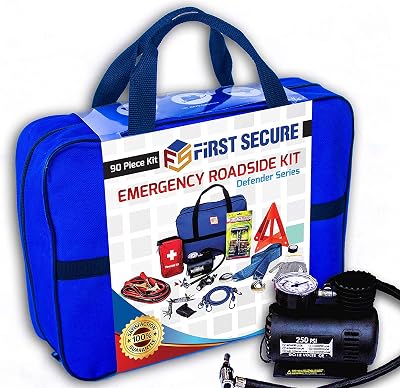
EVERLIT Emergency Roadside Assistance Kit
All-in-One Roadside Kit — Air Compressor, Flashlight & More
* Amazon affiliate link — EV Charger Scout may earn a small commission at no extra cost to you.
DC Fast Charging in Winter: What to Expect
Cold batteries charge slowly. This is the most common source of winter EV frustration for drivers unfamiliar with the phenomenon — arriving at a Supercharger or Electrify America station and seeing 30 kW delivered to a vehicle rated for 250 kW. Here's what's actually happening and what to do about it.
The battery management system (BMS) limits incoming charge current based on battery temperature. Below approximately 5–10°C (41–50°F), most battery chemistries see the BMS begin reducing maximum charge rate. At −10°C (14°F), peak charge rates are often reduced to 20–40% of maximum. This is a safety feature — charging lithium-ion cells too aggressively when cold causes lithium plating, a form of internal damage that permanently degrades the battery. The BMS is protecting your battery, not malfunctioning.
Charge Rate Recovery
The good news: charging itself warms the battery. Once a cold-battery DC fast charging session has been running for 10–15 minutes, internal heat from the charging process raises battery temperature enough that the BMS begins allowing higher charge rates. Many cold-start charging sessions show a characteristic shape: very low power for the first 5–10 minutes, then a ramp up to near-normal rates as temperature recovers. If your car is showing 20 kW at a 250 kW charger, wait — it may climb to 150+ kW within a quarter hour.
For cold-weather DC fast charging sessions without preconditioning, add 10–15 minutes to your expected session time to account for the warm-up phase. Then set your departure charging target to 85% (not 100%) to keep the session in the fast part of the charging curve and leave before the inevitable taper.
Home Charging in Winter
AC Level 1 and Level 2 home charging are largely unaffected by cold weather in terms of the charging process itself — the battery's acceptance of AC charging current (which is lower power than DC fast charging) is less sensitive to temperature. A Level 2 EVSE delivering 7.4 kW will deliver 7.4 kW to a cold battery without significant rate reduction. The main winter consideration for home charging is keeping the vehicle plugged in whenever possible.
- →Keep the vehicle plugged in overnight. The BMS actively manages battery temperature in extreme cold, which requires small amounts of power. An unplugged vehicle in −20°C weather burns battery charge just keeping itself alive.
- →Set a scheduled departure time. The vehicle will handle preconditioning automatically, pulling grid power instead of battery power for cabin and battery warming.
- →Don't unplug immediately after arriving home. The BMS sometimes runs a brief thermal management cycle after a charging session in cold weather — interrupting it wastes the work it was doing.
- →For garage-stored vehicles: even an unheated garage typically stays 10–15°C (18–27°F) warmer than outdoor temperatures in severe cold. This is significant — a vehicle stored at −5°C instead of −20°C will charge faster, precondition faster, and start with more effective range.
Maximizing Range in Winter: Practical Driving Strategies
Beyond charging and preconditioning, how you drive in winter significantly affects how far you go on a charge.
Cabin Heating Strategies
- →Use seat heating and steering wheel heating instead of cabin air heating. Heated seats deliver warmth directly to the occupant at roughly 60–150 watts. Heating the entire cabin air volume takes 2,000–5,000 watts. For short trips with one or two occupants, seat heating with minimal air heating can cut HVAC consumption by 70–80%.
- →Set a moderate cabin temperature, not maximum. 18°C (64°F) instead of 22°C (72°F) cuts heating load significantly. You're in a vehicle, not a living room — a cooler temperature is acceptable with warm seats and steering wheel.
- →Use the vehicle's eco or range mode. These modes often reduce HVAC output in addition to limiting motor power. In severe cold where range is genuinely critical, this trade-off is worth making.
- →Preheat the cabin while plugged in. Starting with a warm cabin means the system only needs to maintain temperature rather than raise it from −15°C — a much smaller ongoing load.
Speed and Regenerative Braking
Wind resistance increases with the square of speed — driving at 130 km/h (81 mph) uses roughly twice the energy of driving at 100 km/h (62 mph), and this effect compounds with the additional energy cost of cold weather. On winter road trips where range is tight, reducing highway speed by 10–15 km/h can recover 10–20% of effective range.
Regenerative braking behavior also changes in cold. Many EVs reduce maximum regen intensity when the battery is cold (regenerating too aggressively into a cold battery can cause the same lithium plating risk as charging too fast). This means the vehicle coasts further than usual in one-pedal driving mode when cold. After 15–20 minutes of driving, normal regen intensity typically resumes as the battery warms from use.
Battery Chemistry Differences: NMC vs. LFP in Winter
Not all EV battery chemistries respond to cold equally. The two main chemistries in consumer EVs — NMC (nickel manganese cobalt) and LFP (lithium iron phosphate) — have different cold-weather characteristics:
| Chemistry | Cold Performance | Common Vehicles |
|---|---|---|
| NMC / NCA | Better cold performance; higher energy density; accepts charge faster when cold | Tesla (standard), BMW, Hyundai Ioniq 5/6, Kia EV6, VW ID.4 |
| LFP | More significant cold performance drop; recovers well once warm; better cycle life; safer thermal profile | Tesla (standard range), BYD vehicles, many Chinese-market EVs |
LFP batteries in particular show a steeper cold-temperature curve — LFP chemistry is more sensitive to low temperatures than NMC. Tesla's standard range vehicles (which use LFP cells) show larger winter range reduction than their long-range NMC counterparts. This isn't a defect — LFP trades cold-weather performance for better longevity, lower cost, and improved safety at high temperatures.
International Winter Charging Context
Home Charging Upgrade · EV Shop
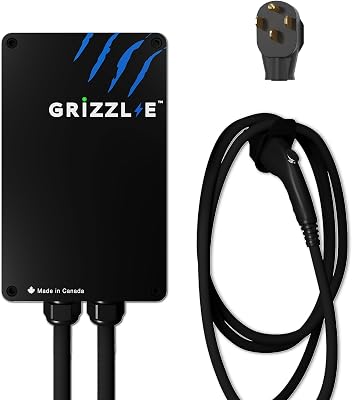
Grizzl-E Classic
Most Durable Level 2 — Cast Aluminum, NEMA 4, No-App Reliability
* Amazon affiliate link — EV Charger Scout may earn a small commission at no extra cost to you.
Nordic Countries (Norway, Sweden, Finland, Denmark)
Norway has the highest EV adoption rate per capita in the world, in a country that regularly sees temperatures below −20°C (−4°F) across large portions of its geography. Norwegian EV drivers have developed the most mature winter charging culture globally — plugged-in parking is widespread, heated garages are common in urban areas, and charging infrastructure at shopping centers and workplaces routinely includes shelter. The Norwegian EV Association (Norsk Elbilforening) publishes annual winter range test results for popular models — these real-world results, measured in actual Norwegian winter conditions, are among the most reliable cold-weather range data available anywhere.
Finnish and Swedish EV drivers face similar conditions, with additional context: many Scandinavian apartment buildings have outdoor electrical outlets for engine block heaters (a legacy of the diesel/petrol era) that EV drivers now repurpose for Level 1 overnight charging. This modest infrastructure investment, originally made for internal combustion vehicles, turned out to be unexpectedly useful for the EV transition.
Canada
Canadian winters in Prairie provinces (Alberta, Saskatchewan, Manitoba) regularly reach −30°C to −40°C (−22°F to −40°F). Quebec and Ontario see sustained −20°C periods. Canadian EV owners in these regions have found that most modern EVs with thermal management systems handle these temperatures adequately — with appropriate expectations. At −30°C, a 400 km-rated vehicle may have 200–220 km of real-world range. For urban commuters, this is almost always sufficient. For highway travel, stop planning needs adjustment.
Canada has also been building out DC fast charging on Trans-Canada Highway corridors specifically for winter usability, with a focus on indoor or sheltered charging areas at service plazas where practical. Several provincial programs specifically fund charging infrastructure designed for extreme cold operation.
South Korea
South Korea experiences genuine winter cold — Seoul regularly sees −10°C to −15°C (14°F to 5°F) in January and February. Hyundai and Kia, both headquartered in Korea, have developed their thermal management systems with domestic winter conditions as a key design parameter. The Ioniq 5 and EV6's heat pump systems were specifically tuned for Korean winter performance, which partly explains their strong cold-weather reputation globally.
China
Northern China — particularly Beijing, Harbin, and the northeastern provinces — sees winters comparable to Canada's Prairie provinces. China's massive EV fleet, predominantly using LFP chemistry (in BYD, SAIC, and CATL-supplied vehicles), faces a real cold-weather challenge given LFP's sensitivity to low temperatures. Chinese automakers have responded with aggressive battery heating system development — preheating via heat pumps and direct resistance pack heaters — and CATL's Shenxing battery technology has improved low-temperature charging performance specifically for the Chinese market.
Central and Eastern Europe
Poland, Czech Republic, Slovakia, Hungary, and the Baltic states all see meaningful winter cold (−10°C to −20°C), with less developed EV-aware charging infrastructure than Western Europe. IONITY highway stations in these markets are exposed rather than covered, which matters in winter — a battery that arrives at a charger after a cold highway run, in a snowstorm, at a station without shelter, is the worst-case scenario for charging speed. Eastern European EV drivers have become adept at battery preconditioning before highway charging stops, and at targeting indoor charging options (shopping centers, heated parking structures) where available.
Winter-Specific Maintenance and Checks
- →Tire pressure — Cold air contracts, and tire pressure drops approximately 1 PSI for every 6°C (10°F) of temperature decrease. Underinflated tires increase rolling resistance and reduce range. Check tire pressure every few weeks in winter, always when cold (before driving), against the recommended value in the door jamb sticker.
- →Wiper blades — EV-specific winter wiper blades (heavier rubber compounds for snow management) don't affect range, but running standard summer blades in ice conditions means icing the cowl area — which affects the cabin air intake and, on some vehicles, the heat pump evaporator. Replace with winter blades when temperatures regularly drop below 5°C (41°F).
- →Charge port seals — Inspect the charge port door and seal for ice buildup before attempting to plug in. A charge port frozen shut is a genuine problem at −20°C. Some vehicles have a heated charge port door (Tesla, some Hyundai models) — if yours doesn't, carrying a silicone spray lubricant for the port seal is worth doing once per season.
- →Software updates — Winter is specifically when you want to have the latest software on your vehicle. Automakers regularly update thermal management parameters, preconditioning behavior, and cold-weather charging curves through OTA updates. A vehicle running year-old software may be missing specific cold-weather optimizations added in recent releases.
What the Range Estimate on the Dash Actually Means in Winter
The range number displayed on your dashboard in winter is one of the most misunderstood figures in EV ownership. Different automakers calculate and display it differently:
- →Tesla — Shows EPA-rated range multiplied by current SoC percentage. This is deliberately optimistic in cold weather and will overestimate real-world range when temperatures are very low. Use the energy consumption graph to see recent actual consumption rather than relying on the range number.
- →Hyundai / Kia — Calculates range from recent consumption history. In cold weather with heavy heating load, the displayed range will reflect real cold-weather consumption more accurately after a few kilometers of driving once the system has updated its estimate. The initial estimate after a cold start may still be optimistic.
- →BMW — iDrive shows a range arc (minimum to maximum) rather than a single number, which is more honest about the uncertainty in range prediction. In cold, the arc shifts lower but the display of uncertainty is useful.
- →VW Group (ID.4, etc.) — Range estimation adapts to recent driving patterns. After driving in cold for a few sessions, the estimate becomes reasonably accurate for that weather profile.
The practical advice: in temperatures below −10°C (14°F), plan your trips and charging stops with 20–30% more buffer than the dashboard estimate suggests. Your actual range in severe cold is more likely to be at the lower end of what's physically possible than the optimistic middle estimate most displays show.
EV Charger Scout displays station data sourced from NREL and OpenChargeMap — a broad database of public charging locations updated periodically by operators and network providers. For winter road trips, use the DC fast charge filter and look for stations at covered or indoor locations where available — a cold battery arriving at a covered station is always a better outcome than arriving at an exposed location in a snowstorm.
Frequently Asked Questions
How much range does an EV lose in cold weather?
It depends heavily on temperature and cabin heating. Around 0°C (32°F) range typically drops to 75–85% of rated without cabin heat, and at −20°C (−4°F) it can fall to 40–58% with active heating. Cabin heating is often a bigger contributor than the battery chemistry effect itself, and the loss is temporary and reversible — not permanent battery damage.
Why does my EV charge so slowly at a fast charger in winter?
A cold battery's management system limits incoming current to prevent lithium plating, which permanently damages cells. Below about −10°C (14°F) peak charge rates are often cut to 20–40% of maximum. The good news is charging itself warms the battery, so after 10–15 minutes the rate usually ramps back up toward normal.
What is battery preconditioning and why does it matter?
Preconditioning warms the battery pack to its optimal temperature before driving or charging, ideally using grid power while plugged in. On most modern EVs, setting a fast charger as your navigation destination triggers it automatically so the battery arrives ready. A 30-minute charging stop can become a 90-minute ordeal if the battery arrives cold instead.
Does a heat pump really make a difference in winter?
Yes — it's the single most impactful feature for winter range. A heat pump moves heat into the cabin rather than generating it, so it might use only 1–1.5 kW to deliver the warmth a resistance heater needs 3 kW for. At around −15°C (5°F) that efficiency advantage can translate to roughly 15–25% additional real-world range.
Should I leave my EV plugged in during cold weather?
Yes, whenever possible. The battery management system uses small amounts of power to manage temperature in extreme cold, and an unplugged vehicle burns its own charge to do this. Staying plugged in also lets scheduled departure preconditioning pull from the grid rather than the battery, so you start with a warm cabin and battery at no range cost.
More guides on Strategy & Planning
Explore the full Strategy & Planning topic hub — related guides that build on this one.
Managed Charging & Off-Peak EV Rates: How to Save $100+ Per Month in 2026
13 min read
Plug and Charge 2026: Which EVs Auto-Start at Electrify America, EVgo & Ionna
12 min read
Home vs. Public EV Charging Costs in 2026: Real Rates, the Math, and How to Save
14 min read
AI-Powered Smart Charging Apps: How They Predict Availability at Your Nearest Station
11 min read
How to Future-Proof Your EV Charging in the NACS Transition Era
9 min read