 EV Charger Scout
Charging your EV at home is already cheaper than filling a gas tank for most drivers. But "home charging" is not a monolithic cost — the rate you pay depends heavily on when you charge. Electricity prices can vary by a factor of three or more between on-peak and off-peak hours depending on your utility and rate plan. Managed charging programs — offered by utilities, networks, and automakers — are specifically designed to make sure your car charges at the cheapest time automatically, without you thinking about it.
This is a genuinely underused feature. Studies consistently show that fewer than a third of EV owners are on time-of-use (TOU) rates or managed charging programs, even when they would save money. Here's what these programs are, where they exist globally, and how to actually set them up.
Why Electricity Prices Change By Time of Day
The electricity grid runs on supply and demand, just like any market. Generation capacity is relatively fixed in the short term, but consumption fluctuates enormously — residential demand peaks in the early evening when people return home, run appliances, and cook dinner. During these peak hours, utilities must dispatch more expensive "peaker" generation (usually gas turbines) to meet demand. During off-peak hours — typically late night through early morning — cheap baseload generation (nuclear, hydro, wind) provides excess power that would otherwise go unused.
Time-of-use (TOU) electricity rates pass this price variation directly to consumers: peak hours cost more, off-peak hours cost less. For an EV owner, this creates a significant opportunity — your car is a large, flexible load that can be programmed to charge precisely when electricity is cheapest.
What Managed Charging Programs Actually Do
"Managed charging" is an umbrella term covering several different program types, all of which aim to shift EV charging to lower-cost or lower-carbon periods:
| Program Type | How It Works | Who Controls It |
|---|---|---|
| Time-of-use (TOU) rates | Tiered pricing — you set your car to charge off-peak via the vehicle app or charger schedule | You (manual scheduling) |
| Utility smart charging | Utility sends signals to your charger to delay or pause charging during peaks | Utility (with your consent) |
| Smart charger automation | Charger and utility communicate directly; charger optimizes schedule autonomously | Charger/app (automated) |
| V2G / demand response | Car exports power during peaks; earns credits or direct payment | Utility (with your participation) |
| OEM scheduled charging | Vehicle's built-in software charges only during set time windows | You (vehicle settings) |
How Much Can You Actually Save?
The savings depend on your utility's rate structure and how wide the peak-to-off-peak spread is. Here are real-world examples from 2025–2026:
| Utility / Market | Peak Rate | Off-Peak Rate | Annual Saving (typical EV) |
|---|---|---|---|
| PG&E (California) | $0.55/kWh (5pm–9pm) | $0.13/kWh (midnight–6am) | ~$700–$1,200/year |
| SCE (California) | $0.48/kWh (4pm–9pm) | $0.11/kWh (9pm–8am) | ~$600–$1,000/year |
| Con Edison (New York) | $0.36/kWh (8am–10pm summer) | $0.08/kWh (off-peak) | ~$400–$700/year |
| National Grid (UK) | £0.28/kWh (peak) | £0.07/kWh (Octopus Go off-peak) | ~£500–£800/year |
| Vattenfall (Sweden) | SEK 2.10/kWh (peak) | SEK 0.60/kWh (off-peak) | ~SEK 4,000–6,000/year |
| AGL (Australia) | AU$0.45/kWh (peak) | AU$0.18/kWh (off-peak) | ~AU$600–$900/year |
California has some of the highest potential savings in the world due to the extreme peak-to-off-peak price spread driven by solar overgeneration during the day and evening peak demand. If you're in California on a standard rate plan, switching to a TOU EV rate should be one of the first things you do after buying an EV.
Setting Up Off-Peak Charging by Vehicle Brand
Most EVs sold since 2022 have built-in scheduled charging features. Here's how to access them on the most common platforms:
Home Charging Upgrade · EV Shop

ChargePoint Home Flex
Best J1772 — Up to 50A, Energy Star Certified, Any Non-Tesla EV
* Amazon affiliate link — EV Charger Scout may earn a small commission at no extra cost to you.
Tesla
- →In the Tesla app: Charging → Schedule → set departure time
- →Car charges to leave at full charge by your departure time, scheduling to avoid peak hours if you're on a utility TOU plan
- →Tesla's Off-Peak Charging feature (Schedule menu) can automatically restrict charging to off-peak windows defined by your utility
- →Works best paired with a utility that shares TOU schedule data — Tesla's app can import this for some US utilities
Ford (BlueCruise / FordPass)
- →FordPass app: Charging → Charge Scheduling → set time windows
- →Ford Intelligent Backup Power (F-150 Lightning) integrates with Ford Home Energy Management for V2H during peaks
- →Can set multiple charge schedules for weekdays and weekends separately
GM (Chevrolet, GMC, Cadillac EV)
- →myChevrolet / myGMC / myCadillac app: Charging → Scheduled Charging
- →GM Energy home integration connects to utility demand response automatically for enrolled customers
- →Energy Assist feature identifies lowest-cost charging windows based on your rate plan
Hyundai / Kia
- →Hyundai Bluelink / Kia Connect apps: Vehicle → Charging → Charging Schedule
- →Set up to three charging windows with departure time override
- →Also supports smart charging through third-party integrations in some markets
Volkswagen / Audi / Porsche (MEB platform)
- →myVolkswagen / myAudi / Porsche Connect apps: Charging → Schedule
- →Smart Charging mode automatically selects cheapest window using real-time electricity prices in supported markets (Germany, Netherlands, UK)
- →Requires vehicle to be plugged in while scheduling — does not support pre-set departure times without being connected
Utility Managed Charging Programs: US
Beyond in-vehicle settings, many US utilities run dedicated managed charging programs that pay you or offer bill credits for participating:
| Utility | Program | Benefit | State |
|---|---|---|---|
| Pacific Gas & Electric | EV2-A TOU Rate + SmartCharge | Lowest off-peak rate + $50 enrollment credit | California |
| Southern California Edison | TOU-D-PRIME + Charge Ready | Off-peak rate + charging equipment rebate | California |
| Georgia Power | TOU-PEV-1 | Off-peak rate differential savings | Georgia |
| Xcel Energy | EV Accelerate at Home | $10/month bill credit + off-peak rate plan | CO, MN, TX, NM |
| Duke Energy | EV Charging Time-of-Use | Discounted off-peak rate + $50 credit | NC, SC, FL, IN, OH, KY |
| Austin Energy | PowerPartner EV | Monthly bill credits for managed charging participation | Texas |
| National Grid | EV Charging Program | Rebates + off-peak rate discount | NY, MA, RI |
Most US utility managed charging programs require you to have a smart Level 2 charger that communicates with the utility via WiFi. A certified smart EVSE like the ChargePoint Home Flex or Emporia Universal is typically a prerequisite for these programs — and many utilities offer rebates on the hardware itself.
Managed Charging Programs: International
United Kingdom
The UK has arguably the most mature managed charging market outside Asia. Octopus Energy's Intelligent Octopus Go tariff — available to Teslas, Volkswagen ID series, Nissan Leaf, BMW i-series, and several others — automatically charges your vehicle during the cheapest grid periods (typically 11pm–5am) at rates as low as 7.5p/kWh. The smart tariff requires your charger and vehicle to support the Octopus API, which an expanding list of EVs and chargers now does natively.
OVO Energy, British Gas, and EDF all offer competing smart EV tariffs with similar structures. UK drivers on standard variable tariffs are typically paying 40–60% more than Intelligent Octopus Go participants for the same charging session.
Germany
Germany's liberalized electricity market allows multiple providers to offer dynamic tariffs that track real-time spot prices. Tibber and aWATTar both offer hour-by-hour pricing — your charger (if compatible) or EV can automatically shift charging to negative-price hours that occur during high wind generation. In Q1 2026, Germany had over 200 hours of negative electricity prices, during which participants were effectively paid to charge.
DC Fast Charging Upgrade · EV Shop
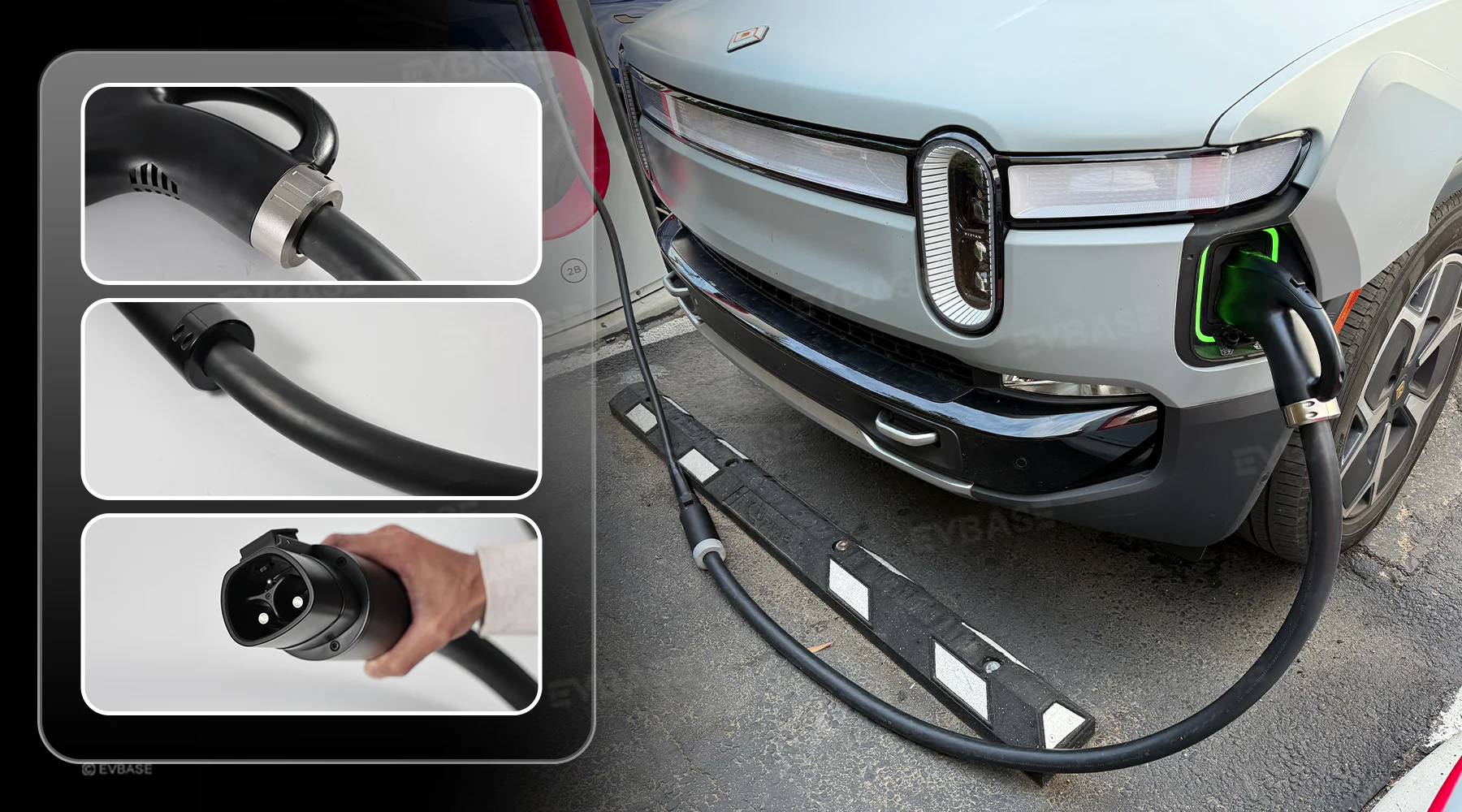
EVBASE NACS to CCS1 Adapter with Extension Cable
Max 350A/1000V with Extension Cable — Charge CCS1 EVs at Tesla Superchargers
* EVBASE affiliate link (via AWIN) — EV Charger Scout may earn a small commission at no extra cost to you.
Australia
Australian utilities including AGL, Origin Energy, and Amber Electric all offer time-of-use or dynamic EV tariffs. Amber's model is particularly aggressive — it passes through the wholesale spot price directly, which can drop to near-zero or negative during high solar generation days in South Australia and Victoria. The tradeoff is price volatility: peak events can be expensive, so smart automation is essential.
Japan
TEPCO's Smart Life Plan and similar offerings from regional utilities provide discounted overnight rates specifically marketed to EV owners. Japan's V2H infrastructure — the most mature globally — means many Japanese EV owners combine managed charging with home energy management, charging overnight and then using the vehicle battery to power the home during peak hours.
Smart Charger Hardware for Managed Charging
Not all Level 2 chargers support utility managed charging programs. The key features to look for:
| Feature | Why It Matters |
|---|---|
| WiFi + cloud connectivity | Required for utility demand response and remote schedule management |
| OCPP 1.6 or 2.0 support | The open protocol that allows utility/aggregator integration |
| Dynamic load management | Coordinates with home energy use to avoid grid overload |
| Energy monitoring | Tracks cost per session — essential for auditing savings |
| Utility program certification | Some utilities require specific hardware to qualify for incentive programs |
Cheap, WiFi-free Level 2 chargers cannot participate in utility managed charging programs, even if your vehicle supports scheduled charging via the app. The charger must be able to receive signals from the utility or aggregator to enable demand response features.
How to Calculate Your Potential Savings
A simple framework: take your EV's efficiency (kWh per 100 km or miles), multiply by your typical monthly mileage, then apply the price differential between peak and off-peak rates. For a driver averaging 1,500 miles per month in an EV consuming 3.5 miles/kWh:
- →Monthly energy use: 1,500 ÷ 3.5 = ~430 kWh/month
- →At peak rate ($0.45/kWh): $193/month
- →At off-peak rate ($0.12/kWh): $52/month
- →Monthly saving: ~$141, or $1,692/year
- →Hardware payback on a $600 smart charger: under 5 months
The savings from managed charging often exceed the annual cost of the charger hardware within the first year. This is one of the highest-return investments an EV owner can make — and unlike adapter purchases, it keeps paying dividends every month.
Getting Started: A Step-by-Step Plan
- 1Contact your utility and ask specifically about EV time-of-use rate plans and managed charging incentives — these are often separate from standard TOU options and have higher savings rates
- 2Determine whether your current charger is smart-capable (WiFi-connected with utility program support) — if not, evaluate upgrading
- 3Check whether your EV supports the utility's preferred integration (many utilities have compatibility lists)
- 4Enroll in the program and complete the charger registration (usually takes 1–2 weeks for enrollment to activate)
- 5Set a departure time in your vehicle app to ensure the car is always ready by the time you need it — managed charging handles the rest
- 6Monitor your first bill cycle to confirm off-peak charging is being registered at the correct rate
Frequently Asked Questions
What is managed charging?
Managed charging is an umbrella term for programs that shift EV charging to lower-cost or lower-carbon periods. It covers time-of-use rates, utility smart charging that delays or pauses charging during peaks, automated smart-charger scheduling, V2G demand response, and OEM in-vehicle scheduled charging — all aimed at charging when electricity is cheapest.
Why does electricity cost more at certain times of day?
The grid runs on supply and demand. Residential demand peaks in the early evening when people return home and run appliances, forcing utilities to dispatch more expensive 'peaker' generation. During off-peak hours — typically late night through early morning — cheap baseload generation provides excess power, so time-of-use rates pass those lower prices to consumers.
How much can managed charging actually save me?
Savings depend on your utility's peak-to-off-peak spread. Real-world 2025–2026 examples range from about $400–$700/year on Con Edison up to $700–$1,200/year on PG&E, where the spread is widest. California has some of the highest potential savings in the world due to its extreme price spread driven by daytime solar overgeneration and evening peak demand.
Do I need a special charger for utility managed charging programs?
Usually yes. Most US utility managed charging programs require a smart Level 2 charger that communicates with the utility via WiFi, often with OCPP 1.6 or 2.0 support. Cheap WiFi-free chargers can't participate even if your vehicle supports scheduled charging — though many utilities offer rebates on qualifying hardware like the ChargePoint Home Flex or Emporia Universal.
How quickly does a smart charger pay for itself?
Often within the first year. For a driver covering 1,500 miles per month at 3.5 miles/kWh, shifting from a $0.45/kWh peak rate to a $0.12/kWh off-peak rate saves roughly $141 per month, or about $1,692 per year — which pays back a $600 smart charger in under five months.
More guides on Strategy & Planning
Explore the full Strategy & Planning topic hub — related guides that build on this one.
Plug and Charge 2026: Which EVs Auto-Start at Electrify America, EVgo & Ionna
12 min read
Home vs. Public EV Charging Costs in 2026: Real Rates, the Math, and How to Save
14 min read
AI-Powered Smart Charging Apps: How They Predict Availability at Your Nearest Station
11 min read
Winter EV Battery Care & Charging 2026: Everything You Need to Know to Maximize Range and Speed in the Cold
13 min read
How to Future-Proof Your EV Charging in the NACS Transition Era
9 min read