 EV Charger Scout
The phrase 'five-minute EV charging' has gone from marketing overpromise to something close to real in 2026 — at least at certain hubs, for certain cars, at certain battery states. A new generation of urban ultra-fast stations is opening across North America, Europe, China, Japan, and the Gulf, and they're designed from the ground up to deliver 300–600 kW per stall reliably. A handful even have megawatt (1 MW+) stalls for trucks and next-gen passenger EVs.
This guide cuts through the marketing: what a 5-minute charging hub actually is, which networks are building them in which cities, what power level you can realistically pull from them with today's cars, and how to find and use them without wasting a trip. It's relevant wherever you drive — the technology, and the geography, has gone genuinely global this year.
What 'Five-Minute Charging' Actually Means
No passenger EV on the market in 2026 can take a completely empty battery to full in five minutes. Physics — battery chemistry, thermal limits, and voltage architecture — still rules. What 'five-minute charging' realistically means is one of the following:
- →Quick top-up: Adding 100–180 km (60–110 miles) of range in roughly five minutes, starting from a low-but-not-empty battery on a car capable of accepting 250+ kW.
- →10-to-80% in under 18 minutes: The more standard benchmark; several 800V vehicles now hit this on capable hardware.
- →Megawatt stalls for heavy-duty: True sub-five-minute meaningful recharge is achievable on Class 8 trucks and next-gen coach buses using the MCS (Megawatt Charging System) connector, but that's for commercial vehicles.
So, 'five minutes' is a real and useful shorthand — just not a literal zero-to-full. For a typical driver, the meaningful metric is how much usable range a five-minute stop adds. With a modern 800V EV at a capable hub, that's enough for a full dinner-and-drive leg of a road trip, or most urban 'filler' top-ups.
Why These Hubs Are Different From a Regular Fast Station
A 'hub' is not just a bigger station. It's an integrated site designed around three things most older fast-charging locations weren't:
- 1On-site grid infrastructure — dedicated substations, battery buffers, and often solar canopies — so multiple stalls can simultaneously pull 350+ kW without throttling.
- 2High-reliability hardware — liquid-cooled cables, cabinet-level redundancy, proactive monitoring. Typical hub uptime targets are 98–99%, versus 91–94% for the broader fast network.
- 3Amenities for a real stop — restrooms, food, seating, climate-controlled lounges. These hubs are designed for drivers who don't want to loiter at a gas pump.
The Major Networks Building Hubs Right Now
North America
| Network | Hub Brand | Peak Power | Key 2026 Cities |
|---|---|---|---|
| Electrify America | Hyper Hub | 350 kW (future 500 kW pilot) | Los Angeles, San Diego, Phoenix, Houston, Atlanta, Washington DC |
| IONNA | Rechargery | 400 kW (select sites) | Austin, Nashville, Raleigh-Durham, Kansas City, Orlando |
| Tesla | V4 Supercharger | 350 kW advertised, 500 kW on select V4 | Most top-30 US metros; flagships in NYC, LA, Austin, Miami |
| EVgo | ReNew 350 | 350 kW | NYC, Boston, Bay Area, Chicago, Seattle |
| Mercedes-Benz HPC | Flagship Hub | 400 kW | San Jose, Boston, Atlanta, Toronto |
| Shell Recharge NA | Flagship Station | 350 kW | Houston, Dallas, Los Angeles pilots |
Europe
| Network | Hub Brand | Peak Power | Key 2026 Cities |
|---|---|---|---|
| Ionity | Flagship Station | 400 kW | Munich, Paris, Madrid, Oslo, Milan |
| Fastned | Mega Station | 400 kW | Amsterdam, Brussels, Berlin, London orbital |
| BP Pulse | Gigahub | 400 kW | London (Hammersmith), Birmingham, Glasgow, Leeds |
| Tesla | V4 Supercharger | 350–500 kW | London, Paris, Berlin, Amsterdam, Madrid |
| EnBW | HyperHub | 400 kW | Stuttgart, Munich, Hamburg, Kamen (German HPC ring) |
| Allego | Mega-E sites | 400 kW | Rotterdam, Düsseldorf, Lyon, Zaragoza |
DC Fast Charging Upgrade · EV Shop
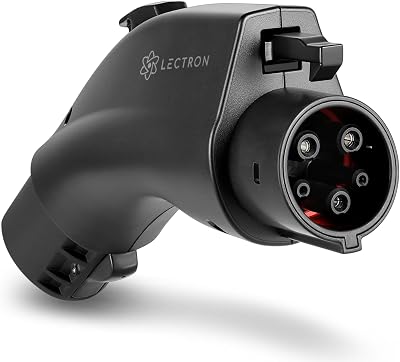
Lectron Vortex Plus NACS-to-CCS Adapter
The Gold Standard — UL 2252 Certified with Safety Interlock
* Amazon affiliate link — EV Charger Scout may earn a small commission at no extra cost to you.
Asia-Pacific & Middle East
| Network / Region | Peak Power | Key 2026 Cities |
|---|---|---|
| Huawei HyperCharging (China) | 600 kW+ (megawatt at flagships) | Shenzhen, Shanghai, Beijing, Guangzhou, Chengdu |
| NIO Power Swap 5.0 (China) | Battery swap ~3 min | All top-tier Chinese cities |
| BYD Supercharging (China) | 1 MW pilots | Shenzhen, Xi'an, Zhengzhou |
| Evie Networks (Australia) | 350 kW | Sydney, Melbourne, Brisbane, Perth |
| ChargeFox (Australia) | 350 kW | Adelaide, Canberra, Hobart |
| MOBI Charge Hub (Japan) | 180–350 kW | Tokyo, Osaka, Nagoya (CHAdeMO + CCS hybrid) |
| EVolta (UAE / KSA) | 400 kW | Dubai, Abu Dhabi, Riyadh, Jeddah |
Which EVs Can Actually Pull These Speeds
A 600 kW stall is only as fast as the car plugged into it. Most EVs still peak around 150–270 kW. The ones that can meaningfully take advantage of 2026's hubs:
| Vehicle | Architecture | Peak DC Accept | 10–80% Time |
|---|---|---|---|
| Porsche Taycan (2025+ refresh) | 800V | 320 kW | ~18 min |
| Lucid Air / Gravity | 900V | 350 kW | ~17 min |
| Hyundai Ioniq 5 / 6 / 9 (2025+) | 800V (E-GMP) | 260 kW | ~18 min |
| Kia EV6 / EV9 (2025+) | 800V (E-GMP) | 260 kW | ~18 min |
| Genesis GV60 / Electrified G80 / GV70e | 800V (E-GMP) | 240 kW | ~18 min |
| Audi A6 e-tron / Q6 e-tron | 800V (PPE) | 270 kW | ~21 min |
| Porsche Macan EV | 800V (PPE) | 270 kW | ~21 min |
| BMW Neue Klasse (iX3, 2026) | 800V (Gen6) | ~270 kW | ~20 min |
| Tesla Cybertruck | 800V (charges at 400V via boost on V3) | ~350 kW on V4 native | ~25 min |
| Tesla Model S / Model 3 / Y | 400V | 250 kW (V3/V4) | ~25 min |
| Chinese 800V+ lineup (Zeekr 001, Xpeng G9, Huawei AITO) | 800V / 900V | 400–600 kW peak | 10–15 min |
| BYD Han L / Tang L (Super e-Platform) | 1000V platform | 1 MW peak on compatible hardware | ~5–8 min |
The lowest-power mainstream 400V EVs — Nissan Ariya, older Ford Mustang Mach-E, Chevy Equinox EV — still cap near 150 kW and don't benefit as much from a 600 kW stall as an 800V vehicle does. You'll get the full 150 kW more reliably at a hub than at a single-stall older site, which is still worth something, but you won't hit the headline speeds.
What You Pay
Hub pricing tends to be slightly higher than older-generation stations in the same region, but membership plans and off-peak windows usually more than offset that. Indicative 2026 prices:
| Region | Peak $/kWh (hub) | Off-peak / member $/kWh |
|---|---|---|
| US (Electrify America Hyper Hub) | $0.56 | $0.36 (Pass+ off-peak) |
| US (Tesla V4) | $0.48 | $0.28 (off-peak) |
| UK (Ionity / BP Pulse Gigahub) | £0.79 | £0.55 (IONITY Power / BP Plus) |
| EU (Fastned Mega) | €0.69 | €0.44 (Gold subscription) |
| China (Huawei HyperCharging) | ¥2.40 | ¥1.50 off-peak |
| Australia (Evie 350 kW) | A$0.85 | A$0.65 overnight |
| UAE (EVolta 400 kW) | AED 1.15 | AED 0.85 off-peak |
Membership plans pay for themselves remarkably quickly on hub networks. Three hub sessions a month on Pass+ or Fastned Gold covers the fee, and everything after is pure saving. If you're using hubs weekly, enroll.
How to Find a Hub That's Actually Ready
Not every network entry tagged '350 kW' on a map is a true hub. Use these filters when searching:
- 1Set the app's power filter to 250 kW or higher — this hides older 50 kW and 100 kW stations.
- 2Filter by stall count ≥ 6. A true hub has capacity, not just one or two fast stalls crammed into a convenience store.
- 3Check the network brand — 'Hyper Hub,' 'Gigahub,' 'Mega Station,' 'Flagship,' 'HyperCharging' all signal a real hub build.
- 4Look at user check-ins or reliability scores in a charger-finder app. Hubs are usually in the 96%+ success-rate tier.
- 5Verify your vehicle's connector. In North America, NACS is appearing on every major new hub site; CCS1 cars still need an adapter at Superchargers. In Europe and Australia, it's CCS2 universally. In Asia, GB/T dominates in China while Japan still mixes CHAdeMO and CCS at newer hubs.
Most road-trip planners now let you pre-filter to 'hub-class' stations. Building your route around two hubs per 600 km segment gives you redundancy and amenities; routing via a single isolated stall does not.
Requirements & Things That Will Surprise You
Account / Payment Requirements
- →Most 2026 hubs require Plug & Charge (ISO 15118) activation in your vehicle account, or the network's app.
- →Credit-card readers are legally required at US NEVI-funded hubs and strongly encouraged in EU hubs under AFIR rules — but the experience is best with an in-car account.
- →Non-Tesla access to Superchargers in North America still needs the Tesla app, even with NACS-native cars.
Power Sharing
A 400 kW stall shared across two cabinets may drop to 200 kW each if both stalls are in use. Hubs are designed to minimise this, but it still happens at peak hours. If time matters, pick the stall labelled 'non-paired' in the app (Ionity, Fastned, Electrify America all show this clearly in 2026).
Battery Preconditioning
You'll only see hub-class peak speeds if your battery is preconditioned. Most modern EVs do this automatically when you set the hub as a navigation destination — roughly 20–30 minutes of warming before arrival. A cold battery arriving at a 600 kW stall still only takes ~80 kW for the first 10 minutes.
Home Charging Upgrade · EV Shop
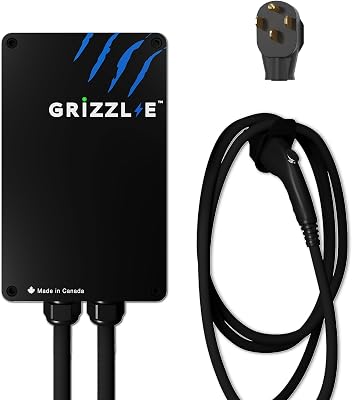
Grizzl-E Classic
Most Durable Level 2 — Cast Aluminum, NEMA 4, No-App Reliability
* Amazon affiliate link — EV Charger Scout may earn a small commission at no extra cost to you.
Amenities & Access
- →Most 2026 hubs are 24/7 with restrooms, covered canopies, and food nearby.
- →Some flagship hubs (Mercedes-Benz, BP Pulse Gigahub, Fastned Mega) include member lounges with espresso, Wi-Fi, and workspace tables.
- →Truck-capable hubs (pull-through lanes for trailers and MCS stalls for Class 8) exist but are rare — Electrify America in the US, Milence in Europe, and BYD hubs in China lead here.
Regional Realities You Should Know
North America
Urban hubs are opening fastest in California, Texas, Florida, and the Mid-Atlantic. Rural corridors are still dominated by NEVI-funded 4-stall sites, which are genuinely helpful but not hubs. Tesla V4 remains the single most reliable fast-charging option at scale, with IONNA catching up quickly on highway corridors.
Europe
Mandatory AFIR deployment has forced every major TEN-T corridor to have a 400 kW hub every 60 km by end of 2025 — largely delivered. Germany, Netherlands, Belgium, and France have the densest networks. Southern Spain, Portugal, Greece, and much of the Balkans are still backfilling.
China
China has the most aggressive megawatt charging rollout in the world. BYD and Huawei hubs in Tier-1 cities routinely deliver real-world 400+ kW to compatible cars. Battery swap stations (NIO, CATL-affiliated) offer a parallel '3-minute' charging experience that no other market has matched.
Middle East & Emerging Markets
Dubai's EVolta network is expanding fast with 400 kW sites along Sheikh Zayed Road and toward Abu Dhabi. Saudi Arabia's new EVIQ network targets 5,000 hub-class stalls by 2030, with over 800 already live in Riyadh, Jeddah, and along major pilgrimage routes. India's Tata, Ather, and Adani networks are rolling out 200–350 kW hubs in Mumbai, Bengaluru, and Delhi — impressive for a market that had almost no fast charging three years ago.
Practical Takeaways for 2026 Driving
- →Plan around hubs, not isolated stalls, for long trips — the reliability difference is real.
- →Membership plans are worth it if you use fast charging more than twice a month.
- →Your car's architecture — 800V vs 400V — matters more than the stall's rated output.
- →Always precondition the battery before arrival; it's the single biggest real-world speed factor.
- →Five-minute charging in its purest sense is real for Chinese 1 MW platforms and MCS trucks. For everyone else, 15–20 minutes is the honest target — which is still a transformational change over where charging was in 2020.
The hub model is what makes ultra-fast charging feel ordinary rather than exotic. When the nearest hub is a five-minute detour, the network delivers the speed it advertises, and the stop is a comfortable coffee break instead of an endurance exercise, EVs start matching gas cars on the road-trip experience that used to be their biggest weakness. 2026 is the year that actually happens, at least in the cities where the hubs have landed.
Frequently Asked Questions
Does “five-minute charging” mean a full charge in five minutes?
No. No passenger EV in 2026 can take an empty battery to full in five minutes — battery chemistry, thermal limits, and voltage architecture still apply. In practice it means a quick top-up of roughly 100–180 km of range in about five minutes from a low battery on a car that accepts 250+ kW. True sub-five-minute meaningful recharges only happen on commercial megawatt-class vehicles.
What makes a charging hub different from a regular fast station?
A hub is an integrated site with dedicated grid infrastructure like substations, battery buffers, and solar canopies so many stalls can pull 350+ kW at once without throttling. Hubs also use high-reliability hardware with uptime targets of 98–99 percent and add real amenities such as restrooms, food, and seating, versus 91–94 percent uptime on the broader fast network.
Which EVs can actually use the fastest hub speeds?
A 600 kW stall is only as fast as the car plugged in. Most EVs still peak around 150–270 kW, so 800V vehicles like the Porsche Taycan, Hyundai Ioniq 5/6/9, Kia EV6/EV9, and Audi e-tron models benefit most. Chinese 800V–1000V platforms such as BYD's Super e-Platform can hit far higher peaks, while older 400V mainstream EVs cap near 150 kW.
Why does my car charge slowly when I first plug in at a hub?
You only see hub-class peak speeds if your battery is preconditioned. Most modern EVs warm the battery automatically when you set the hub as a navigation destination, taking roughly 20–30 minutes before arrival. A cold battery arriving at a 600 kW stall may only draw about 80 kW for the first 10 minutes.
Are charging hub membership plans worth it?
For frequent users, yes. Membership plans and off-peak windows usually more than offset the slightly higher hub pricing, and just three hub sessions a month on plans like Pass+ or Fastned Gold typically covers the fee. If you use fast charging more than about twice a month, enrolling generally pays off.
More guides on Infrastructure
Explore the full Infrastructure topic hub — related guides that build on this one.